Lake Humidity Is Quietly Eating Your AC
The Highland Lakes are the whole reason half of us live here. Buchanan, Inks, LBJ, Marble Falls: the chain wraps Burnet County in water, and that water hangs in the air all year doing something most homeowners never think about. It is aging your air conditioner faster than the same machine would age forty miles inland, and the wear is quiet right up until it is expensive.
We service systems on both shores of the chain every week. Here is what a decade of lakeside work taught us about what the water actually does to equipment, and the boring rhythm that keeps it from mattering.
None of it requires selling your lake house or buying exotic equipment. It requires knowing what the air is doing to the machine, and giving the machine the specific counterpunches the shoreline demands, on a schedule, before the damage compounds.
The Short Version
- Lakeside humidity keeps coils wet longer, which feeds the gunk that chokes them.
- Drain lines near the water grow algae clogs on a dependable summer schedule.
- Moist air corrodes cabinets, coil fins, and electrical connections years early.
- A waterfront maintenance rhythm erases most of the penalty. Neglect doubles it.
- Float switches and placement decisions are cheap insurance with five-figure payoffs.
- A documented service history even helps when the lake house eventually sells.
- Sticky-at-74 houses usually have a sizing problem, and measurement settles it.
What the Water Does to a Cooling Coil
Your indoor coil spends every summer cold and wet. That is normal; pulling moisture out of the air is half its job. But lakeside air carries more moisture more of the year, so the coil stays wetter longer, and a wet coil in a dark cabinet is a farm. Biological growth films over the fins, the film insulates the coil from the air it is supposed to cool, and the system slowly loses capacity while the electric bill climbs to cover the loss.
You never see any of this happen. The coil is sealed inside the air handler, the decline is a few percent a season, and the first visible symptom is usually a system that runs all afternoon and never quite catches up in August. By then the coil has been fouling for two or three summers.
The chemistry is dull and relentless. Organic dust rides the air into the cabinet, lands on the wet fins, and feeds on the moisture film. Within a couple of seasons the growth is a visible mat, and a matted coil can lose a meaningful slice of its heat transfer while looking, from the outside of the unit, like absolutely nothing is wrong. The electric meter notices before you do. The August afternoon notices last, and loudest.
The Drain Line Has a Summer Schedule
All that moisture the coil pulls out has to go somewhere, and it leaves through a condensate drain line about as wide as your thumb. Warm water, dark pipe, organic dust: that is an algae recipe, and lake-country humidity keeps the recipe cooking from May to October. The clog builds, the water backs up, and then either a float switch kills your cooling on a hot Saturday or, in houses without one, the pan overflows into your ceiling.
Ceiling stains from condensate backups are one of the most common preventable damages we see on the chain. The prevention is genuinely boring: the line gets cleared and treated on schedule, the switch gets tested, and the failure simply never happens. Boring is what you want from a drain line. The drain service page covers the whole ritual.
The float switch deserves its own sentence, because it is the difference between an annoyance and an insurance claim. This little device sits in the drain pan and kills the system before an overflow reaches your drywall. Plenty of older installs around the chain never got one, and plenty of existing ones have quietly failed without anyone knowing. We test the switch at every visit and add one where it is missing, because a thirty-dollar part that prevents a five-figure ceiling repair is the best math in this trade.
Corrosion Runs on a Faster Clock at the Shore
Walk the outdoor units on any lakefront street and you can see the clock running: cabinet seams blooming rust, coil fins going chalky, electrical lugs growing the green fuzz that eventually becomes a no-cool call. Moist air does this everywhere, but waterfront exposure runs the process years ahead of inland equipment. We regularly see lake-adjacent condensers looking a decade old at year five.
The counters are simple and mechanical. Coils get washed and treated so the film never establishes. Electrical connections get checked, cleaned, and protected at every service. Cabinets get cleared of the leaf litter that traps moisture against the metal. And at replacement time, placement and equipment choices get made with the exposure in mind, because where the unit sits on a lake lot genuinely changes how long it lives.
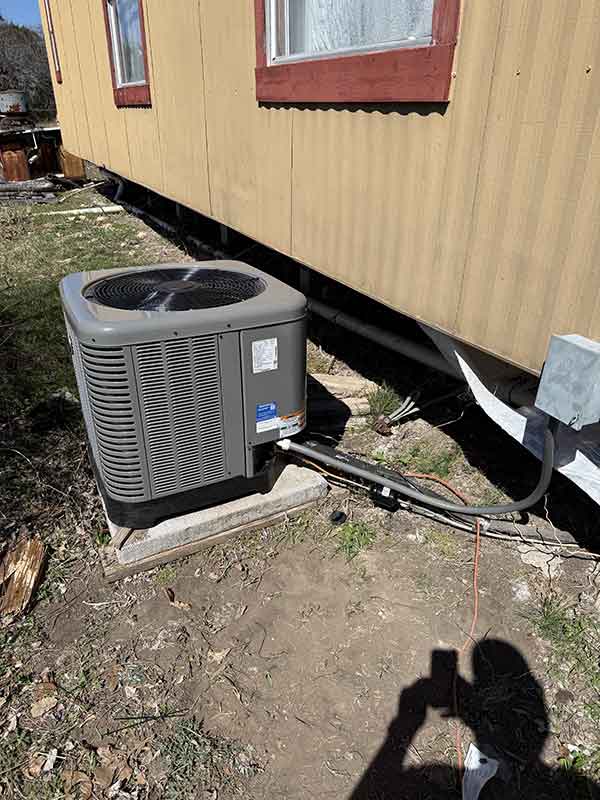
Placement matters more at the shore than anywhere else we work. A condenser tucked on the north side of the house, out of the spray line and off the bare dirt, ages measurably slower than the same unit catching lake wind on a slab that splashes every rain. When we install on waterfront lots we argue about placement like it matters, because it does: the site decision made in one afternoon follows the equipment for fifteen years.
Why Your House Feels Sticky at 74
Humidity is also a comfort problem, and lakeside houses wear it first. If your place sits at 74 degrees and still feels damp, sheets slightly sticky, closets musty, windows sweating on spring mornings, your system is winning the temperature fight and losing the moisture fight. Oversized equipment is the usual culprit: it cools the air fast and shuts down before it has run long enough to wring the water out.
The fix starts with measuring instead of guessing. Runtime patterns, indoor humidity logging, and a real load calculation tell us whether the answer is fan and control adjustments, a dedicated whole-home dehumidifier, or honest right-sizing when the current unit reaches replacement age. Lake air is beatable. It just has to be fought on purpose.
There is also a sneaky third player: infiltration. Lake houses love their big sliders, their screened porches, their doors that open forty times a Saturday. Every opening trades conditioned air for damp air, and a house that leaks generously will feel humid no matter how well the equipment performs. Part of the humidity assessment is simply reading how the house lives, because sometimes the highest-value fix is weatherstripping and door habits, and we will say so rather than sell hardware.
The Waterfront Maintenance Rhythm
Everything above rolls into one habit: lakeside systems need their maintenance weighted differently than inland ones. More frequent coil attention, drain treatment timed to the algae season, corrosion checks at every visit, and refrigerant and electrical verification so the slow drifts get caught while they are cheap findings instead of August failures.
That is exactly how we run the maintenance rhythm for the chain: same two visits a year, weighted for the water. The difference shows up in the file over time. Maintained waterfront equipment on our routes routinely reaches a respectable old age. Neglected waterfront equipment retires early, usually mid-heatwave, usually expensively.
The rhythm also produces a paper trail, and on lake properties the paper trail has real value. Waterfront homes change hands often, and a documented service history answers the buyer’s inspector before the question costs you leverage. We have watched a maintained file add real credibility at more than one closing on the chain. The visits pay for comfort first, equipment life second, and negotiation third, which is a decent stack of returns for two appointments a year.
If You Just Bought on the Water
New lake-house owners inherit whatever the last owner did or skipped, and the system rarely came with a diary. An inspection reads the truth in an afternoon: coil condition, drain health, corrosion stage, charge, electrical wear, and how many honest summers the equipment has left. That baseline turns every future decision from a guess into arithmetic.
And if the place will sit empty part of the year, get the monitoring conversation done before your first vacant winter. A connected thermostat with freeze alerts costs almost nothing against what a burst pipe does to an empty house in February. The lake gives a lot. It also keeps score. A little rhythm keeps you on the right side of the ledger.
One more inheritance worth checking: the ductwork. Lake houses grow in renovations, and every renovation era handled duct runs differently, some through vented crawlspaces that breathe damp air onto the metal, some through additions that never got proper returns. The inspection reads the whole delivery system, because a healthy condenser feeding corroded, leaking ducts is still a sick system. New-to-you houses deserve the full picture once, on paper, before the first summer writes its own report.
Quick Answers
How much faster does equipment really wear out near the lake?
On our routes, unmaintained waterfront equipment commonly shows wear years ahead of identical inland units: corrosion visible by year three or four, capacity loss from coil fouling within two or three summers, and early retirements that catch owners off guard. Maintained lakeside systems close most of that gap. The water sets the pace, but the maintenance rhythm decides whether the pace matters, and the file on the chain proves it season after season.
Is a dehumidifier worth it or should the AC handle moisture by itself?
A right-sized, healthy system handles ordinary humidity. Lakeside load, oversized equipment, or a house that stays damp at temperature changes the math, and the honest answer comes from measurement: we log your indoor humidity and runtimes before recommending anything. When a whole-home dehumidifier earns its place, it transforms the house, crisp at 74 instead of clammy at 71. When it would be a bandage on a sizing problem, we say that instead and fix the actual problem.
What does the lakeside maintenance visit include that a normal one skips?
Nothing gets skipped either way; the weighting changes. Waterfront visits put extra time on coil cleaning and treatment, condensate line clearing and treatment on the algae calendar, corrosion inspection on cabinets, fins, and electrical connections, and protective work on the lugs and contacts the moist air attacks first. Same two-visit rhythm, tuned for what the water actually does. Your system gets the version its address requires.
Does covering the outdoor unit in the off-season help near the lake?
Mostly no, and sometimes it actively hurts. Full covers trap moisture against the coil and cabinet, which is exactly the corrosion recipe you were trying to avoid, and they make cozy winter homes for rodents who chew wiring. These units are built to live outdoors. What genuinely helps at the shore: keep vegetation trimmed back for airflow, keep the cabinet clear of leaf litter, rinse the coil gently a couple of times a season, and let the maintenance rhythm handle the deep cleaning and treatment. Airflow and cleanliness beat covers every time.
Your AC Fights the Lake Every Day. Send Backup.
One visit sets the waterfront rhythm: coil, drain, corrosion, charge, all read honestly with the findings explained in plain English. We have serviced systems on every arm of the chain from Buchanan Dam to Horseshoe Bay, the failure patterns are in the file, and the first visit reads your equipment against a decade of shoreline data. The lake is not going anywhere, and neither is the humidity, so put the rhythm on the calendar and let the water do its worst.
Call (512) 925-3090or book a free lookWant proof first? The gallery is all real jobs and the reviews are all real neighbors.