
Right-Sized Beats Oversized.
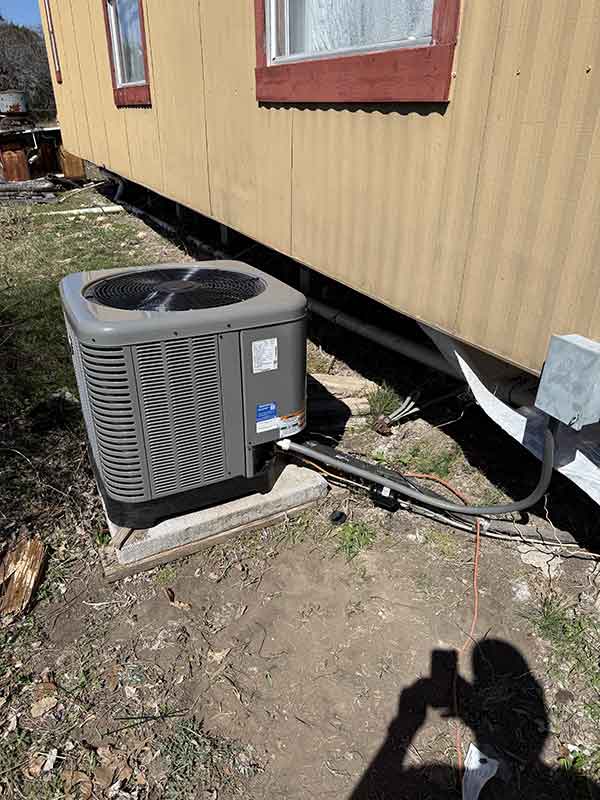
The most consequential decision in a system replacement gets made before any equipment is ordered, and it is not the brand. It is the size, and the answer changes depending on whether the house is lived in daily, rented out, visited on weekends, or sitting on acreage with metal skirting around the base.
Sizing
The Arithmetic Before the Equipment
An installation here begins with a load calculation run on your actual building. Square footage, orientation, how much glass faces west, insulation levels, ceiling heights, how leaky the envelope is. The output is a number describing what the house genuinely needs, and it very often disagrees with the tonnage on the label of the machine being replaced, because that machine’s size was frequently inherited from a guess somebody made decades ago and then copied forward by every contractor since.
Oversizing is the local epidemic and it is worth understanding why it is a defect rather than a margin of safety. An oversized system satisfies the thermostat quickly, then shuts off. Rapid cooling feels effective, but pulling moisture out of the air takes sustained run time, so the short cycle never dehumidifies. The house ends up cold and clammy, the equipment starts and stops far more often than it was engineered to, and the compressor ages on a schedule nobody intended. A correctly sized system runs longer, holds the temperature more evenly, dries the air properly, and lasts. Getting the arithmetic right is the cheapest efficiency improvement available, because it costs nothing but the willingness to do it.
The ductwork gets evaluated before equipment is selected, not after. This order matters. A starved return will strangle the finest machine ever built, and installing new equipment onto a duct system that cannot move the air simply buys an expensive version of the same complaint. If the ducts need correcting, that gets said before you commit rather than discovered as a change order halfway through.

Context
How the House Gets Used Changes the Answer
The same square footage can want a different system depending on who is in it and how often. These are the conversations that happen before anything is specified.
Start with the load calculation.
Before brands or numbers come up, the house gets measured. That conversation is where a good installation actually begins.
Delivery
What Installation Day Actually Looks Like
The quote is fixed in writing before anything is ordered, and it includes the commissioning work that a surprising number of installers treat as optional. No allowance games, no line items that resolve into a larger number once the old equipment is out and the leverage has shifted.
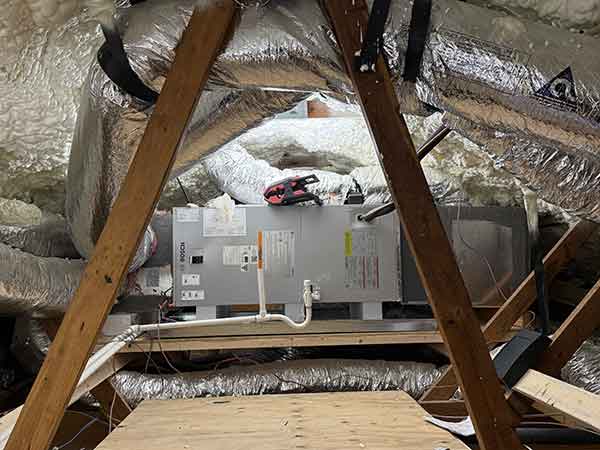
Replacements get staged so nobody is without conditioning longer than the work genuinely requires. Old equipment leaves with us and gets disposed of properly rather than left beside the house. Refrigerant lines are handled correctly, the electrical is brought to current requirements where the existing work falls short, and the condensate path is built to drain rather than to pass an inspection.
Then the system gets commissioned, which is the step that separates a working installation from a merely completed one. Charge weighed in to the manufacturer’s specification instead of guessed by feel. Static pressure measured to confirm the duct system is doing what the calculation assumed. Temperature splits verified at the registers, room by room, so the machine’s performance is proven under real load before anybody signs anything. Warranty registration is handled and documented on our end, and the system’s file starts on day one, which means every future service call begins informed rather than archaeological.
The trade’s least discussed truth is that most long-term comfort complaints trace to installation decisions rather than to equipment brand. Wrong size, starved airflow, unsealed ducts, charge that was never actually verified. The fix is doing the arithmetic the first time, and it is the reason this shop treats an installation as an engineering job instead of a delivery. You can look through finished work in the gallery to see what that means in practice, and every job on this route runs to the same standard whether the drive from the shop was short or long.
Questions about payment options get straight answers rather than a redirect, and the honest replace-versus-repair conversation happens before any of this, not after. If the machine you have has more life in it than the sales pitch suggests, you will hear that. Send a note if writing is easier than calling.
Diamond Contractor
Mitsubishi’s top ductless credential, carried through factory training.
Second Generation
The trade learned at home, then ten years on the tools before the name went on a truck.
Warranty Authorized
JB and Mitsubishi warranty work, registered and filed from this end.
Open 24 Hours
A real person answers at any hour, every day of the year.
Standard
No Guessing, No Padding, No Shortcuts
On an installation those three rules have specific meanings. No guessing means the load calculation gets run on your house rather than copied from the nameplate of the unit being removed. No padding means the proposal contains the equipment and the corrections the building actually needs, with nothing added because it was easy to sell alongside. No shortcuts means torque values, code clearances and manufacturer procedure get followed in the attic and behind the equipment where nobody will ever look, which is precisely where this trade’s corners usually get cut.
And then it gets proven under load, with the numbers recorded rather than remembered. You get a plain account of what was installed and why it was chosen, the site gets left clean, and the invoice matches the fixed quote you agreed to at the start. That is the entire arrangement, and it is worth holding anybody to.
Questions
Asked Before Anything Gets Ordered
The five that come up most in a replacement conversation, answered properly rather than briefly.
Can I just replace what I have with the same size?
You can, and it is what most of the industry does, but it means inheriting whatever decision was made when the house was built or when the last unit went in. Very often that number was a rule-of-thumb guess rather than a calculation, and it has been copied forward ever since. Running the load calculation fresh takes a modest amount of time and either confirms the existing size or catches a genuine mismatch. Either outcome is worth having, because sizing is the decision you live with for the next fifteen years and it cannot be corrected later with a setting.
Is a bigger unit better if I want the house cold faster?
No, and this is the single most common misunderstanding in the trade. An oversized system does cool the air quickly, then it shuts off, and removing humidity requires sustained run time that a short cycle never provides. The result is a house that is cold and damp rather than comfortable, plus equipment starting and stopping far more often than it was designed to, which shortens its life. Correct sizing produces longer, gentler run cycles that hold temperature steadily and actually dry the air. Bigger is a downgrade dressed as an upgrade.
Do my existing ducts need to be replaced too?
Sometimes, often not entirely, and the only way to know is to measure rather than assume. Ducts get evaluated before equipment is selected, because the duct system determines what airflow is achievable and therefore what equipment makes sense. Frequently the answer is targeted repair, sealing leaks, correcting a crushed run, or opening a starved return, rather than wholesale replacement. What will not happen is quietly installing new equipment onto a duct system that cannot serve it and letting you discover the problem afterward.
What is different about a system for a manufactured home?
Quite a lot. Manufactured homes have specific equipment requirements and a duct arrangement that is usually built into the structure with limited access, which changes both what can be installed and how the work is done. The right answer is frequently equipment designed for that application rather than a standard residential unit adapted to fit, and the details of the connection and the condensate path matter more than they would elsewhere. Done properly it works well; done as an afterthought it becomes a comfort complaint that never fully resolves.
What does commissioning mean, and why do you keep mentioning it?
Commissioning is proving the installed system performs, and it is the step most frequently skipped because nobody sees it. It means the refrigerant charge is weighed in to the manufacturer’s specification rather than judged by feel, static pressure is measured to confirm the ducts move what the calculation assumed, and temperature splits are verified at the registers room by room. It is included in the quoted price here because an installation that has not been proven under load is an installation nobody has actually finished.
Get the Numbers First
Describe the house and how it gets used, and the sizing conversation starts from there. Prefer to write it out? Send the form and we will call you back.
(512) 925-3090 Book a Free Look




