
The Boring Visit That Saves August.
Nobody brags about a tune-up. It is the least dramatic thing this trade does, and it is the single reason some houses go a decade without an emergency call while their neighbors go three summers. Below is exactly what a visit covers, in order, plus the handful of things worth noticing yourself in the months between.
Visits
Two Appointments, One Calendar Year
The rhythm is simple: a cooling visit before the heat arrives and a heating visit before the first real front. Two appointments carry the whole year, and the reason there are two rather than one is that the two halves of the system fail differently and at different times. Skipping the fall visit is how a family discovers a cracked igniter at ten at night in January, and skipping the spring visit is how a capacitor that had been fading since March finally quits during a July cookout.
What separates a real visit from a fifteen-minute filter change is the measuring. Anybody can look at equipment and pronounce it fine. The work that actually predicts failure is comparative: capacitance read against the rating stamped on the part, amp draw read against the nameplate, temperature split across the coil, static pressure telling you whether the ducts can move what the blower is producing. Those numbers go in the file, and the following year they get compared to themselves. A capacitor at ninety percent of rating is fine. The same capacitor at seventy percent next spring is a scheduled replacement instead of an emergency.
That comparison over time is the whole product. One visit is a snapshot; a few years of visits is a trend line, and a trend line is what lets somebody say your blower motor is drawing more than it did and should probably be handled this fall rather than in the middle of a heat wave.
Around here the plan is deliberately unglamorous. Seasonal visits, the reminder calls handled on our end so nobody has to keep a mental calendar, and priority status when the emergency board fills up. No tiers, no lock-ins, no bundle with contents nobody can name.
Coverage
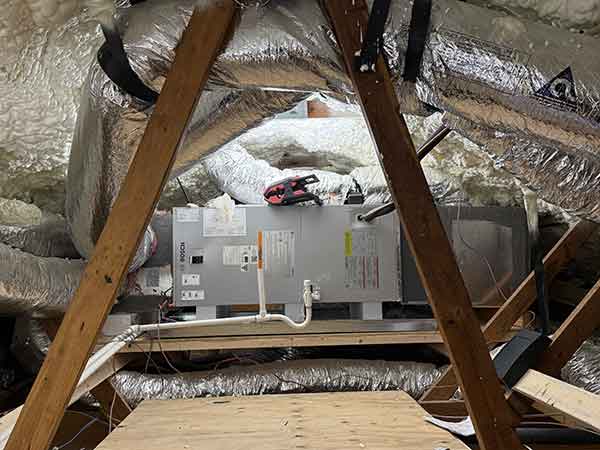
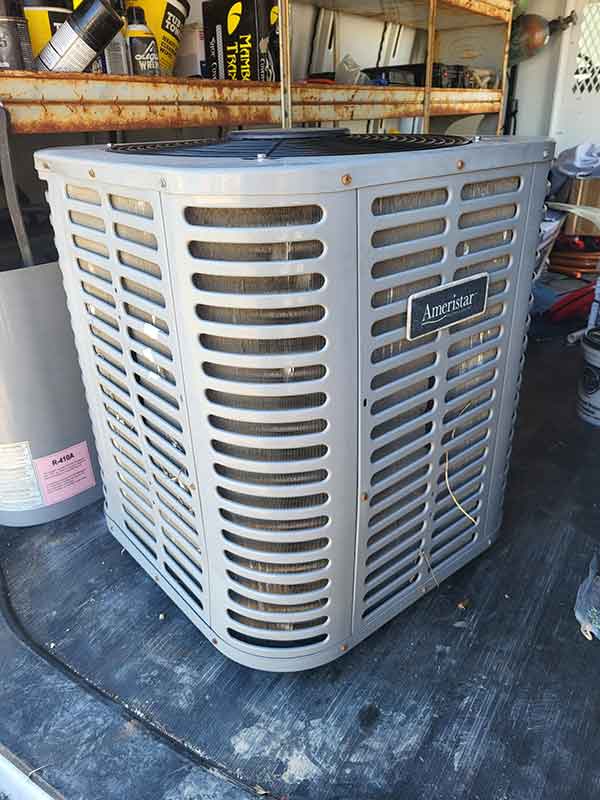
What Actually Happens on a Cooling Visit
In roughly the order it gets done, and none of it is optional to call the visit finished.
Get on the calendar before the rush.
Spring and fall book up fast, and the visits that get scheduled early are the ones that actually happen. One call sets both.

Between
Five Things Worth Noticing Yourself
You are around your system far more than any technician, and most of the failures that end up as emergencies announced themselves quietly for weeks first. None of the following requires tools or a ladder.
Listen at startup. A healthy outdoor unit comes on with one sound and settles. A hard start, a hum before the fan catches, or a new rattle that was not there in May are all worth a phone call while they are still symptoms rather than events.
Watch the run time. If the system used to satisfy the thermostat in the afternoon and now simply never stops, something has changed: charge, coil, airflow, or the machine’s own capacity. Weak cooling that arrives slowly is the most commonly ignored warning in this trade because nothing ever fully breaks.
Look for water. Any dampness near the indoor unit, a stain on a ceiling below an attic air handler, or a pan holding standing water means the drain is losing the fight. That one is worth same-week attention because the secondary damage costs more than the repair.
Change the filter on a real schedule, and pick the right one. A pleated filter dense enough to feel substantial can restrict a system that was never designed for it, and a restricted return produces exactly the frozen coil people blame on refrigerant. If you are unsure what your equipment wants, ask on the phone; it takes a minute and costs nothing.
Finally, notice the smell. A brief dusty odor on the first heat cycle of the season is normal. Anything sharp, sour, or persistently musty is not, and musty in particular usually traces back to moisture sitting somewhere it should have drained from.
Report any of it and the phone consult is straightforward: describe what changed, hear whether it can wait, and get a slot that suits the answer. You can also send it in writing if that is easier, and we will call you back.
Diamond Contractor
Mitsubishi’s top ductless credential, held through factory training.
Second Generation
A trade learned at home, plus ten years on the tools before the name went on a truck.
Warranty Authorized
JB and Mitsubishi warranty work, with the claim filed on our side of the desk.
Open 24 Hours
A real person answers at any hour, every day of the year.
Rhythm
Why This Is the Cheapest Thing We Sell
Maintenance is the only lever that meaningfully bends the aging curve of a system. The visit catches the marginal capacitor before it strands somebody in August, the slow leak before it becomes a compressor running on low charge, the cracked flame sensor before the first cold night, and the duct leak quietly taxing every hour of run time. None of those findings are dramatic. All of them are cheaper as findings than as failures, usually by a wide margin.
The customers who complain least about this trade are the ones on the rhythm. Their systems are boring, their bills are predictable, and their failures are rare and scheduled instead of dramatic and at midnight. Boring is the product being sold here. It takes disciplined work twice a year to manufacture, and it is worth every minute of it. The trucks that run this route also come through town constantly for other work, so getting on the schedule rarely means waiting for a special trip.
Questions
Fair Things to Ask Before Signing Up
The five that come up most when somebody is deciding whether any of this is worth their money.
Is a maintenance plan actually worth paying for?
It is worth it if the visits are real and it is not if they are theater, which is the honest version nobody in this industry likes saying out loud. A visit that measures capacitance, amp draw, static pressure and temperature split produces findings that prevent expensive failures. A visit that changes a filter and leaves a sticker does not. Ask any company what gets measured and written down. If the answer is vague, that tells you what the visit is. The value here comes from catching drift early, which is only possible if somebody recorded the numbers last year.
How often does a system in this climate really need service?
Twice a year, and the reason is the run time rather than the calendar. Cooling equipment here works most of the year, which means the wear that a milder region spreads across a decade gets compressed. The spring visit prepares the cooling side for the season that will actually punish it, and the fall visit catches the heating components that have sat unused for months and are about to be asked for full output on the first cold night. One visit a year means one of those two seasons starts blind.
My system seems fine. Why pay somebody to look at it?
Because equipment does not have a warning light for gradual decline. A capacitor at seventy percent of its rating cools your house perfectly well right up until the afternoon it does not, and a coil losing charge slowly just feels like a hot summer. The entire point of measuring is to see the drift while the system still works, which is exactly when the fix is small and schedulable. Waiting for a symptom means waiting for the failure, and failures pick their own timing.
Do you handle the scheduling, or is that on me?
On us. The reminder calls come from this office, which exists because the most common reason maintenance gets skipped is not cost but memory. Life is busy and a tune-up is easy to defer indefinitely. Members get contacted when the season turns and get priority when the emergency board is full, which is the practical benefit that shows up on the hottest week of the year when everybody is calling at once.
What happens if the visit turns up something broken?
You hear about it with the reading that found it, and you get the price before anything is done. Some findings are urgent, like a failed safety switch or a drain about to overflow, and some can wait for a planned appointment, like a capacitor that has drifted but is still functioning. That distinction gets made honestly rather than converted into pressure. A tune-up here is not a sales call wearing a uniform, and the visit ends with a recommendation you are free to decline.
Put It on the Calendar
One call sets the spring and fall visits and puts the reminders on our side. Prefer to write? Send the form and we will reach out.
(512) 925-3090 Request a Call Back




