
Real Jobs, Real Photos
Shot on Burnet-Area Job Sites
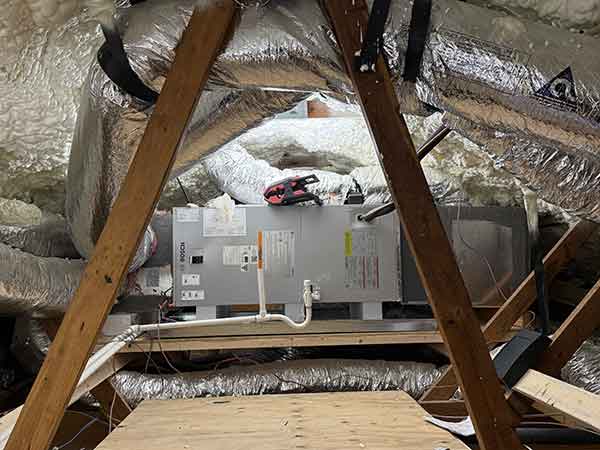
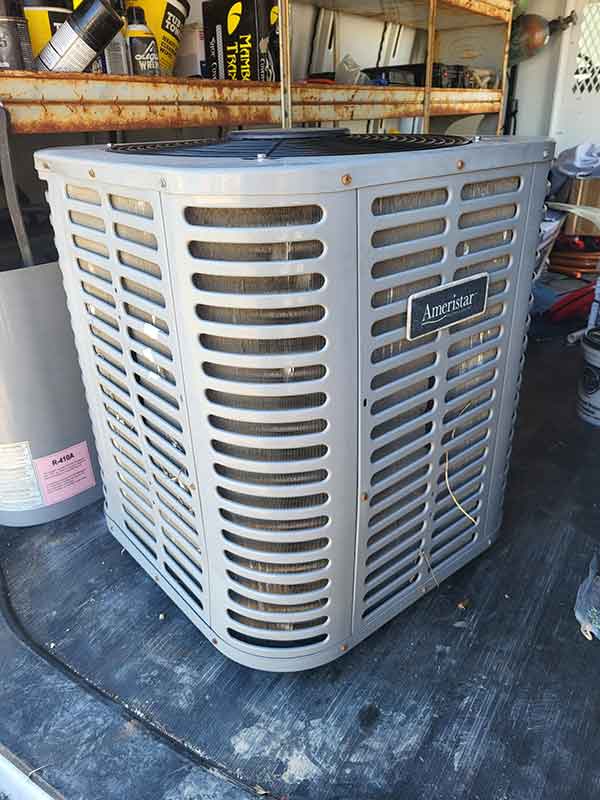
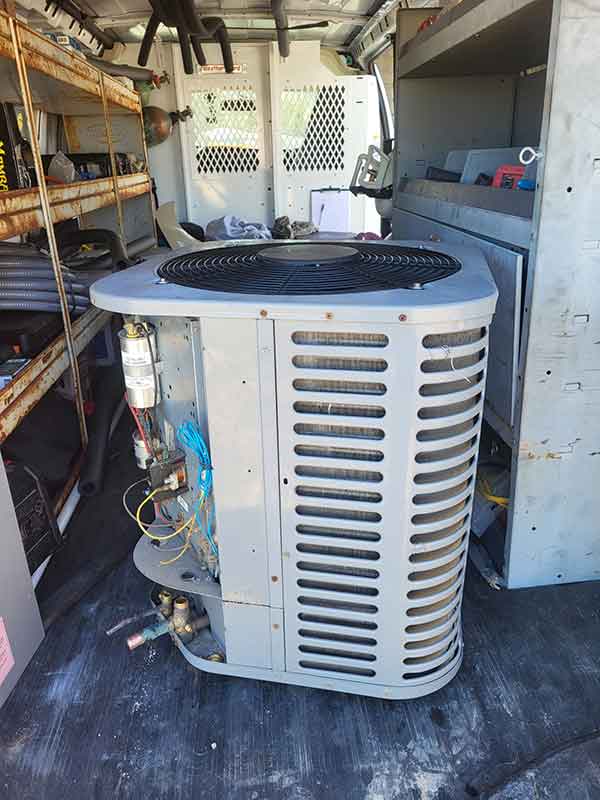
Every photo below was taken on an actual Off Duty job site around Burnet and the Highland Lakes, usually on a phone, usually by the man doing the work. No stock photography, no rented models in clean uniforms, no staged glamour shots. This is what the work actually looks like, captioned by the person who did it.





Why Phone Photos
The Camera Never Gets a Say
There is a reason this page looks different from most contractor galleries. The photos here were shot mid-job, in real attics and real crawlspaces, in whatever light the job site offered. We could buy prettier pictures. Every contractor site you have ever seen with spotless techs grinning at thermostats bought exactly those pictures, from exactly the same three stock libraries, and none of it tells you a thing about the company.
A phone photo from inside the job tells you plenty. You can see how the lineset was dressed, whether the platform was decked, how the wiring was managed, whether the brazing is clean. Anyone who has paid for sloppy work before knows exactly what to look for in these frames. That level of inspection is the entire point. We photograph the work because we are not afraid of the closeup.
There is also a practical reason the phone comes out on every job: records. Photos go in the customer file, so the next visit starts with a picture of exactly what is behind that panel, and warranty or insurance paperwork has evidence attached before anyone asks for it. The gallery is the public sliver of a habit that mostly exists to protect customers.
More Coming
The Gallery Grows With the Job List
This page updates as jobs finish and photos come off the phone. If you want to see a particular kind of work before you hire us for it, a ceiling cassette install, a walk-in cooler repair, a full duct replacement, call and ask. Odds are there are photos from a recent job we can show you, along with a straight explanation of what was done and why.
And if we do your job, your system might end up here too, never with your name or address attached. Just the work, standing on its own, the way work should. Curious what any of these jobs would look like at your house? Book a free look or browse the full service catalog to see everything the trucks carry parts for.
One more source is coming: the client’s own photo archive. Bryce has years of before-and-after sets sitting on phones and hard drives, the kind of documentation that never made the old website. As those get sorted, the strongest of them land here, organized by the type of work. The gallery you are looking at is the starting roster, and it only gets deeper from this point forward.
Notes From the Field
Three Stories the Photos Do Not Finish
The Ladder Shot
The lineset photo at the top of the gallery came from a ductless install where the homeowner had been quoted a full ducted system by another outfit, ductwork, soffits, drywall repair, the works. The room was a garage conversion. A single-zone mini-split did the job for a fraction of the disruption, installed in a day, running that evening. Being a Diamond Contractor means we reach for ductless when ductless is the honest answer, and the photo shows the kind of finish the credential requires.
The Flood System
Some of the install photos in this gallery come from the summer after the July 2025 Burnet flood, when we partnered with Samaritan’s Purse to put a complete new system into a family’s gutted home. Flood work is unglamorous: everything is wet, schedules belong to six other trades, and the family is living the worst season of their lives. The Alvarados’ review of that job sits on our reviews page. The work in these frames is what earned it.
The Crawlspace Call
The crawlspace photo is from a maintenance visit that started as something else entirely. The homeowner called about weak airflow, expecting a big repair. The actual cause was a collapsed flex duct under the house, crushed years earlier and slowly leaking air into the crawlspace. One duct section replaced, airflow restored, no new equipment sold. That call cost a fraction of what the homeowner feared, which is exactly the kind of math that keeps a small shop’s phone ringing.
A Buyer’s Guide Hidden in Photos
How to Read an HVAC Photo Like a Tech
Next time any contractor shows you their work, here is what to actually look at. Consider it a free inspection lesson from the second generation.
Look at the Lines
Refrigerant lines and wiring tell on a tech instantly. Straight runs, smooth bends, proper supports, and sleeved penetrations mean someone cared. Kinked copper, sagging linesets, and wiring draped like party streamers mean the parts you cannot see got the same treatment. Every lineset in this gallery is fair game for that test, which is why the photos are here.
Look at the Platform
An attic system needs a solid, level, decked platform with room for a human to service it. Units balanced on scrap lumber over bare joists are a ceiling collapse and a warranty fight waiting to happen. Check the emergency drain pan under the unit too. Central Texas insurers have paid for a lot of ceilings that a forty-dollar pan would have saved.
Look at the Finish
Commissioning is invisible in a photo, but its cousins show: a level condenser on a proper pad, cleared clearances, sealed penetrations, labeled breakers. A tech who leaves the visible details right almost always pulled the gauges, checked the charge, and verified temperatures too. A tech who leaves a mess in frame definitely did not. Judge us by that standard on every photo above.
Gallery Questions
Asked About the Photos
Are these really your photos?
Every one. They come off the phones of the people doing the work, shot on job sites around Burnet, the Highland Lakes, and the wider Central Texas map we cover. That is also why the lighting varies and the compositions are what they are. A marketing photographer makes work look pretty. A job site photo makes work look honest, and honest is the brand. If a photo ever appears on this site that we did not shoot on our own job, it will be labeled as such, and so far there has never been a need.
Can I see examples of a specific service before hiring you?
Yes, just ask. The gallery shows a cross-section, but the phone archive runs much deeper: installs, repairs, duct projects, commercial refrigeration, and the odd jobs that never make a website. Tell us what you are planning, a garage mini-split, a full system replacement, a duct redesign, and we will show you comparable finished work during the free look, along with what it involved and roughly how long it took. Seeing a real local example beats any brochure.
Will you photograph my job too?
Almost certainly, because documentation is part of how we work. Before-and-after photos protect you on insurance claims, help with warranty filings, and give the next tech a record of what was done. Whether those photos ever appear publicly is your call. We never post identifying details, addresses, or anything that points at your property, and if you would rather your job stay entirely off the internet, say the word and it will. The documentation still goes in your file either way, because it serves you first.
Why does some of the work happen in attics and crawlspaces?
Because that is where Central Texas builders put the equipment. Attic air handlers dominate around here, with crawlspace systems common in older homes around Burnet and the lake towns. Both locations are hard on equipment, attics bake in summer and crawlspaces stay damp, which is why maintenance visits matter more in this region than almost anywhere. When you see a photo of a tech wedged under a house, that is the actual job, and it is a big part of why you should be glad someone else does it. It is also why we check drain pans and float switches obsessively.
Do you have photos from my part of the map?
Probably. The gallery pulls from jobs across the whole hundred-mile territory, Burnet and the Highland Lakes most heavily, plus the Williamson County corridor, Bell County, and the outer towns. Photos do not carry location labels here, on purpose, because customer privacy outranks marketing. If you are in Marble Falls, Georgetown, or anywhere on the coverage map and want to see work from your area specifically, ask during the free look and we will pull relevant examples from the archive.
What happens between the photos, on an actual visit?
The process is on the about page in full, and it is short: you call, we diagnose, we explain it straight, we fix and verify. The photos in this gallery live inside step four, the fix, but the steps around them are what make the fix stick. Diagnosis with gauges instead of guesses, a real price before work starts, and testing under load before we leave. If you would like to watch the process happen at your own house, the phone number is (512) 925-3090 and it answers at any hour.
Your House Could Be the Next Frame
Every photo up there started with a phone call to the same number, answered by the same person, at whatever hour the system picked to quit. Straight answers, fair prices, and work worth photographing. That is the whole pitch, and the pictures back it up.
(512) 925-3090 Book a Free Look




