Mini Split Maintenance, Explained Straight.
Mini splits earned their efficiency reputation honestly, and they keep it dishonestly in half the houses that own them: filters loaded to felt, coils wearing biology, drains one clog from a wall stain, and inverter systems compensating silently for all of it at the meter. The annual maintenance visit is where the reputation gets re-earned.
Mini Splits · Burnet & Central Texas
Quiet Machines, Quiet Decline
The mini split’s virtue is its vice: it runs so quietly and modulates so smoothly that decline hides. A conventional system straining announces itself; an inverter system just ramps a little harder, week over week, as filters load and coils foul, holding your setpoint while efficiency bleeds out invisibly. Texas accelerates the whole cycle, humidity feeding coil biology, dust and pet dander loading filters in weeks, condensate lines running ten months a year, and the owner’s first symptom is often the drip, the smell, or the electric bill, all of them late-stage announcements of maintenance that stopped being optional months earlier.
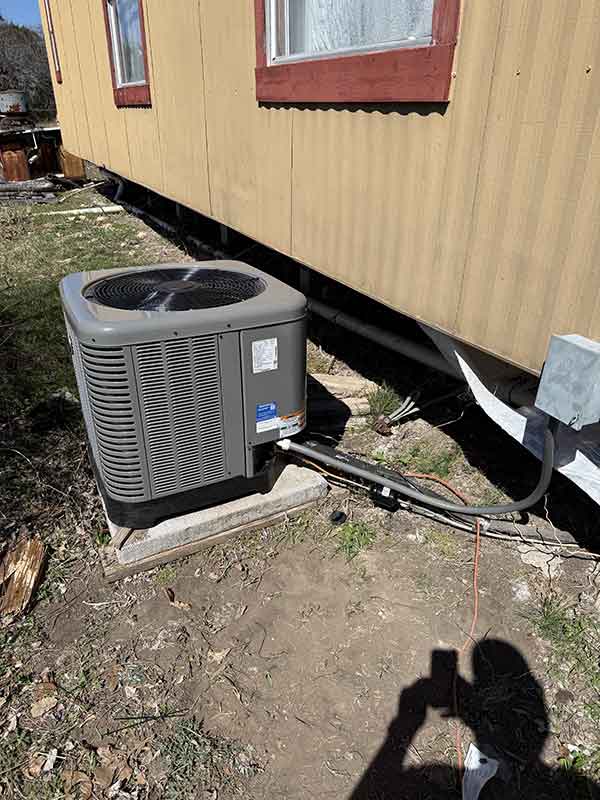
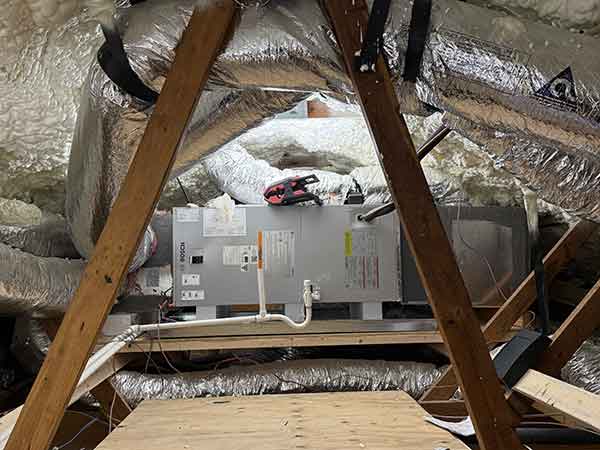
The annual professional visit does what the monthly filter rinse cannot: heads opened properly, coils inspected and treated, blower wheels checked for the film that unbalances them, condensate pans and lines cleared, treated, and flow-tested, flare joints leak-checked, the platform’s signature weep point, outdoor coils washed, mounts and linesets inspected, error histories read from the boards, and performance verified against the machine’s own baseline. Multi-zone systems get every head serviced and the branch logic exercised, because the guest room head nobody runs is exactly where surprises incubate.
Between visits, the owner’s share is genuinely simple, filter rinses on the honest schedule, a seasonal glance at the drain outlet, and our handoff teaches it in five minutes, because the machines reward exactly that small consistency.
Local conditions shape this work more than most homeowners expect. Our summers stack week after week of hundred-degree afternoons, which means long compressor runtimes, drain lines moving gallons of condensate a day, and electrical components living near their limits from June through September. Lake humidity keeps the corrosion clock running even in mild months, and spring pollen packs filters fast enough to choke airflow in weeks. A tech who works this exact hundred miles every day builds all of that into the mini split maintenance call: what to check first, which parts fail early here, and which settings survive a Texas cooling season instead of merely a laboratory one.

Mini Splits
The Annual Ductless Service
What a real mini split maintenance visit includes, head by head and end to end.
- Heads deep-checkedFilters, coils, and blower wheels inspected and serviced properly, with the panels off and the film found before it smells.
- Condensate provenPans, lines, and pumps cleared, treated, and flow-tested, the drip prevention that saves drywall annually.
- Flares leak-checkedThe platform’s classic weep points sniffed and verified, catching the slow ounce-a-season leaks early.
- Outdoor unit servedCoil washed, mounts checked, clearances restored, the half of the system Texas weather works on directly.
- Boards interrogatedError histories read and cleared knowingly, because the machine remembers faults its owner never saw.
- Performance verifiedTemperatures, draws, and modulation behavior checked against baseline, so drift shows up as data.
Skip the reading, make the call.
Two minutes on the phone with a real tech beats an hour of internet research. Describe the symptom in your own words and get a straight answer about cause, timing, and cost.
Why Off Duty
The Efficiency You Paid For, Kept
The arithmetic of ductless maintenance is embarrassingly favorable: these machines were bought for their operating economics, the modulating efficiency that shows up on every bill, and neglect quietly refunds the premium, a loaded filter and fouled coil can erase a mini split’s efficiency edge entirely while it dutifully holds temperature, which means the owner is paying inverter prices for window-unit performance without a single symptom. The annual visit costs a fraction of that silent tax and returns the machine to its ratings, which is why maintained systems in our fleet still bill like the brochure promised in year ten, and unmaintained ones prompt the is-this-thing-broken call by year four, about a machine with nothing broken but its habits.
The maintenance rhythm also protects the Diamond warranty position, documented annual service is what keeps long-warranty conversations easy, and folds naturally into whatever else your property runs: whole-home plans cover the mini splits alongside the central equipment, multi-zone lake houses get every head on one visit, and the reminder calendar is ours to keep, not yours. Small machines, small rhythm, full standard, that is the program.
Every mini split maintenance call runs the same four steps we run on everything. You call (512) 925-3090 and a real person answers, any hour of any day. We diagnose with gauges and meters, never with guesses, until the actual cause is proven. Then we explain it straight: the failure, the fix, and the exact price, in plain English, before any work starts. Finally we do the work to spec and verify it under load before the truck leaves. Temperatures checked, pressures checked, paperwork handled. It is the same process that earned the reviews on our reviews page, and it does not change based on the size of the job.
A straight word on money. We do not print teaser prices on this website and we do not do surprise math on invoices. Call, describe the problem, and we will tell you what the visit costs before a truck rolls. When the diagnosis is in, you get the full repair price out loud, before the work starts, and you decide with the real number in front of you.
Worth saying plainly: this is not a problem that ages well. Systems compensate quietly right up until they cannot, and the failure that finally announces itself usually costs more than the one caught early would have. If your gut says something is off, that instinct is worth one free phone call. The worst case is we tell you everything sounds normal, which is a pretty good worst case.
Who does the work matters as much as what gets done. Off Duty is owner-operated: the person diagnosing your system is the person whose name carries the company, trained in the family trade and seasoned by ten years of Central Texas installs and repairs. You can see the standard in real job photos, and you will see it again in your own equipment closet.
We run this work all over the map: Burnet and the Highland Lakes first, then the whole hundred-mile circle, Marble Falls, Georgetown, Round Rock, Austin, Killeen, and out to Waco and Boerne. The full sixteen-county roster is on the service areas page. Wherever you sit on it, the same truck standard applies: the same tech, the same instruments, the same price-before-work rule, whether the drive took ten minutes or ninety. Distance changes the arrival window, never the workmanship.
Diamond Contractor
Mitsubishi’s top ductless credential, earned with factory training.
Second Generation
Raised in the trade, ten years on the tools before the name went on a truck.
Warranty Authorized
JB and Mitsubishi warranty work: we file the claim, you skip the fight.
Open 24 Hours
A real person answers the phone at any hour, every day of the year.
The Standard
How This Work Gets Done Here
A job like this is a chain of small decisions nobody watches: which part, which setting, which clearance, which step gets skipped when the attic hits 130 degrees. Our answer to all of them is the same. Do it the way the book says, the way the second generation was taught, the way you would want it done if the address were your own. That means proven diagnosis before parts, correct materials over convenient ones, and procedure followed all the way through the parts of the job that never show.
It also means finishing properly. The system gets verified under working load, the readings get documented, the old components get shown on request, and you get an explanation in plain English rather than trade jargon. The price never moves between the quote and the invoice. If anything about the work ever needs a second look, the phone number on your receipt rings the person who did it. Simple system, kept promises, reviewed in public by the people it was kept to.
Mini Split Maintenance Questions
Asked Before We Roll a Truck
Real questions from real Central Texas customers, answered the same way we answer them on the phone: straight.
How often does a mini split really need professional service?
Annually, in this climate, with the owner’s filter rinses carrying the weeks between: Texas humidity drives coil biology and condensate duty hard enough that the national skip-a-year advice underserves the machines here, and multi-zone systems with rarely-used heads earn the visit doubly, since idle heads incubate quietly. Heavy-duty applications, shops, sunrooms, pet-dense households, sometimes justify a mid-year filter-and-drain check. The honest signal to watch between visits: any smell on startup, any drip, any new sound, each means the visit is due now rather than at the calendar’s convenience.
Can I just clean the filters myself and skip the service?
The filter rinse is genuinely yours, monthly-ish, quick, and we teach it gladly, and it is a third of the story: the coil film that filters cannot stop, the blower wheel loading that unbalances airflow, the condensate biology that clogs drains, and the flare weeps that steal charge all live behind panels and require proper access, tools, and judgment. The DIY-only pattern produces the classic year-four fleet: clean filters, filthy coils, first drip incoming. Do the rinses, absolutely, and let the annual visit do the machine justice underneath them. The combination is what fifteen-year mini splits are made of.
What does mini split maintenance cost?
It prices by the head, single-zone visits at friendly rates, multi-zone systems scaled sensibly since the truck and setup serve every head in one trip, and the exact numbers get quoted plainly when you call, per the house policy against mystery pricing. Plan customers fold ductless service into their agreements at package rates with the reminders handled. Against the alternative ledger, silent efficiency loss on every bill, the drywall lottery of untested drains, and repair calls that maintenance would have prevented, the annual visit remains the cheapest thing that ever happens to these machines.
My mini split seems fine. What would the visit even find?
The usual census on seems-fine machines: filters past their airflow, early coil film not yet smelling, a drain line half-closed and on schedule for August, a flare weeping ounces the inverter is quietly compensating for, and an error history the owner never saw because the machine handled it. None of it symptomatic yet, all of it on the road to the classic complaints, and every item cheaper now than at its destination. That is the entire logic of maintaining precision equipment: the visit exists to find the problems still in their cheap phase, and seems-fine is exactly when they are.
Do you maintain multi-zone systems and lake house setups?
Constantly, and they are the program’s best case: multi-zone systems get every head serviced in one visit, branch boxes and shared logic exercised, and the rarely-used zones, guest rooms, bunk rooms, the casita between visits, get the attention their idleness quietly requires. Lake properties add the seasonal angle, service timed before the summer occupancy wave, connected-thermostat integration checked where fitted, and the freeze-season readiness that second homes need. One visit, whole system, documented per head, with the calendar kept by us, which for a property you visit on weekends is most of the point.
Related work: Mini Split Cleaning · Ductless Mini Split Repair · HVAC Maintenance · see real jobs in the gallery
Keep the Brochure Numbers Real
One annual visit per system, every head served, drip season cancelled. Prefer to write it out? Send the form and we call you back.
(512) 925-3090 Book a Free Look