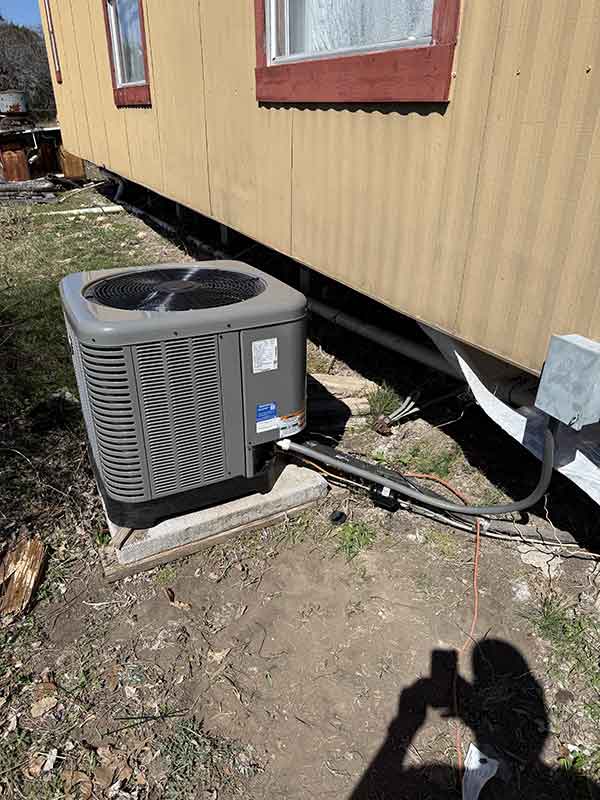
AC Tune-Up, the Off Duty Way.
A real tune-up is a physical service, coils washed, charge corrected, components tested under load, drain cleared, that measurably restores cooling capacity and catches the parts drifting toward failure. A fake tune-up is a coupon and a glance. The difference shows up in August, which is exactly when you cannot fix it anymore.
Air Conditioning · Burnet & Central Texas
What a Tune-Up Actually Tunes
The phrase tune-up got debased by decades of coupon marketing, so let us rebuild it from the work. An air conditioner drifts out of tune physically: pollen and cottonwood mat the outdoor coil so it cannot shed heat, charge seeps low so the coil runs cold and inefficient, contacts pit, capacitors weaken, drains silt up, filters choke. Each drift steals a little capacity and adds a little runtime, and Texas summers charge interest on both. The tune-up reverses the drift: cleaning, correcting, tightening, and testing until the system performs to its specification again, with the numbers to prove it.
Ours runs twenty-plus points and produces before-and-after evidence: temperature split across the coil, measured at arrival and at completion, is the honest scoreboard, and customers routinely see meaningful improvement from cleaning and charge correction alone. The under-load electrical testing doubles as fortune-telling, a capacitor at the edge of spec in April is a scheduled part instead of a stranded family in July. And the drain service prevents the single most common shutdown of the Texas summer, the algae clog that floats the switch.
Spring is the season, before the heat asks your system for everything it has. A tuned system enters summer with margin; an untuned one enters with a list of IOUs.
Local conditions shape this work more than most homeowners expect. Our summers stack week after week of hundred-degree afternoons, which means long compressor runtimes, drain lines moving gallons of condensate a day, and electrical components living near their limits from June through September. Lake humidity keeps the corrosion clock running even in mild months, and spring pollen packs filters fast enough to choke airflow in weeks. A tech who works this exact hundred miles every day builds all of that into the AC tune-up call: what to check first, which parts fail early here, and which settings survive a Texas cooling season instead of merely a laboratory one.
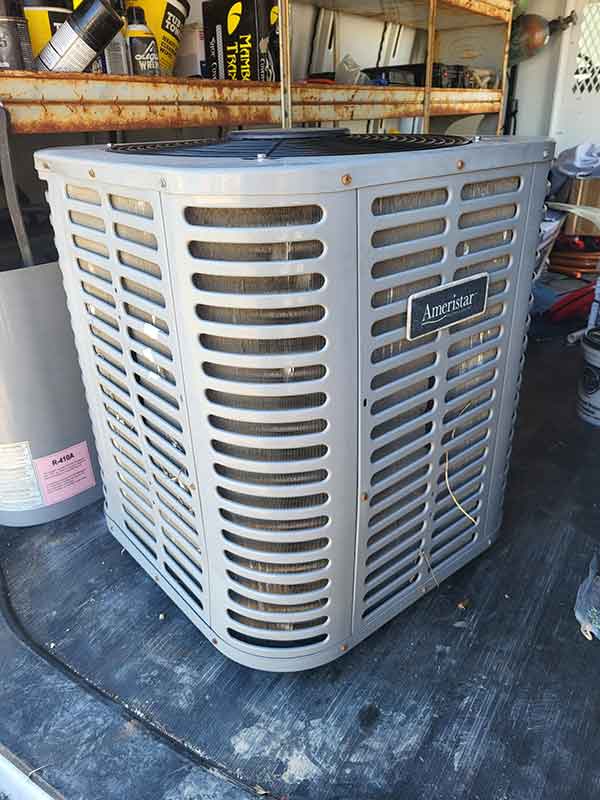

Air Conditioning
On the Tune-Up Bench
The material points of the visit, so you know what you are buying and can compare it against anyone’s coupon.
- Outdoor coil deep washPollen, fluff, and lake grime off the condenser coil. This alone often restores several degrees of performance in spring.
- Charge checked and correctedGauges on, spec consulted, charge trimmed where needed. Low charge is the quiet capacity thief and coil-freezer.
- Capacitors measured, never eyeballedMicrofarads against rating, in your file. The number one summer failure gets caught here months ahead.
- Contactor and connectionsPitting, buzzing, and loose lugs found and fixed while they are cheap symptoms instead of stranded-Saturday causes.
- Drain flushed and treatedLine cleared, algae tablets placed, float switch tested. The most preventable emergency in Texas, prevented.
- Split measured before and afterThe honest scoreboard: supply-return temperature difference, documented, so the tune-up proves its own worth.
Not sure this is your problem?
Call anyway. We name the likely cause on the phone for free, and if it turns out to be something small you can handle yourself, we say exactly that and save you the visit.
Why Off Duty
The Coupon Question, Answered Honestly
You have seen the deep-discount tune-up ads, and the business model behind them deserves daylight: the coupon buys a doorway, the visit becomes a sales inspection, and the tech, often paid on what he finds, finds things. We run the opposite model. The tune-up is priced honestly as a real service, the tech earns nothing from discoveries, and anything found gets shown to you with its measurement and priced without pressure. Sometimes we find nothing; healthy systems exist, and telling you so is a fine outcome. The tune-up is the product here, never the pretext.
One more honest distinction: tune-up versus repair. If your system is actively failing, warm air, ice, breaker trips, book a repair call, because a tune-up on a broken machine wastes your money sorting symptoms a diagnosis should own. The tune-up is for working systems you want kept working. If you are unsure which you need, describe the situation on the phone and we will route you truthfully, even when the truthful routing is the cheaper visit.
The process here never changes, whether the job is AC tune-up or a full system swap. Step one, you call (512) 925-3090 and a human answers, around the clock. Step two, we test until the real cause is proven, because parts-swapping on a hunch is how invoices grow. Step three, you get the failure, the fix, and the exact number explained to the point before we touch a thing. Step four, we do the work to spec and prove it under load before we leave. Our customers keep writing reviews about exactly this rhythm, which tells us to keep it.
On pricing, the policy is the same as everything else here: out loud and up front. The visit cost gets stated on the phone before anyone drives anywhere. The repair price gets stated after diagnosis and before work. No packages with hidden contents, no commission-driven upsell in the truck, and no number on the invoice you did not already hear.
A word about waiting it out. Central Texas weather does not leave much grace period, and a system limping in May is a system down in July, when everyone else’s is down too and the schedule is at its tightest. The early call gets the easy appointment and, usually, the smaller invoice. The July call gets the queue. Texas rewards the prepared, and so does our schedule.
Who does the work matters as much as what gets done. Off Duty is owner-operated: the person diagnosing your system is the person whose name carries the company, trained in the family trade and seasoned by ten years of Central Texas installs and repairs. You can see the standard in real job photos, and you will see it again in your own equipment closet.
Coverage is the same as everything else we do: Burnet at the center, about 100 miles in every direction. That means the lake towns, Marble Falls, Kingsland, Horseshoe Bay, the corridor through Leander, Cedar Park, and Georgetown, plus Austin, Bell County, and the outer ring through Waco, San Marcos, New Braunfels, Fredericksburg, and Boerne. The full sixteen-county list lives on the service areas page, and if you sit just past the edge of it, call anyway and get an honest answer.
Diamond Contractor
Mitsubishi’s top ductless credential, earned with factory training.
Second Generation
Raised in the trade, ten years on the tools before the name went on a truck.
Warranty Authorized
JB and Mitsubishi warranty work: we file the claim, you skip the fight.
Open 24 Hours
A real person answers the phone at any hour, every day of the year.
The Standard
How This Work Gets Done Here
Every trade job carries an invisible line item: the standard it was done to. On AC tune-up work, ours reads like this. The diagnosis is proven with instruments, because guessing is expensive and it is your money on the table. The parts that go in are parts we would put in our own house, matched to spec instead of whatever was cheapest on the shelf. The workmanship follows the manufacturer’s book and the Texas code book both, because shortcuts hide for exactly one season and then bill you with interest.
When the work is finished, it gets tested the way it will actually be used: under load, at temperature, with the readings written down. Then the area gets left the way we found it or cleaner, the old parts get shown to you on request, and the invoice matches the number you already heard. If anything acts up afterward, you call the same number and the same person answers. That is the entire warranty conversation most customers ever need, and it is why the reviews keep saying the same three things: honest, fair, showed up.
AC Tune-Up Questions
Asked Before We Roll a Truck
The ones the phone line hears most for this service, with the answers given at full length instead of sales-brochure length.
What does your AC tune-up include exactly?
The list on this page, performed rather than gestured at: coil cleaning outdoor and indoor-inspection, refrigerant charge verified with gauges and corrected to spec, capacitors and contactor measured under load, motor amps recorded, drain flushed, treated, and flow-tested with the float switch proven, filter and blower checked, thermostat verified, and the temperature split measured before and after so the improvement is documented instead of asserted. Everything lands in your customer file for the year-over-year trend. Plan on a genuine working visit, around an hour, sometimes more if the coil wash is overdue.
How is a tune-up different from maintenance?
Same family, same instruments, slightly different emphasis. Our maintenance program is the standing seasonal rhythm, visits, records, reminders, priority status. A tune-up is the single-visit version of the same work, often the entry point for a new customer or a new-to-you house. The work performed overlaps almost completely, which is by design: whichever door you come through, the system gets the full instrumented treatment. Most tune-up customers convert to the seasonal rhythm once they see the file we build, because the trend line is where the real value compounds.
Can a tune-up really lower my electric bill?
When the system has drifted, yes, and physics does the explaining. A matted condenser coil forces longer runtimes for the same cooling; washing it restores heat rejection. Low charge makes the compressor work harder for less capacity; correcting it restores the design point. Together with a clean filter and healthy airflow, the system simply buys more cooling per kilowatt. Across a Central Texas summer, five months of daily runtime, the drift we remove routinely represents real monthly money. A system already clean and correctly charged saves little, and you will hear that too.
Is spring really that important, or is that a sales line?
It is scheduling truth. Spring catches systems after pollen season has done its coil damage and before summer demands full capacity, which is the ideal moment to restore and verify. It also catches drifting parts, capacitors especially, months before the July heat converts drift into failure, when the repair becomes an emergency and the schedule is at its worst. And frankly, spring is when the calendar has room for unhurried visits. You can tune up in July; people do. They mostly do it in the emergency queue.
What if you find something wrong during the tune-up?
You see the evidence and the price, then you decide. A capacitor reading below spec gets shown to you on the meter, priced for replacement on the spot, and installed only with your yes, most people say yes to cheap parts caught early, which is the entire logic of the visit. Bigger findings, a leak, a tired compressor, get the honest full conversation: options, costs, timing, and what Bryce would do at his own house. Nothing is installed by momentum, and nothing found ever turns into pressure. Evidence, price, your call.
Related work: AC Maintenance · AC Coil Cleaning · AC Inspection · see real jobs in the gallery
Tuned Now Beats Broken in August
Book the instrumented spring visit and enter summer with a proven system and margin to spare. Prefer to write it out? Send the form and we call you back.
(512) 925-3090 Book a Free Look