
Commercial Refrigeration, the Off Duty Way.
Commercial refrigeration is HVAC with inventory riding on it: the walk-in holding the weekend’s product, the reach-ins fronting the service line, the ice machine that runs out exactly at rush, every failure priced in spoilage and stopped service. This page heads the refrigeration family, the systems, the urgency doctrine, and the program that keeps the cold holding.
Commercial HVAC · Burnet & Central Texas
Cold Chains and Countdown Clocks
Refrigeration failure runs faster clocks than comfort ever does: the walk-in’s temperature climbing toward the thresholds where product becomes loss, hours, not days, the reach-in line’s failure cascading into service capacity mid-rush, the ice machine’s quiet death discovered at the first weekend order, and the response doctrine prices those clocks explicitly, refrigeration emergencies holding top-tier triage on the 24-hour line, inventory-at-risk reading as the operations event it is, response windows stated against the product’s actual countdown, bridge strategies, product consolidation, temporary capacity, engineered where the repair must wait for parts. The corridor’s restaurants, stores, and food operations run their cold chains on exactly this doctrine, the emergency line’s refrigeration calls answering at whatever hour the compressor picked.
The systems fluency spans the commercial cold census: walk-in coolers and freezers with their remote and self-contained condensing units, evaporator coils, defrost systems, and door infrastructure, per their dedicated pages; reach-in fleets across the service-line census, their condensing units, controls, and gasket realities; ice machines with their production cycles, water systems, and the maintenance their chemistry demands; and the refrigeration-specific disciplines throughout, food-safe temperatures verified rather than assumed, defrost cycles engineered against Texas humidity, condensing units serviced at the exposure their placements suffer, roof, alley, kitchen corner, and the controls, from mechanical stats through digital monitoring, serving the operation’s compliance reality, health-inspection logs, corporate standards, the temperatures documented because documentation is half the obligation.
The family’s dedicated pages hold the depth, walk-in cooler and freezer repair, ice machines, reach-ins, maintenance and installation, while this page holds the doctrine: cold chains served at inventory urgency, on a program that keeps the emergencies rare.
There is also a Hill Country layer to this work that out-of-area advice never accounts for. Limestone terrain around Burnet soaks up heat all day and radiates it back through the evening, so equipment here runs longer and later than the same unit would in a milder market. Humidity rolling off Buchanan, LBJ, and the rest of the Highland Lakes chain works on coils, drain lines, and cabinet steel every month of the year. Then winter shows up sideways: a sixty-degree afternoon collapsing into an overnight freeze finds every marginal component in the county at once. Doing commercial refrigeration work correctly here means doing it for this climate, with parts choices and settings that respect what Central Texas actually does to machinery.
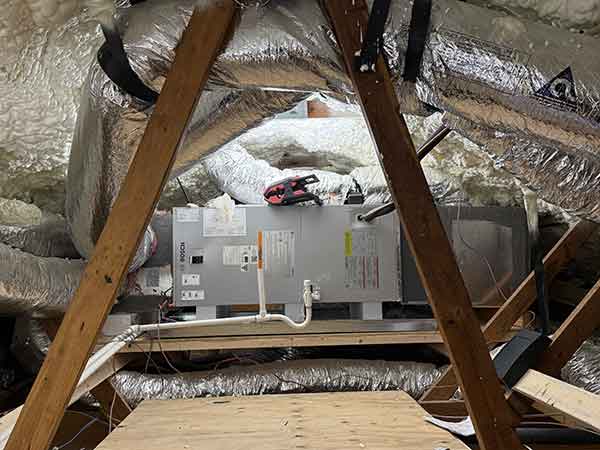
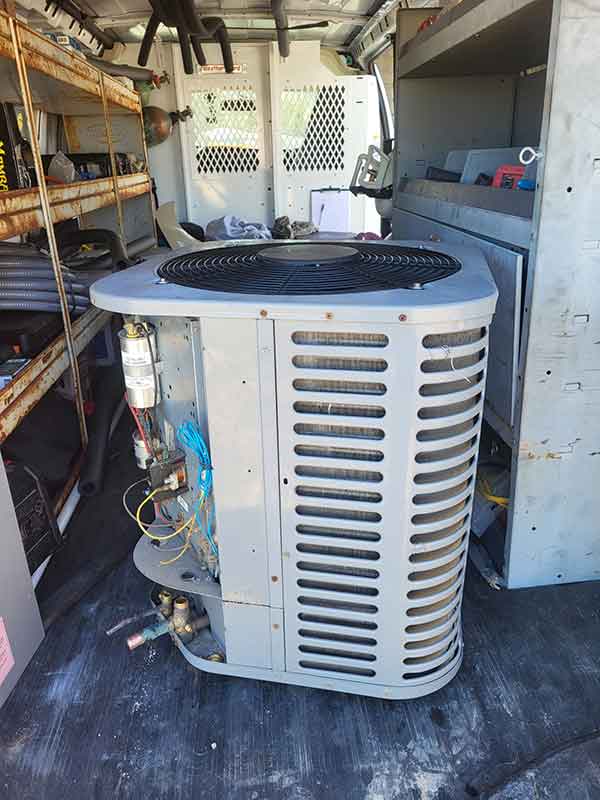
Commercial HVAC
The Commercial Cold Census
The refrigeration fleet this family of pages serves, urgency doctrine throughout.
Skip the reading, make the call.
Two minutes on the phone with a real tech beats an hour of internet research. Describe the symptom in your own words and get a straight answer about cause, timing, and cost.
Why Off Duty
The Program That Keeps Product Cold
Refrigeration maintenance is inventory insurance run on the commercial rhythm: condenser coils on exposure schedules, kitchen grease and rooftop grime setting their own calendars, evaporators and defrost systems verified against the humidity they fight, gaskets, doors, and curtains served as the envelope items they are, every leak a compressor tax, controls calibrated against food-safe reality, drainage cleared before it floods the walk-in floor, and refrigerant circuits leak-checked at the volumes commercial charges represent, the whole program documented per the compliance doctrine, temperatures logged, service recorded, the file serving health inspections and corporate audits alike. The failure census the program prevents, dead compressors from cooked condensers, iced evaporators from failed defrost, product-loss events from drift nobody watched, prices the enrollment against any operation’s spoilage history, the arithmetic per the preventative doctrine, denominated in inventory.
The emergency-side integration completes the doctrine: program accounts holding refrigeration’s top triage standing, their equipment histories in hand when the clock starts, their failures cheaper because drift was watched, and the bridge protocols pre-planned, which cooler consolidates to where, what temporary capacity stages, the worst night’s playbook written in the calm, per the operations thinking the whole commercial family runs on. Cold chains reward exactly this discipline, and the corridor’s food operations that run it read their spoilage lines annually for the proof.
Here is how the visit goes. A call to (512) 925-3090 reaches a real tech, not a call center, at any hour. On site, the diagnosis runs on instruments until the cause is certain, and then everything gets laid out in plain English: what failed, what fixes it, and exactly what it costs, before work begins. When the commercial refrigeration work work is done, it gets verified under load instead of switched on and waved at. If the pattern sounds simple, it is. It is also rare enough in this trade that people write reviews about it.
Money talk, handled the Burnet way: we say the price before the work, every time. The trip cost comes over the phone before we roll, the repair quote comes after diagnosis and before a single part goes in, and if the smart move is to not spend money at all, you will hear that too. Fair pricing shows up in every review we have because it is policy, not luck.
A word about waiting it out. Central Texas weather does not leave much grace period, and a system limping in May is a system down in July, when everyone else’s is down too and the schedule is at its tightest. The early call gets the easy appointment and, usually, the smaller invoice. The July call gets the queue. Texas rewards the prepared, and so does our schedule.
As for who shows up: this is an owner-operated shop, so the tech at your door is usually Bryce himself, a second-generation HVAC man with ten years on the tools, licensed, insured, and photographed doing exactly this kind of work in the job gallery. No commissioned salesman rides along, and nobody at this company earns a bonus for talking you into more than you need.
Coverage is the same as everything else we do: Burnet at the center, about 100 miles in every direction. That means the lake towns, Marble Falls, Kingsland, Horseshoe Bay, the corridor through Leander, Cedar Park, and Georgetown, plus Austin, Bell County, and the outer ring through Waco, San Marcos, New Braunfels, Fredericksburg, and Boerne. The full sixteen-county list lives on the service areas page, and if you sit just past the edge of it, call anyway and get an honest answer.
Diamond Contractor
Mitsubishi’s top ductless credential, earned with factory training.
Second Generation
Raised in the trade, ten years on the tools before the name went on a truck.
Warranty Authorized
JB and Mitsubishi warranty work: we file the claim, you skip the fight.
Open 24 Hours
A real person answers the phone at any hour, every day of the year.
The Standard
How This Work Gets Done Here
Every trade job carries an invisible line item: the standard it was done to. On commercial refrigeration work work, ours reads like this. The diagnosis is proven with instruments, because guessing is expensive and it is your money on the table. The parts that go in are parts we would put in our own house, matched to spec instead of whatever was cheapest on the shelf. The workmanship follows the manufacturer’s book and the Texas code book both, because shortcuts hide for exactly one season and then bill you with interest.
When the work is finished, it gets tested the way it will actually be used: under load, at temperature, with the readings written down. Then the area gets left the way we found it or cleaner, the old parts get shown to you on request, and the invoice matches the number you already heard. If anything acts up afterward, you call the same number and the same person answers. That is the entire warranty conversation most customers ever need, and it is why the reviews keep saying the same three things: honest, fair, showed up.
Commercial Refrigeration Questions
Asked Before We Roll a Truck
Real questions from real Central Texas customers, answered the same way we answer them on the phone: straight.
Our walk-in is warming up right now. What do we do?
Call first, protect product second: the refrigeration emergency line answers at any hour with top-tier triage, the response window stated against your product clock, and while the truck rolls, work the countdown, doors closed and traffic stopped, the box’s thermal mass buying hours when sealed, product consolidated toward the coldest zones, coolers and freezers cross-loaded where capacity allows, thermometers watched and logged, the loss-threshold temperatures known per product type, and any secondary capacity, reach-ins, a neighbor’s box, staged for the genuine threshold, per the phone triage’s specific walk of your situation. Most warming boxes hold product through the response window; the fast call is the variable; and the dedicated walk-in pages carry the repair from there.
Do you service refrigeration at night and on weekends?
The 24-hour doctrine runs strongest here: refrigeration failures pick their hours adversarially, the compressor dying Friday evening ahead of the weekend’s inventory, the ice machine quitting before the Saturday rush, and the emergency line answers accordingly, refrigeration calls holding top triage standing at every hour, the on-call response reading product clocks rather than business hours, weekend and holiday failures served per the emergency family’s standing pages. The cold chain’s clock does not observe the calendar, the response doctrine matches it, and the corridor’s food operations carry the number for exactly the hours this answer describes, which is when it earns its keep.
Can you handle both our HVAC and refrigeration equipment?
The combined account is the operational win: one shop serving the building’s comfort systems and its cold chain, one 24-hour line for every mechanical emergency the operation can have, one maintenance program rhythming both fleets, the quarterly walk covering RTUs and walk-ins in the same visit, one file holding the whole mechanical census, and the triage integration mattering at the margins, the shop that knows your whole building routing its worst days correctly. Restaurants and food retail run exactly this consolidation here, the refrigeration fluency being native rather than subcontracted, per this family of pages, and the single-relationship economics, shared truck rolls, program pricing across fleets, pricing the consolidation’s case annually.
How cold should our walk-in cooler and freezer actually run?
Food safety writes the targets: coolers holding product at or below the food-code thresholds, the box running the setpoints that keep product zones compliant against door traffic and load cycles, freezers holding solidly below their own lines, and the verification mattering more than the dial, product-zone temperatures measured rather than assumed, the controls calibrated against instruments per the maintenance doctrine, logs kept where compliance obligations demand, which for inspected operations is everywhere. Drift from targets is the early-warning diagnostic, the box working harder toward failure or the envelope leaking its cold, either deserving the look before the countdown version, per the program’s whole logic, and the assessment reads your boxes against their targets in one visit, documented per the practice.
Is refrigeration maintenance really worth it for a small operation?
The spoilage ledger answers per operation: one walk-in failure event, the weekend’s product lost plus the emergency response plus the trading interruption, typically prices years of the program that would have caught the drift, the small operation’s margin arithmetic making the insurance more compelling rather than less, one bad Friday being proportionally larger against a smaller book, and the compliance layer riding along, the documented temperatures and service records inspections increasingly expect. The program scales to the fleet honestly, the single-walk-in cafe entering at modest scope, per the maintenance page’s structure, and the enrollment math running exactly as the preventative doctrine states it, small scheduled attention against large unscheduled loss, denominated in inventory, verifiable against your own spoilage history.
Related work: Walk-In Cooler Repair · Refrigeration Maintenance · Ice Machine Repair · see real jobs in the gallery
The Cold Chain, Kept Cold
Inventory-grade urgency, exposure-schedule maintenance, and the emergency line that answers at product speed. Prefer to write it out? Send the form and we call you back.
(512) 925-3090 Book a Free Look




