
Dual Fuel Heat Pump Systems Without the Runaround.
A dual fuel system is the have-it-both-ways answer for Texas winters: a heat pump carries the house through the mild ninety percent of the season on cheap electric heat, and a gas furnace takes over automatically for the hard freezes when heat pumps work hardest. Set up correctly, it is the lowest-cost comfortable winter a Central Texas house can buy.
Heat Pumps · Burnet & Central Texas
Two Heat Sources, One Smart Handoff
Central Texas winters are mostly mild with occasional teeth. That profile is exactly what dual fuel was invented for. Above the balance point, typically somewhere in the 30s, a heat pump moves heat far more cheaply than gas can burn it, so the heat pump runs and your money stays put. When a genuine freeze arrives and heat pump output sags just as demand spikes, the system hands the house to the furnace, which does not care how cold the outdoor coil would have been. No electric strip heat, which is the expensive crutch ordinary heat pump systems lean on, ever needs to run.
The whole trick lives in the handoff. The changeover temperature has to be set to your actual utility rates and your actual equipment, calculated rather than left on a factory default. Set it too high and you burn gas on days electricity was cheaper. Set it too low and the heat pump strains through weather it should have handed off. We have seen plenty of dual fuel systems around the lakes running factory settings that waste money in both directions, and correcting the changeover logic is sometimes the most profitable half hour a homeowner can buy.
We design and install new dual fuel systems, convert suitable existing setups, and service the fleet already out there, including the control boards, outdoor sensors, and thermostat logic that make the handoff happen. If your system has both a heat pump and a furnace and you have no idea which is running when, that is worth a visit all by itself.
There is also a Hill Country layer to this work that out-of-area advice never accounts for. Limestone terrain around Burnet soaks up heat all day and radiates it back through the evening, so equipment here runs longer and later than the same unit would in a milder market. Humidity rolling off Buchanan, LBJ, and the rest of the Highland Lakes chain works on coils, drain lines, and cabinet steel every month of the year. Then winter shows up sideways: a sixty-degree afternoon collapsing into an overnight freeze finds every marginal component in the county at once. Doing dual fuel work correctly here means doing it for this climate, with parts choices and settings that respect what Central Texas actually does to machinery.
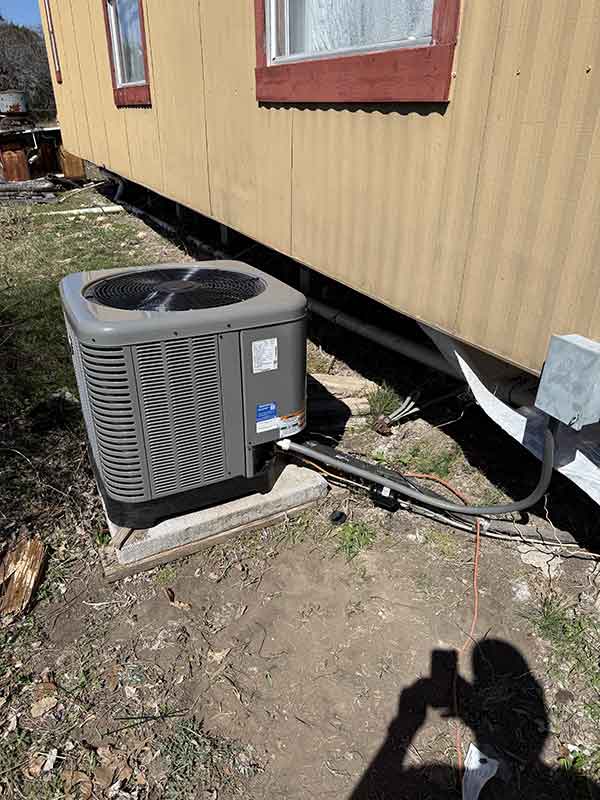

Heat Pumps
What Dual Fuel Service Covers
Whether it is a new design or a tune-up of an existing system, the work centers on the same handful of make-or-break items.
Same crew, any hour.
The name is the joke, the 24-hour line is not. If this problem cannot wait, call now and the on-call tech picks up, quotes the visit straight, and rolls a stocked truck.
Why Off Duty
Is Dual Fuel Right for Your House?
Honest answer: it depends on what you have and what you pay. Houses with existing gas service and a decent furnace are the natural fits, adding a heat pump instead of a straight AC replacement upgrades summer cooling and slashes winter costs in one move. All-electric houses usually do better with a good cold-climate heat pump than with adding gas from scratch. And if your gas furnace is elderly, the math changes again. We run your actual numbers, current rates, equipment ages, house load, and tell you which configuration wins, including when the answer is not the one we happened to be selling that day.
For existing dual fuel owners, the cheap wins are real: a changeover recalculation after any rate change, sensor verification, and a seasonal check that both sources still start and hand off cleanly. The expensive failure mode is quiet, a dead outdoor sensor or miswired logic that lets strip heat or the wrong source carry the load for a whole winter. One instrumented visit rules it out.
Here is how the visit goes. A call to (512) 925-3090 reaches a real tech, not a call center, at any hour. On site, the diagnosis runs on instruments until the cause is certain, and then everything gets laid out in plain English: what failed, what fixes it, and exactly what it costs, before work begins. When the dual fuel work work is done, it gets verified under load instead of switched on and waved at. If the pattern sounds simple, it is. It is also rare enough in this trade that people write reviews about it.
A straight word on money. We do not print teaser prices on this website and we do not do surprise math on invoices. Call, describe the problem, and we will tell you what the visit costs before a truck rolls. When the diagnosis is in, you get the full repair price out loud, before the work starts, and you decide with the real number in front of you.
One honest note about timing. Problems in this category rarely improve on their own, and the price of waiting is usually a bigger bill: the weak part takes a healthy one with it, the small leak becomes a stain on a ceiling, the strange noise becomes a seized motor. Calling early is almost always the cheaper version of the same repair, and the phone consult costs nothing: describe what you are seeing and we will tell you honestly whether it can wait.
Who does the work matters as much as what gets done. Off Duty is owner-operated: the person diagnosing your system is the person whose name carries the company, trained in the family trade and seasoned by ten years of Central Texas installs and repairs. You can see the standard in real job photos, and you will see it again in your own equipment closet.
Coverage is the same as everything else we do: Burnet at the center, about 100 miles in every direction. That means the lake towns, Marble Falls, Kingsland, Horseshoe Bay, the corridor through Leander, Cedar Park, and Georgetown, plus Austin, Bell County, and the outer ring through Waco, San Marcos, New Braunfels, Fredericksburg, and Boerne. The full sixteen-county list lives on the service areas page, and if you sit just past the edge of it, call anyway and get an honest answer.
Diamond Contractor
Mitsubishi’s top ductless credential, earned with factory training.
Second Generation
Raised in the trade, ten years on the tools before the name went on a truck.
Warranty Authorized
JB and Mitsubishi warranty work: we file the claim, you skip the fight.
Open 24 Hours
A real person answers the phone at any hour, every day of the year.
The Standard
How This Work Gets Done Here
Here is the standard this work gets held to, spelled out. First, no guessing: the cause is proven with gauges, meters, and eyes on the actual equipment before a single part is recommended. Second, no padding: the fix that goes on the quote is the fix the system needs, sized and specced properly, with no mystery add-ons riding along. Third, no shortcuts: torque specs, code clearances, and manufacturer procedure all get followed even where nobody will ever look, because that is precisely where corners usually get cut.
And when it is done, it gets proven. Systems get run under real load, temperatures and pressures get checked against spec, and the numbers get recorded so the next visit starts from data instead of memory. You get the plain-English version of what was done and why, the workspace gets cleaned, and the price on the invoice is the price you heard before the work began. Hold us to all of it. Our neighbors in the reviews already do.
Dual Fuel Heat Pump Systems Questions
Asked Before We Roll a Truck
The ones the phone line hears most for this service, with the answers given at full length instead of sales-brochure length.
What exactly makes dual fuel cheaper?
Physics and rates, working together. A heat pump moves heat rather than making it, so above roughly freezing it delivers two to three units of heat per unit of electricity paid for. Gas heat costs the same per unit regardless of weather. Dual fuel simply uses whichever source is cheaper at the current temperature: electric efficiency for the mild bulk of winter, gas for the freezes where heat pump efficiency sags. Most Central Texas winters are eighty to ninety percent mild hours, which is why the savings are structural rather than marginal.
How do I know if my changeover is set right?
Watch what runs on a 40-degree morning. If gas fires above the mid-30s, the setting is likely too high and burning money. Deeper check: the balance point should reflect your current utility rates, and rates have moved a lot in recent years while most installed settings have not. We calculate the correct number from your bills and equipment, set it, and show you the arithmetic. Homeowners are frequently startled by how far off the factory default was for their situation.
Can you add dual fuel to my existing system?
Often, yes. The cleanest conversion is a house with a working gas furnace and an aging straight AC: the AC gets replaced by a heat pump coil-matched to the furnace, changeover controls get added, and you gain the whole dual fuel economics without touching the gas side. Converting from a heat pump with strip backup to true dual fuel means adding gas, which is a bigger project and only sometimes worth it. A free look at your equipment answers it definitively, with numbers.
What maintenance does a dual fuel system need?
Both halves need their season prep, because both carry the house at different times. The heat pump side gets the standard twice-yearly attention, coils, charge, defrost, electrical. The furnace side gets its annual combustion analysis and safety inspection even though it runs few hours, because the hours it runs are the coldest of the year and failure then is the worst-case timing. The changeover logic gets verified each fall. We bundle all of it into one sensible agreement so nothing gets missed.
Does dual fuel make sense in new construction?
Where gas is already coming to the house, frequently yes, and the build stage is the cheapest moment to do it right: proper sizing from a real load calculation, matched equipment, and controls designed in rather than bolted on. Where gas would have to be brought in specially, a high-quality cold-climate heat pump usually wins the math instead. We work with owner-builders and remodelers around the Highland Lakes and will give you the straight comparison for your site before the slab is poured.
Related work: Heat Pump Installation · Cold Climate Heat Pumps · HVAC System Design · see real jobs in the gallery
Run Your Numbers Both Ways
A free look and an honest calculation: dual fuel, straight heat pump, or keep what you have. Prefer to write it out? Send the form and we call you back.
(512) 925-3090 Book a Free Look




