Wall Mounted Mini Splits, the Off Duty Way.
The high-wall head is the mini split most people picture: the quiet rectangle up near the ceiling, washing the room with conditioned air from its long louver. It is the platform’s workhorse for good reasons, efficient, affordable, endlessly proven, and the difference between a wall unit that disappears into daily life and one that annoys for a decade is almost entirely placement and installation craft.
Mini Splits · Burnet & Central Texas
The Workhorse Head, Worked Right
Wall mounts dominate ductless for honest reasons: the high-wall position suits airflow physics, air thrown horizontally at height falls gently through the room as it tempers, the hardware costs less than any alternative head style, service access is human-friendly, and the modern generations run library-quiet at cruising speeds. The engineering maturity shows, decades of iteration have refined vane geometry, sensor placement, and filter access into genuinely resolved designs, and the quality platforms’ wall heads are the most reliable equipment category we service. When people ask what we would put in our own garage or bedroom, this is usually the answer.
Placement is the craft that separates loved units from resented ones, and it is a real design conversation: height and wall selection for throw that covers the space without blasting the bed or the desk, clearance from obstructions that would fold the airflow back, sensor honesty, away from sun patches and heat sources that would fool the machine, lineset routing that exits cleanly toward the outdoor unit without draping copper across the house’s face, and condensate’s gravity path considered before the first hole. Ten minutes of placement argument at the walkthrough buys ten years of the unit simply working, and we have the argument cheerfully on every install.
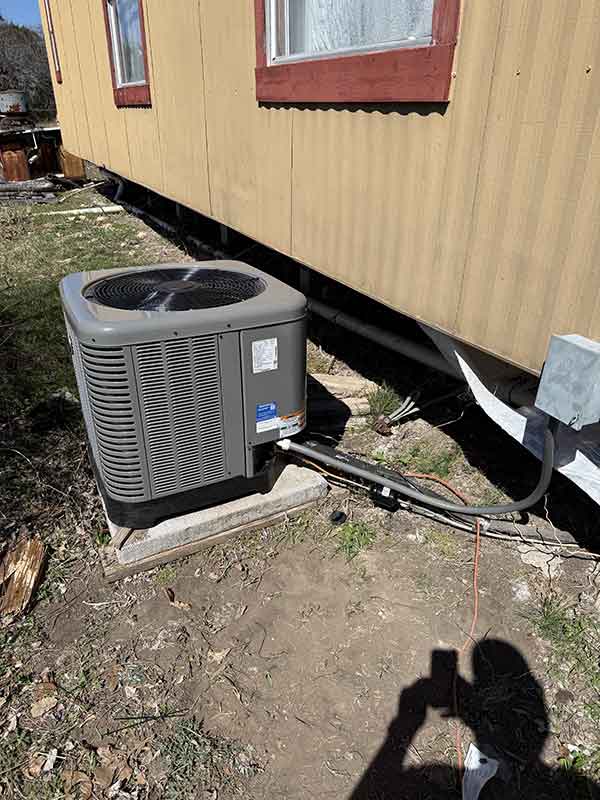
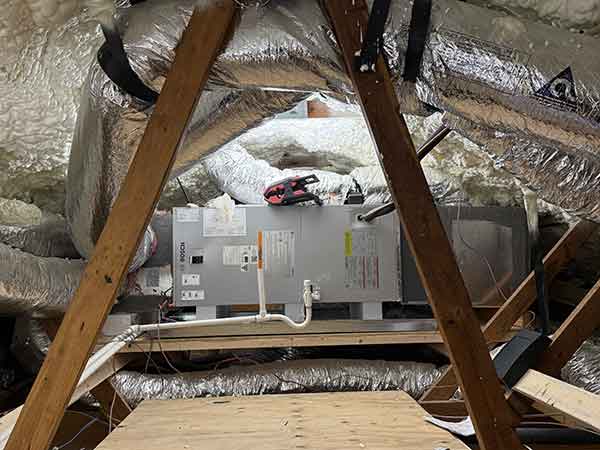
The installation itself is the Diamond routine, fresh flares torqued to spec, verified vacuum, engineered drainage, clean covered linesets, and commissioning with readings, the craft this platform rewards and our gallery photographs.
Everything about this service gets tuned to where you live. The same failure looks different in a lakefront place at Horseshoe Bay, a nineties ranch house outside Bertram, and a five-year-old build in Leander, because humidity exposure, duct design, and equipment grade differ at each address. Ten years of wall-mount work calls across Burnet County and the corridor mean we usually know the local pattern before the panel comes off: what the builder-grade systems in the new subdivisions do at year five, what lake air does to outdoor coils, and what a Hill Country attic does to anything asked to work inside it in August.

Mini Splits
Where Wall Heads Serve Best
The rooms where the classic head is the honest first choice, which is most of them.
Not sure this is your problem?
Call anyway. We name the likely cause on the phone for free, and if it turns out to be something small you can handle yourself, we say exactly that and save you the visit.
Why Off Duty
Placement Is the Product
The wall-mount complaints that reach our repair line are placement sins more often than equipment faults: heads blasting beds because the only argument at install was ladder convenience, units reading a sunlit wall and overcooling the actual room, airflow folded back by a ceiling fan nobody accounted for, and linesets draped like afterthoughts because routing took planning nobody spent. Every one was preventable at the walkthrough, which is why ours takes the time it takes: the room’s geometry, the furniture’s reality, the sun’s schedule, and the exterior’s sight lines all get their vote before the mounting plate touches drywall. The head then disappears into the room’s life, which is the entire definition of success.
The wall head is also where the platform’s value concentrates: the affordable entry to inverter comfort, the Diamond twelve-year position on qualifying equipment, hyper-heat tiers for the spaces that live year-round, and the service-friendly design that keeps maintenance quick and honest. For most single rooms and most multi-zone bedrooms, it is simply the right call, and we will say plainly when a space’s geometry argues for a cassette or floor unit instead, because the head should always fit the room rather than the quote.
Here is how the visit goes. A call to (512) 925-3090 reaches a real tech, not a call center, at any hour. On site, the diagnosis runs on instruments until the cause is certain, and then everything gets laid out in plain English: what failed, what fixes it, and exactly what it costs, before work begins. When the wall-mount work work is done, it gets verified under load instead of switched on and waved at. If the pattern sounds simple, it is. It is also rare enough in this trade that people write reviews about it.
Money talk, handled the Burnet way: we say the price before the work, every time. The trip cost comes over the phone before we roll, the repair quote comes after diagnosis and before a single part goes in, and if the smart move is to not spend money at all, you will hear that too. Fair pricing shows up in every review we have because it is policy, not luck.
Worth saying plainly: this is not a problem that ages well. Systems compensate quietly right up until they cannot, and the failure that finally announces itself usually costs more than the one caught early would have. If your gut says something is off, that instinct is worth one free phone call. The worst case is we tell you everything sounds normal, which is a pretty good worst case.
You will also know exactly who is in your house. This company runs on one standard because it mostly runs on one set of hands: Bryce, second-generation in the trade, with every credential on the about page and every kind of job photographed in the gallery. Small shop, short chain of accountability, no strangers in rotation.
Coverage is the same as everything else we do: Burnet at the center, about 100 miles in every direction. That means the lake towns, Marble Falls, Kingsland, Horseshoe Bay, the corridor through Leander, Cedar Park, and Georgetown, plus Austin, Bell County, and the outer ring through Waco, San Marcos, New Braunfels, Fredericksburg, and Boerne. The full sixteen-county list lives on the service areas page, and if you sit just past the edge of it, call anyway and get an honest answer.
Diamond Contractor
Mitsubishi’s top ductless credential, earned with factory training.
Second Generation
Raised in the trade, ten years on the tools before the name went on a truck.
Warranty Authorized
JB and Mitsubishi warranty work: we file the claim, you skip the fight.
Open 24 Hours
A real person answers the phone at any hour, every day of the year.
The Standard
How This Work Gets Done Here
A job like this is a chain of small decisions nobody watches: which part, which setting, which clearance, which step gets skipped when the attic hits 130 degrees. Our answer to all of them is the same. Do it the way the book says, the way the second generation was taught, the way you would want it done if the address were your own. That means proven diagnosis before parts, correct materials over convenient ones, and procedure followed all the way through the parts of the job that never show.
It also means finishing properly. The system gets verified under working load, the readings get documented, the old components get shown on request, and you get an explanation in plain English rather than trade jargon. The price never moves between the quote and the invoice. If anything about the work ever needs a second look, the phone number on your receipt rings the person who did it. Simple system, kept promises, reviewed in public by the people it was kept to.
Wall Mounted Mini Splits Questions
Asked Before We Roll a Truck
The ones the phone line hears most for this service, with the answers given at full length instead of sales-brochure length.
Where exactly should a wall unit go in my room?
High on a wall that lets the air throw across the room’s length, clear of obstructions, not directly over beds, desks, or seating that would live in the airstream, away from sun patches and heat sources that would lie to the sensor, and positioned so the lineset exits cleanly toward the outdoor unit’s location. Ceiling fans, tall furniture, and door swings all get their say, and the exterior face matters too, we route so the house’s curb view stays clean. The walkthrough settles it together in minutes, with the reasons explained, and the right answer usually becomes obvious once the criteria are named.
Are wall mounted units noisy in a bedroom?
The quality platforms at cruising speeds are genuinely bedroom-quiet, low-speed operation registers below quiet-library levels, and most owners stop hearing them within a week, but the honest engineering matters: correctly sized heads cruise; undersized ones run high speeds constantly, and high speed is where any head gets audible. Sleep-focused installs get sizing margin, night-mode profiles configured, and placement that keeps the airstream off the bed. The failure stories are almost always a bargain unit sized by hope running flat-out forever, and that outcome is a quote-stage decision we simply decline to sell.
Can one wall unit handle my whole garage or big room?
Sized honestly, usually yes: single wall heads carry substantial spaces when the load math is respected, and Texas garages, the classic case, get sized against their real personality, sun-baked doors, marginal insulation, ceiling heat, rather than the optimistic chart on a box. The genuine limits are geometry as much as capacity, long L-shaped spaces and obstructed layouts can defeat one head’s throw regardless of size, and the walkthrough names when a second head, a different style, or a vane strategy solves what tonnage alone cannot. One right-sized head in the right position covers more than people expect; the assessment tells you if your space is within that reach.
How is the unit attached, and can my wall hold it?
On a steel mounting plate anchored to the wall’s structure, studs found and used, masonry anchored appropriately, never drywall-only hope, with the head clicking onto the plate as designed, and the weight of a wall head is modest enough that virtually any sound wall carries it easily once anchored right. The penetration behind it, the three-inch pathway for lineset, drain, and wiring, gets drilled with slight outward pitch for drainage insurance, sleeved, and sealed properly against weather and pests. Stone, brick, and metal-building walls all have their standard approaches, and the walkthrough confirms yours before anything is promised.
What maintenance does a wall unit need from me?
The friendly minimum: filter rinses on an honest schedule, monthly-ish in Texas dust-and-dander reality, a quick task the handoff teaches in two minutes, plus a seasonal glance that the condensate drip outside still drips when cooling runs, the cheapest drain test there is. The annual professional visit handles the rest, coil, blower wheel, drain treatment, flare check, per the maintenance page. That small rhythm is genuinely the whole ownership burden of the platform, and machines that receive it are the fifteen-year fleet; machines that skip it write our repair pages instead.
The Classic Head, Placed Like It Matters
A real placement conversation, Diamond installation, and a wall unit that disappears into the room’s life. Prefer to write it out? Send the form and we call you back.
(512) 925-3090 Book a Free Look