
Condenser Repair, Explained Straight.
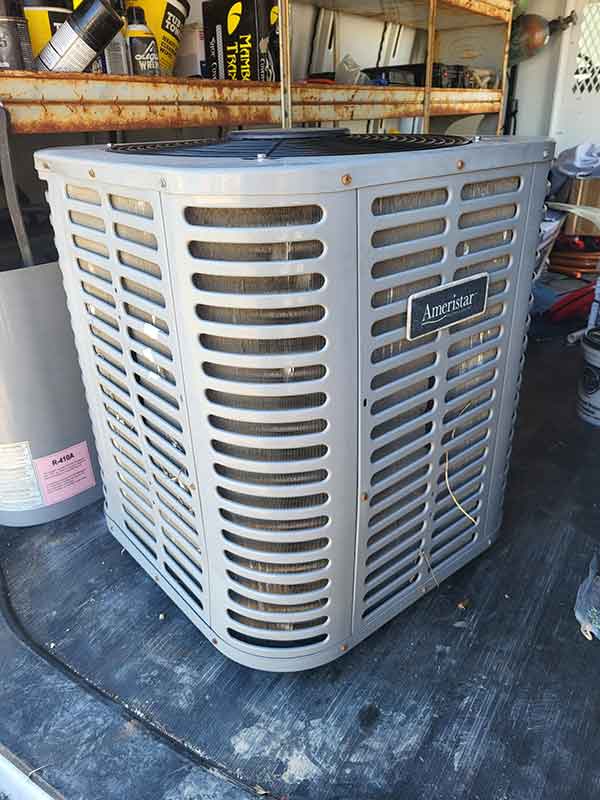
The condenser is the half of your air conditioner that lives outside in the Texas weather it exists to fight: hundred-degree summers, spring hail, lake humidity, mower debris, and the occasional dog. When the outdoor unit fails, cooling stops, and most of the ways it fails are exactly what our trucks stock parts for.
Air Conditioning · Burnet & Central Texas
The Machine That Works Outside in July
Spare a thought for the condenser’s job description: stand in direct Texas sun, inhale hundred-degree air, and somehow convince your house’s heat to leave into it, all day, for months. Every hard-working component is out there, the compressor, the condenser fan, the coil, the contactor and capacitor, the defrost and control boards on heat pumps, exposed to weather, yard chemistry, cottonwood snow, and whatever the string trimmer throws. Outdoor-unit failures are the majority of sudden no-cool calls, and their repair is the daily bread of this shop.
The failure census is familiar and mostly stockable. Capacitors and contactors lead, heat-cooked and cycle-worn. Condenser fan motors follow, when the top fan stops, head pressure spikes and the compressor overheats within minutes, making a dead fan an urgent call. Boards fail from heat and power events. Coils suffer hail bruising, fin damage, and the slow strangulation of grime. Refrigerant connections weep at service valves. And compressors, the expensive residents, usually die from the accumulated sins of everything above rather than from age. Diagnosis sorts the list with instruments; the truck stock converts most verdicts into same-visit fixes.
Outdoor units also take literal beatings here, hail seasons, falling limbs, flood silt in the bad years, and we handle the insurance-adjacent side properly: honest damage documentation with photographs, clear repair-versus-replace assessments backed by measurements, and claim paperwork written the way adjusters actually accept it, a skill sharpened during the 2025 Burnet flood recovery.
Local conditions shape this work more than most homeowners expect. Our summers stack week after week of hundred-degree afternoons, which means long compressor runtimes, drain lines moving gallons of condensate a day, and electrical components living near their limits from June through September. Lake humidity keeps the corrosion clock running even in mild months, and spring pollen packs filters fast enough to choke airflow in weeks. A tech who works this exact hundred miles every day builds all of that into the condenser repair call: what to check first, which parts fail early here, and which settings survive a Texas cooling season instead of merely a laboratory one.

Air Conditioning
Outdoor Unit Failures on the Board
A week of condenser calls looks like this list. Most entries end with cooling restored the same visit.
- Fan stopped, unit roaringA dead condenser fan sends pressures through the roof fast. Shut it off and call promptly; the compressor is on the clock.
- Hum-click, no startThe capacitor-contactor duet again, the outdoor unit’s favorite failure. Stocked, swapped, verified, cooled.
- Unit dead silentPower, boards, or controls: the diagnostic trail runs from the breaker panel to the contactor coil, and a good meter walks the whole length of it quickly.
- Hail-bruised coilFlattened fins strangle airflow after big storms. Fin combs restore what is restorable, and the honest damage report covers the rest.
- Tripping breakersA component drawing wrong current, or a breaker aging out. Diagnosed with respect, since guessing here costs compressors.
- Weeping refrigerant fittingsService valves and factory joints seep with age and vibration out here. Found with detectors, repaired properly, and recharged by weight, with the whole system verified after.
Not sure this is your problem?
Call anyway. We name the likely cause on the phone for free, and if it turns out to be something small you can handle yourself, we say exactly that and save you the visit.
Why Off Duty
Field Repairs, Done to Shop Standards
Outdoor repair work tempts shortcuts because nobody is watching: the universal part close enough to fit, the connection tightened by feel, the charge topped by intuition. Our field standard ignores the privacy. Replacement parts match specification, electrical work gets torqued and verified with the amp clamp, refrigerant work follows the full discipline, recover, repair, pressure-test, evacuate, weigh, and the repaired unit gets watched through complete cycles with readings recorded before the truck leaves. The condenser lives where the weather is; the repair standard cannot.
Protection advice comes free with the visit, because siting and habits genuinely matter out here: clearances kept clear of shrubs and fence lines, mower discharge aimed away from the fins, gentle off-season rinses, and hail-season awareness for the exposed units. None of it is complicated, and together it adds years. The condensers that reach fifteen around the lakes are almost always the ones that got both maintenance and a little respect.
Here is how the visit goes. A call to (512) 925-3090 reaches a real tech, not a call center, at any hour. On site, the diagnosis runs on instruments until the cause is certain, and then everything gets laid out in plain English: what failed, what fixes it, and exactly what it costs, before work begins. When the condenser repair work is done, it gets verified under load instead of switched on and waved at. If the pattern sounds simple, it is. It is also rare enough in this trade that people write reviews about it.
Money talk, handled the Burnet way: we say the price before the work, every time. The trip cost comes over the phone before we roll, the repair quote comes after diagnosis and before a single part goes in, and if the smart move is to not spend money at all, you will hear that too. Fair pricing shows up in every review we have because it is policy, not luck.
A word about waiting it out. Central Texas weather does not leave much grace period, and a system limping in May is a system down in July, when everyone else’s is down too and the schedule is at its tightest. The early call gets the easy appointment and, usually, the smaller invoice. The July call gets the queue. Texas rewards the prepared, and so does our schedule.
You will also know exactly who is in your house. This company runs on one standard because it mostly runs on one set of hands: Bryce, second-generation in the trade, with every credential on the about page and every kind of job photographed in the gallery. Small shop, short chain of accountability, no strangers in rotation.
This service runs wherever our trucks do: home base in Burnet, the Highland Lakes from Granite Shoals to Buchanan Dam, down the corridor to Round Rock and Austin, north to Killeen and Temple, and out to the sixteen-county edge at Waco, Boerne, and Fredericksburg. The whole map lives on the service areas page, with drive-time honesty built into every window we quote.
Diamond Contractor
Mitsubishi’s top ductless credential, earned with factory training.
Second Generation
Raised in the trade, ten years on the tools before the name went on a truck.
Warranty Authorized
JB and Mitsubishi warranty work: we file the claim, you skip the fight.
Open 24 Hours
A real person answers the phone at any hour, every day of the year.
The Standard
How This Work Gets Done Here
A job like this is a chain of small decisions nobody watches: which part, which setting, which clearance, which step gets skipped when the attic hits 130 degrees. Our answer to all of them is the same. Do it the way the book says, the way the second generation was taught, the way you would want it done if the address were your own. That means proven diagnosis before parts, correct materials over convenient ones, and procedure followed all the way through the parts of the job that never show.
It also means finishing properly. The system gets verified under working load, the readings get documented, the old components get shown on request, and you get an explanation in plain English rather than trade jargon. The price never moves between the quote and the invoice. If anything about the work ever needs a second look, the phone number on your receipt rings the person who did it. Simple system, kept promises, reviewed in public by the people it was kept to.
Condenser Repair Questions
Asked Before We Roll a Truck
Real questions from real Central Texas customers, answered the same way we answer them on the phone: straight.
My outdoor unit is running but the house is not cooling. Which part is it?
The honest phone answer: it narrows to a shortlist that instruments settle quickly on site. A running-but-useless condenser usually means the compressor is not actually pumping, capacitor or contactor trouble letting only the fan run, low refrigerant from a leak, or a coil too matted or damaged to reject heat. Each has a distinct gauge-and-meter signature. Describe what you see and hear, is the big line cold, is the top fan spinning, and triage sharpens before the truck rolls, which is how same-visit fixes happen.
The fan on top stopped spinning. How urgent is that?
Genuinely urgent, treat it like a small fire. The condenser fan is what carries heat away from the coil; without it, head pressure and compressor temperature climb within minutes, and the compressor, the expensive part, cooks while the cheap dead motor sits there. Switch the system off at the thermostat now, then call. Condenser fan motors and their capacitors are standard truck stock, so this is usually a same-visit repair, and the fast shutdown you did is what kept it from becoming a compressor conversation.
Hail hit my unit. Does it need to be replaced?
Sometimes, and often not, and the difference deserves honest assessment rather than storm-chaser theater. Hail typically flattens fin surfaces, which restricts airflow: moderate bruising combs out beautifully, restoring most function, while severe crushing across large areas, or punctured tubing, moves the conversation toward coil or unit replacement. We assess with measurements, comb and verify what is restorable, and document what is not in adjuster-ready form. After big Central Texas hail events, be wary of door-knockers condemning every unit on the street; second opinions here are cheap and calibrated.
Why does my outdoor unit keep tripping the breaker?
Something is drawing current it should not, and the candidate list runs from cheap to serious: a failing capacitor making the compressor struggle, a shorted fan motor, a compressor with winding trouble, a wiring fault, or occasionally a breaker itself aging in the Texas heat. The wrong response is resetting it repeatedly and hoping, each trip event is stress, and sustained overcurrent kills components. The right response is a meter on the circuit and components, which identifies the actual draw quickly. Leave it off after a second trip and call; this diagnosis genuinely cannot be done by guesswork.
Is it worth repairing an older condenser, or should I replace the system?
The fork depends on what failed and what refrigerant flows through it. Cheap electrical failures on any age unit: repair, nearly always. Major failures, compressor, coil, on units past ten to twelve years: the math starts favoring replacement, and on R-22 equipment it tilts hard, since the refrigerant alone makes every future repair punitive. Matching also matters: outdoor units pair with indoor coils, and mismatched half-replacements underperform chronically. You get both paths priced with five-year outlooks and a straight recommendation. The pattern by now is familiar: evidence, numbers, your call.
Related work: AC Fan Motor Repair · AC Compressor Repair · AC Repair · see real jobs in the gallery
Get the Outdoor Half Working
Most condenser failures are on the truck already. Describe the symptom and hear the plan. Prefer to write it out? Send the form and we call you back.
(512) 925-3090 Book a Free Look




