Coil Cleaning, the Off Duty Way.
Every system is two coils having a conversation: the indoor coil absorbing the house’s heat, the outdoor coil rejecting it, and grime on either end garbles the whole exchange, capacity falling, runtimes stretching, bills climbing while both units hum along sounding fine. Coil cleaning restores the conversation, both ends, measured.
Maintenance · Burnet & Central Texas
Two Coils, One Conversation
The system-level frame matters because the coils fail as a pair: a matted outdoor coil raises head pressure and running temperature, the compressor straining, capacity sagging exactly when summer demands it, while a filmed indoor coil chokes airflow and heat absorption together, splits narrowing, cycles stretching, the freeze-up road opening, and either end’s neglect taxes the other, the whole refrigeration conversation degrading until the house feels it as weakness no thermostat setting fixes. Heat pumps double the stakes, their coils swapping roles seasonally, the outdoor coil absorbing in winter what it rejects in summer, grime taxing both directions of the year, which is why coil condition anchors both seasonal exams here rather than either alone.
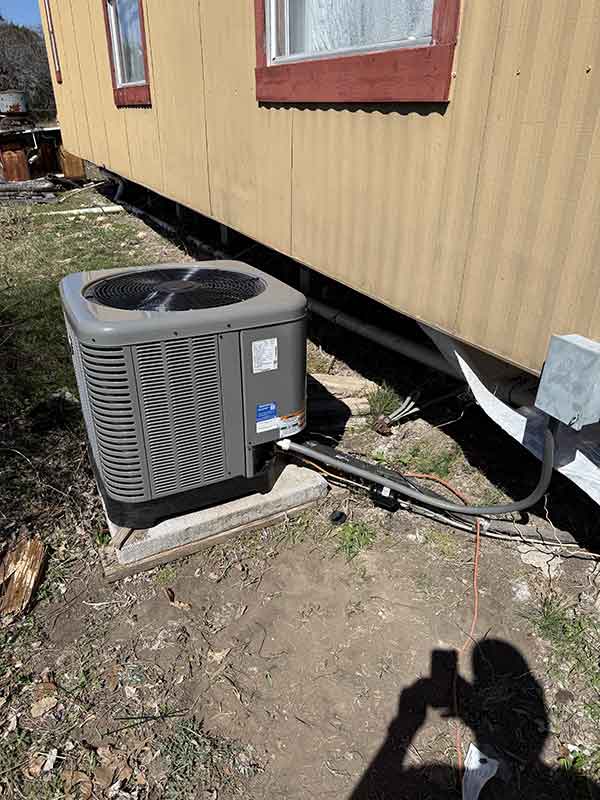
The cleaning craft differs by end and deserves its specifics: outdoor coils washed with fin-safe pressure and appropriate chemistry, top-down after clearing the cottonwood-and-pollen census, combs restoring bent fin territory, clearances re-established against the vegetation Texas grows around every condenser; indoor coils treated in place with no-rinse chemistry where buildup is light, deep-cleaned with proper access, pull-and-clean where years of film demand it, the blower-adjacent work protected and the drain pan serviced in the same opening, since coil film and pan biology are one ecosystem. Both ends close with the measurements that prove restoration, pressures eased, splits widened, the conversation audible again.
The page’s siblings handle the specialties, the AC-specific cleaning angle, mini-split head deep-cleans, condenser-focused service, while this one holds the whole-system frame: both coils, both seasons, one standard.
Everything about this service gets tuned to where you live. The same failure looks different in a lakefront place at Horseshoe Bay, a nineties ranch house outside Bertram, and a five-year-old build in Leander, because humidity exposure, duct design, and equipment grade differ at each address. Ten years of coil cleaning calls across Burnet County and the corridor mean we usually know the local pattern before the panel comes off: what the builder-grade systems in the new subdivisions do at year five, what lake air does to outdoor coils, and what a Hill Country attic does to anything asked to work inside it in August.


Maintenance
Coil Service, Both Ends
The whole-system cleaning scope, end by end and season by season.
Outdoor coil restored
Fin-safe wash, proper chemistry, the pollen-and-grime blanket lifted and heat rejection recovered.
Indoor coil served honestly
In-place treatment through deep-clean by condition, the film removed where the house’s heat gets absorbed.
Fins and clearances corrected
Combs on the bent territory, vegetation cleared, the airflow path both coils depend on re-opened.
Pan and drain in the same opening
The coil’s ecosystem partner cleared and treated while access exists, one visit, whole story.
Heat pump seasonality respected
Both coils cleaned knowing they swap duties, the winter absorption side readied alongside summer’s.
Restoration measured
Pressures and splits before and after, the recovered capacity shown rather than promised.
Same crew, any hour.
The name is the joke, the 24-hour line is not. If this problem cannot wait, call now and the on-call tech picks up, quotes the visit straight, and rolls a stocked truck.
Why Off Duty
The Cheapest Capacity You Can Buy
The economics stay the catalog’s cleanest: coil cleaning prices as routine service and returns capacity the system already owns, the restoration measurable same-visit, head pressures dropping, splits widening, cycles shortening, with the season-long dividends following, bills easing as the machine stops paying the grime tax, compressor stress relieved exactly where Texas summers apply it, the freeze-up and overheat failure roads both narrowing, and equipment life extending on the gentler duty, the maintained-coil fleet’s longevity being one of the file’s most consistent patterns. Against any equipment-side purchase delivering comparable capacity, the cleaning wins embarrassingly, which is why it anchors the seasonal exams and why the standalone service exists for every system between rhythms.
Central Texas writes the schedule: live oak pollen matting outdoor coils every spring, cottonwood snowing into June, lake humidity feeding indoor film year-round, dust and mowing seasons contributing steadily, the annual outdoor cleaning being the honest regional floor with heavy-exposure sites earning more, and the indoor coil inspected every visit, cleaned as condition demands rather than calendar ritual. The assessment reads your coils’ actual state in minutes, the fin-face and film evidence visible to a flashlight, and the cleaning follows need, which around here arrives reliably enough that the question is rarely whether, just when.
Here is how the visit goes. A call to (512) 925-3090 reaches a real tech, not a call center, at any hour. On site, the diagnosis runs on instruments until the cause is certain, and then everything gets laid out in plain English: what failed, what fixes it, and exactly what it costs, before work begins. When the coil cleaning work is done, it gets verified under load instead of switched on and waved at. If the pattern sounds simple, it is. It is also rare enough in this trade that people write reviews about it.
Money talk, handled the Burnet way: we say the price before the work, every time. The trip cost comes over the phone before we roll, the repair quote comes after diagnosis and before a single part goes in, and if the smart move is to not spend money at all, you will hear that too. Fair pricing shows up in every review we have because it is policy, not luck.
Worth saying plainly: this is not a problem that ages well. Systems compensate quietly right up until they cannot, and the failure that finally announces itself usually costs more than the one caught early would have. If your gut says something is off, that instinct is worth one free phone call. The worst case is we tell you everything sounds normal, which is a pretty good worst case.
Who does the work matters as much as what gets done. Off Duty is owner-operated: the person diagnosing your system is the person whose name carries the company, trained in the family trade and seasoned by ten years of Central Texas installs and repairs. You can see the standard in real job photos, and you will see it again in your own equipment closet.
Coverage is the same as everything else we do: Burnet at the center, about 100 miles in every direction. That means the lake towns, Marble Falls, Kingsland, Horseshoe Bay, the corridor through Leander, Cedar Park, and Georgetown, plus Austin, Bell County, and the outer ring through Waco, San Marcos, New Braunfels, Fredericksburg, and Boerne. The full sixteen-county list lives on the service areas page, and if you sit just past the edge of it, call anyway and get an honest answer.
Diamond Contractor
Mitsubishi’s top ductless credential, earned with factory training.
Second Generation
Raised in the trade, ten years on the tools before the name went on a truck.
Warranty Authorized
JB and Mitsubishi warranty work: we file the claim, you skip the fight.
Open 24 Hours
A real person answers the phone at any hour, every day of the year.
The Standard
How This Work Gets Done Here
A job like this is a chain of small decisions nobody watches: which part, which setting, which clearance, which step gets skipped when the attic hits 130 degrees. Our answer to all of them is the same. Do it the way the book says, the way the second generation was taught, the way you would want it done if the address were your own. That means proven diagnosis before parts, correct materials over convenient ones, and procedure followed all the way through the parts of the job that never show.
It also means finishing properly. The system gets verified under working load, the readings get documented, the old components get shown on request, and you get an explanation in plain English rather than trade jargon. The price never moves between the quote and the invoice. If anything about the work ever needs a second look, the phone number on your receipt rings the person who did it. Simple system, kept promises, reviewed in public by the people it was kept to.
Coil Cleaning Questions
Asked Before We Roll a Truck
Real questions from real Central Texas customers, answered the same way we answer them on the phone: straight.
How do I know if my coils need cleaning?
The evidence stack reads easily: visible gray felt on the outdoor coil’s fins where metal should show, cooling that weakened across a season rather than overnight, runtimes stretching and bills creeping without habit changes, the outdoor unit sounding strained on hot afternoons, and any musty note at the registers implicating the indoor coil’s film, with the confirmation taking a technician minutes, fin faces inspected, pressures and splits read against spec, the grime tax quantified on the spot. The seasonal exams check both coils as standing scope, and between rhythms the homeowner’s glance at the outdoor fins after pollen season answers most of the question, gray felt meaning yes.
Can I clean the coils myself with a garden hose?
The outdoor coil accepts careful help: power off at the disconnect, a gentle top-down rinse washing loose pollen and dust from the fins, no pressure washers ever, their spray flattening fins into permanent restriction, no aggressive angles driving debris deeper, and the honest limits stated, bonded grime and the coil’s inner faces need proper chemistry and access, the annual professional wash doing what rinses cannot. The indoor coil is the harder no: reaching it means opening the air handler around electronics and drains, wrong chemistry damages fins and fouls pans, and the deep-clean’s value lives exactly in the access and technique. Rinse the condenser gently between services; leave the surgery to the visit.
Why does my heat pump need coil cleaning more than my neighbor’s AC?
The double life: an AC’s outdoor coil works one season, rejecting summer heat, while your heat pump’s works both, rejecting in summer and absorbing in winter, its fin condition taxing cooling capacity in July and heating capacity in January, the grime bill collected year-round, and the indoor coil swaps roles identically, the whole machine’s conversation running through both surfaces every month it operates. The maintenance arithmetic follows the duty, both coils verified both seasonal visits, the outdoor wash timed after pollen season for summer and checked again before winter’s absorption duty, which is exactly the twice-yearly rhythm the heat pump pages keep insisting on, coil condition being much of the reason.
What is that dirty sock smell when my system runs?
The indoor coil’s signature confession: the film that grows on wet fin surfaces, Texas humidity’s standing project, hosts the biology whose metabolites smell exactly as described, worst at cycle starts when accumulated air moves first, the phenomenon common enough to carry its own industry name, and the fix is the coil deep-clean with appropriate chemistry, the film removed rather than perfumed, the drain pan treated as the ecosystem’s other half, with UV’s standing guard per its own page for the recurrence-prone. Masking sprays and register fresheners treat the announcement while the film thickens; the cleaning treats the source; and the smell’s absence afterward is binary, which is how coil work likes to be judged.
Is coil cleaning included in the maintenance plan?
Structurally: the seasonal exams inspect both coils every visit and include the standard cleaning scope, outdoor coils washed as the spring exam’s anchor item, indoor coils treated as condition warrants, the plan’s rhythm timed exactly to the regional grime calendar, pollen season preceding the spring visit by design, and the heavier interventions, deep pull-and-clean restorations on long-neglected indoor coils, quoted honestly as their own scope when a system arrives needing recovery rather than upkeep. Enrolled systems thus rarely reach the neglected state at all, their coils never more than a season from service, which is the plan’s whole prevention logic applied to the surfaces where capacity actually lives.
Related work: AC Coil Cleaning · Condenser Cleaning · HVAC Maintenance · see real jobs in the gallery
Restore the Conversation
Both coils, proper chemistry, and the recovered capacity measured before the truck leaves. Prefer to write it out? Send the form and we call you back.
(512) 925-3090 Book a Free Look