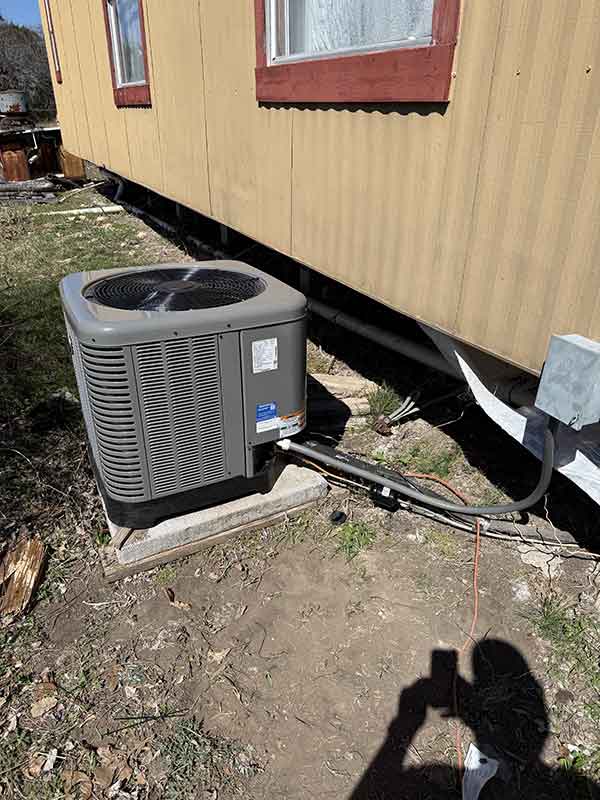
Commercial Package Units, Done Right.
The package unit is commercial Central Texas in one cabinet: everything, compressor, coils, blower, heat, boxed at the factory, set on a curb or pad, and serving the space through two duct openings. The format carries the corridor’s working square footage, and this page is its full lifecycle, installed, serviced, and replaced.
Commercial HVAC · Burnet & Central Texas
The Workhorse Box, Whole Lifecycle
The package format won commercial deployment on operational logic: factory-assembled refrigeration circuits arriving charged and tested, single-cabinet service access that never disturbs the space below, no field-built refrigerant connections to weep across the decades, straightforward replacement economics when the time comes, crane, curb, connections, done, and configuration breadth covering the fleet’s needs, gas-electric packages the incumbent standard, heat pump packages claiming share on operating math, cooling-only variants with electric heat where profiles fit, the corridor’s shops, restaurants, offices, and metal buildings running on exactly this census. The format’s honest trade-offs, efficiency ceilings below premium splits, duct-junction losses where installation slacks, get engineered against per the installation pages, sealed transitions and current-generation equipment closing most of the historic gap.
Lifecycle service is the format’s strength played correctly: installation per the rooftop and commercial doctrines, curbs engineered, transitions sealed, commissioning documented; maintenance at the package’s single-cabinet convenience, the whole system serviced at one location on the commercial rhythm, belts, electrical, coils, heat sections, economizers, the quarterly walk covering everything the box contains; repair with the census fluency the RTU pages describe, the package’s common failures stocked and same-visit serviceable; and replacement as the format’s cleanest operation, the crane-day choreography swapping decades of service in a choreographed morning, correction opportunities taken per the standing doctrine. The single-vendor lifecycle, one shop installing, maintaining, repairing, and replacing, is where package economics optimize, the file compounding across every phase.
Ground-mounted packages serve the corridor’s slab-and-pad applications identically, the format’s logic at grade, and the residential-scale cousins get their own page, this one holding the commercial fleet.
There is also a Hill Country layer to this work that out-of-area advice never accounts for. Limestone terrain around Burnet soaks up heat all day and radiates it back through the evening, so equipment here runs longer and later than the same unit would in a milder market. Humidity rolling off Buchanan, LBJ, and the rest of the Highland Lakes chain works on coils, drain lines, and cabinet steel every month of the year. Then winter shows up sideways: a sixty-degree afternoon collapsing into an overnight freeze finds every marginal component in the county at once. Doing package unit work correctly here means doing it for this climate, with parts choices and settings that respect what Central Texas actually does to machinery.

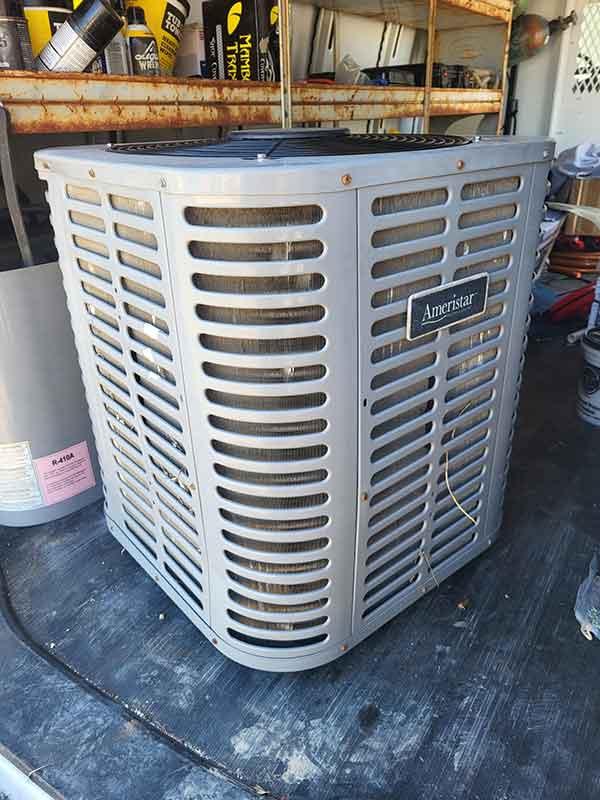
Commercial HVAC
Package Unit Services
The lifecycle, phase by phase, one format throughout.
Same crew, any hour.
The name is the joke, the 24-hour line is not. If this problem cannot wait, call now and the on-call tech picks up, quotes the visit straight, and rolls a stocked truck.
Why Off Duty
Why the Format Fits the Corridor
The package unit’s regional fit is structural: the corridor’s commercial stock, single-story retail, restaurant pads, office strips, metal buildings, shops, presents exactly the roof and pad real estate the format wants, space below too valuable or too occupied for equipment rooms, service access best kept outside the trade, and replacement cycles best measured in crane-mornings rather than renovation weeks; the Texas climate rewards the format’s serviceability, hard-run equipment needing its quarterly attention reachable without ladders through stockrooms; and the local service reality completes it, package fleets serviceable at pace by shops fluent in the census, parts common, downtime short, the format’s whole operational logic landing where the corridor lives. The premium-split alternatives earn their placements where efficiency ceilings and acoustic profiles justify, named honestly per the assessment; the workhorse box carries the rest.
The fleet-management view serves the multi-unit and multi-site accounts: package fleets tracked unit by unit in the file, ages, histories, efficiency generations, replacement planning sequenced across portfolios per condition and budget, the phased crane seasons that keep capital calendars sane, and the maintenance program holding the whole census per the commercial doctrine, which for the operators running a dozen boxes across three sites is the format’s economics realized, equipment as fleet, service as program, the roof’s whole population working while the business below does the same.
Every package unit work call runs the same four steps we run on everything. You call (512) 925-3090 and a real person answers, any hour of any day. We diagnose with gauges and meters, never with guesses, until the actual cause is proven. Then we explain it straight: the failure, the fix, and the exact price, in plain English, before any work starts. Finally we do the work to spec and verify it under load before the truck leaves. Temperatures checked, pressures checked, paperwork handled. It is the same process that earned the reviews on our reviews page, and it does not change based on the size of the job.
Money talk, handled the Burnet way: we say the price before the work, every time. The trip cost comes over the phone before we roll, the repair quote comes after diagnosis and before a single part goes in, and if the smart move is to not spend money at all, you will hear that too. Fair pricing shows up in every review we have because it is policy, not luck.
One honest note about timing. Problems in this category rarely improve on their own, and the price of waiting is usually a bigger bill: the weak part takes a healthy one with it, the small leak becomes a stain on a ceiling, the strange noise becomes a seized motor. Calling early is almost always the cheaper version of the same repair, and the phone consult costs nothing: describe what you are seeing and we will tell you honestly whether it can wait.
As for who shows up: this is an owner-operated shop, so the tech at your door is usually Bryce himself, a second-generation HVAC man with ten years on the tools, licensed, insured, and photographed doing exactly this kind of work in the job gallery. No commissioned salesman rides along, and nobody at this company earns a bonus for talking you into more than you need.
We run this work all over the map: Burnet and the Highland Lakes first, then the whole hundred-mile circle, Marble Falls, Georgetown, Round Rock, Austin, Killeen, and out to Waco and Boerne. The full sixteen-county roster is on the service areas page. Wherever you sit on it, the same truck standard applies: the same tech, the same instruments, the same price-before-work rule, whether the drive took ten minutes or ninety. Distance changes the arrival window, never the workmanship.
Diamond Contractor
Mitsubishi’s top ductless credential, earned with factory training.
Second Generation
Raised in the trade, ten years on the tools before the name went on a truck.
Warranty Authorized
JB and Mitsubishi warranty work: we file the claim, you skip the fight.
Open 24 Hours
A real person answers the phone at any hour, every day of the year.
The Standard
How This Work Gets Done Here
Every trade job carries an invisible line item: the standard it was done to. On package unit work work, ours reads like this. The diagnosis is proven with instruments, because guessing is expensive and it is your money on the table. The parts that go in are parts we would put in our own house, matched to spec instead of whatever was cheapest on the shelf. The workmanship follows the manufacturer’s book and the Texas code book both, because shortcuts hide for exactly one season and then bill you with interest.
When the work is finished, it gets tested the way it will actually be used: under load, at temperature, with the readings written down. Then the area gets left the way we found it or cleaner, the old parts get shown to you on request, and the invoice matches the number you already heard. If anything acts up afterward, you call the same number and the same person answers. That is the entire warranty conversation most customers ever need, and it is why the reviews keep saying the same three things: honest, fair, showed up.
Commercial Package Units Questions
Asked Before We Roll a Truck
Real questions from real Central Texas customers, answered the same way we answer them on the phone: straight.
What is the difference between a package unit and a rooftop unit?
Mostly vocabulary: the RTU is a package unit on a roof, the package format, everything in one factory cabinet, being the technology, and rooftop being its most common commercial address, with ground-mounted packages serving pad and slab applications identically, the corridor running both placements per building reality. The meaningful distinctions live elsewhere, package versus split architecture, the factory-sealed box against field-connected components, per the installation pages’ comparison, and configuration within the format, gas-electric, heat pump, cooling-electric, per the operating math. If your building runs a big box outside serving ducts inside, it is this page’s subject whatever the placement, and the lifecycle doctrine applies identically.
How long do commercial package units last?
Fifteen-to-twenty rooftop years for the maintained fleet, the format’s factory-sealed circuits and single-cabinet service supporting the range’s upper end where the quarterly rhythm holds, duty cycles and exposure setting position within it, kitchen-serving units aging faster than office duty, coastal-pattern grime and cottonwood exposure taxing coils on their own schedules, and the unmaintained fleet running years shorter across the same census, the maintenance delta being the format’s largest controllable variable, per the standing arithmetic. The file reads each unit’s trajectory honestly, replacement conversations opening on evidence per the crane-day doctrine, and the fleet’s ages managed as the portfolio planning the format’s clean replacements enable.
Are package units efficient enough, or should we go with something premium?
The current generation closed most of the historic gap: package efficiency tiers now reach ratings that make the format’s operational advantages decisive across most corridor profiles, the remaining premium-split margins mattering where runtimes are extreme or certification targets specify, and installation quality governing realized efficiency more than format, the sealed-transition discipline capturing what junction losses historically squandered, per the installation doctrine. The assessment runs your building’s arithmetic honestly, format against format at your hours and rates, the premium alternatives named where they genuinely earn placement, and the workhorse verdict, which most corridor buildings receive, arriving with its numbers rather than as default, per the house habit of showing work.
Can you service the package unit our building already has?
The commercial fleet’s standard entry: existing packages absorbed into service regardless of installer, the baseline visit reading the unit complete, model, serial, condition, warranty standing, evident history, founding the file, inherited issues ranked honestly, and the maintenance rhythm proceeding from there per the commercial program, repairs served from the census fluency meanwhile, the box’s origin mattering for paperwork and nothing else. Orphaned units, installer-vanished, history-unknown, are the corridor norm rather than exception, the format’s standardization making absorption straightforward, and the first quarterly walk typically surfacing the deferred census, drift documented, priorities ranked, the recovery path priced without drama, per the standing practice on every inherited fleet.
Gas-electric or heat pump package for our replacement?
The current arithmetic increasingly answers heat pump, run honestly per building: heating at heat pump efficiency through corridor winters, gas infrastructure and combustion maintenance avoided, demand behavior engineered per the commercial heat pump page, against the gas-electric incumbent’s familiarity and its genuine remaining cases, heavy continuous heating, amortized gas infrastructure, certain kitchen profiles, the proposal modeling both successors at your rates and hours with the verdict following the numbers. Replacement is the reconsideration moment per the correction doctrine, succession-by-default being the habit the modeling replaces, and the corridor’s recent crane days document the shift, the electric configuration claiming placements the incumbent held for decades, building by building, on arithmetic.
The Workhorse, Fully Served
Installed, maintained, repaired, and replaced, one file across the whole lifecycle. Prefer to write it out? Send the form and we call you back.
(512) 925-3090 Book a Free Look