
Does a Heat Pump Make Sense in the Hill Country?
Somebody asks us this every week, usually standing next to a system that is due for replacement and a stack of opinions from the internet. The short answer is: for most Hill Country homes, yes, and more clearly yes every year the equipment improves. The long answer is worth ten minutes, because the honest case has real numbers in it and a couple of genuine caveats.
We install and service heat pumps across all sixteen counties we cover, we carry the Mitsubishi Diamond Contractor credential for the ductless side of the family, and we have no commission structure pushing us toward any answer. So here is the straight version, Central Texas edition.
One promise before we start: this is climate math, your climate specifically, and no national article can run it for you. Ours is a cooling-dominated corner of the world with short, sharp winters, and that exact profile is what the technology happens to be best at.
The Short Version
- A heat pump is an AC that runs both directions, and we live in AC country.
- Central Texas winters sit squarely inside modern heat pump comfort range.
- One machine doing both jobs means one system to maintain, one to replace.
- Electric resistance strip heat is the bill-doubling trap; sizing right avoids it.
- The dual-fuel option keeps a backup burner for the rare deep freeze.
- The right answer comes from a load calculation, never from a brochure.
What a Heat Pump Actually Is, Minus the Mystery
A heat pump is your air conditioner with a reverse gear. In summer it moves heat out of your house exactly like the AC you already own. In winter a valve flips and it runs the same trick backwards, pulling heat out of the outdoor air, yes, even chilly air holds heat, and moving it inside. Same compressor, same refrigerant loop, same physics, both directions.
That is the whole secret, and it explains the efficiency story. A machine that moves heat can deliver two to three units of warmth for every unit of electricity it buys, because moving heat is cheaper than making it. Old-school electric heat makes heat from scratch at exactly one-to-one, which is why the strip-heat bills you have heard horror stories about are real.
It also explains why the technology fits here. A heat pump is at its best in a climate that needs serious cooling and moderate heating, which is a nearly perfect description of Burnet County. We are not asking the machine to fight a Minnesota January. We are asking it to handle a Texas one, and that is a fair fight it wins comfortably.
The Hill Country Winter, by the Numbers
Our winters are short and mostly mild: plenty of fifty-degree days, cold snaps that visit for a few days at a time, and a genuinely hard freeze every few years. Modern heat pumps hold full or near-full capacity well below freezing, and the better cold-climate models keep meaningful output down into the teens. For the overwhelming majority of Hill Country winter hours, a right-sized heat pump does not even breathe hard.
The old reputation, heat pumps blow lukewarm air and give up when it freezes, was earned by equipment from twenty-plus years ago and kept alive by installers who oversized the strips and undersized the thinking. The current generation of variable-speed machines is a different species: warmer supply air, steadier output, and far smarter defrost behavior than the units that built the bad name.
The honest caveat is the deep freeze. When the county drops into single digits, as it memorably has, a standard heat pump leans on its backup heat, and how that backup was designed decides whether the week is comfortable, merely expensive, or both. That design conversation is where a good installer earns their fee, and it happens before anything is sold.
The Strip-Heat Trap, Explained Once
Every ducted heat pump carries electric resistance strips as backup, and the strips are where bad installs go to hide. Strips make heat at one-to-one efficiency, which means they cost roughly triple what the heat pump costs to deliver the same warmth. A properly designed system touches them rarely: during defrost, during the deepest cold, during recovery from a big setback. A badly designed one leans on them constantly, and the owner finds out in February, by mail.
The classic failure is sizing. An undersized heat pump runs out of capacity early and calls the strips in at forty degrees. An oversized one short-cycles and never runs the efficient long cycles the technology wants. Both mistakes trace to skipping the load calculation and sizing by square footage or by whatever the old unit was, which is how the boom era did nearly everything.
The other failure is control setup. Thermostats that stage the strips too eagerly, setback schedules that trigger recovery surges every morning, sensors configured wrong on install day and never revisited. We audit strip behavior on every heat pump we service because the fix is usually settings, and settings are the cheapest efficiency work in the entire trade. If your February bill has ever made you question the whole technology, the audit is where the answer lives, and it is usually a happier answer than a new system.
What the One-Machine Life Is Like
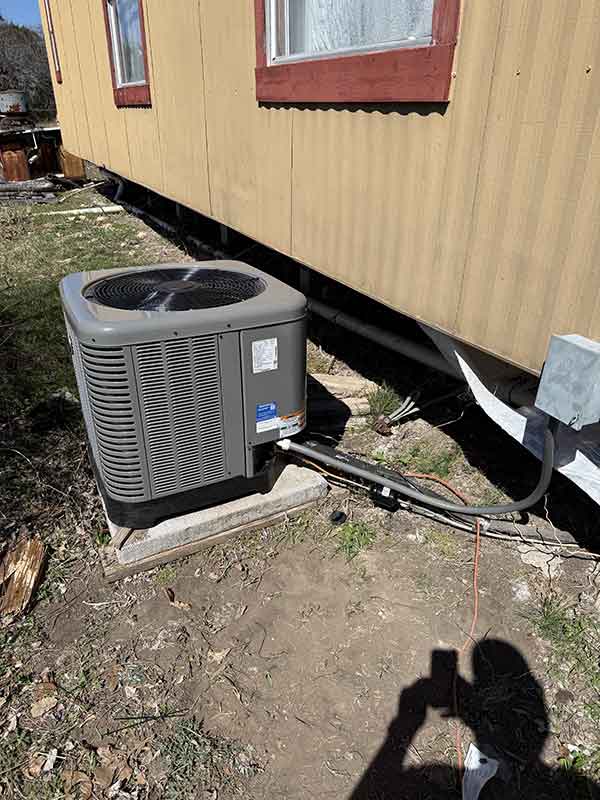
Owning one machine instead of two changes the ownership math quietly and permanently. One system to maintain on the two-visit rhythm instead of separate cooling and heating equipment. One system to repair, with one set of parts. One replacement event on the calendar instead of two, staggered years apart the way separate systems always seem to arrange it.
Comfort-wise, the modern variable-speed versions run long, low, and quiet, which suits Texas houses beautifully: steadier temperatures, dramatically better humidity control in our damp lake-country summers, and none of the blast-and-coast cycling of single-stage equipment. Most owners notice the humidity improvement before they notice the bills.
The bills do come around, though. Against a house heating with electric resistance or aging equipment, the winter savings are usually obvious in the first season. Against efficient existing equipment the gap is narrower and we will say so honestly, because the technology deserves honest advocates, and your budget deserves the real comparison, not the brochure one. The point of the technology is the arithmetic, and arithmetic does not need exaggerating.
Dual-Fuel, Ductless, and the Menu Nobody Explains
The heat pump family has options worth knowing. A dual-fuel setup pairs the heat pump with a fuel-burning backup instead of strips: the heat pump carries the mild ninety percent of winter, the burner takes over for the deep cold where it shines. For propane households in the ranch country, this is often the sweetest spot, mild-weather efficiency without deep-freeze anxiety.
The ductless branch skips ductwork entirely: wall units serving individual rooms with individual control, at some of the best efficiency numbers in the industry. For the Hill Country stock that never had ducts, stone originals, cabin conversions, garage apartments, casitas, ductless heat pumps are usually the whole answer, and our Diamond credential backs those installs with twelve-year warranties.
And cold-climate models exist for the belt-and-suspenders buyer: rated to hold capacity far below anything our county sees more than a night or two a decade. They cost more, and for some households, especially all-electric ones that remember the last big freeze, the sleep-at-night margin is worth every dollar. That is a values call, and it is yours.
How to Actually Decide
The decision is arithmetic, and it starts with a Manual J load calculation on your actual house: orientation, glass, insulation, infiltration, the real numbers. From the load comes the sizing, from the sizing comes honest performance and cost projections, and from those comes a recommendation you can interrogate. Any proposal that skips the load calculation is a guess wearing a price tag.
Your fuel situation matters too. All-electric households have the simplest case, the heat pump nearly always wins. Propane households run a real comparison between dual-fuel and full-electric, and current propane prices usually make that math interesting. Households with existing solar tilt further toward the heat pump, since self-generated electricity makes moved heat nearly free.
What we bring is the measurement, the menu, and a no-commission structure that lets the answer be whatever your house says it is. Some assessments end with a heat pump proposal. Some end with keep your current system another five years, and here is the maintenance that gets you there. Both are wins in our book, because the file is long, the county talks, and honest answers are the only advertising that compounds.
Quick Answers
Will a heat pump keep up when it really freezes here?
A right-sized modern unit handles the standard Hill Country winter without drama, holding strong capacity well below freezing. In a genuine deep freeze, single digits, ice on the roads for days, a standard system leans on its backup heat by design, and how comfortable and affordable that week is depends on how the backup was engineered. Dual-fuel setups and cold-climate models both exist for households that want extra margin. The load calculation and an honest conversation about your freeze tolerance settle it before anything gets installed.
Is it true heat pumps make your electric bill explode?
Badly installed ones can, and that is the strip-heat trap: undersized equipment or sloppy controls leaning on one-to-one resistance heat all winter. A properly sized system with properly staged controls touches the strips rarely, and delivers two to three units of heat per unit of electricity the rest of the time, which is why correctly installed heat pumps usually cut winter bills against resistance heat, often dramatically. If you have a heat pump and a scary February bill, the strip audit is a service visit, and settings fixes are cheap.
Should I wait for my current AC to die before switching?
Usually the replacement moment is the natural switch point, since a heat pump replaces the whole outdoor unit anyway and the incremental cost is smallest right then. Running healthy existing equipment into the ground first is legitimate math and we will say so. The exception is a failing AC paired with expensive or aging heat: replacing both sides with one heat pump at once often beats fixing them separately. Bring us the ages and repair history and the arithmetic takes ten minutes.
What maintenance does a heat pump need compared to an AC?
The same two-visit rhythm, with a winter twist: because the machine works year-round instead of resting all winter, the heating-season check matters as much as the cooling one. Spring service covers the cooling side, coil, charge, drains, electrical. Fall service proves the heating mode, verifies defrost behavior, and audits the backup strips so they only run when they should. Year-round duty means the rhythm earns its keep twice over, and skipped maintenance shows up faster than it does on a summer-only machine.
Run the Real Numbers on Your House.
One load calculation and an honest menu, heat pump, dual-fuel, ductless, or keep what you have. No commissions behind the answer, just the arithmetic, the instruments, and a second-generation shop that has to live beside its recommendations for years. The assessment books around your schedule and the findings come in plain English with every number shown.
Call (512) 925-3090or book a free lookWant proof first? The gallery is all real jobs and the reviews are all real neighbors.





