What the 2025 Flood Taught Us About HVAC
In July 2025, the flood came through Burnet County and rearranged a lot of lives, including some belonging to people we have known our whole lives. This company spent that stretch doing what everybody here did: helping, alongside the Samaritan’s Purse crews and half the county, with the water still in some of the houses.
A year on, we carry two kinds of lessons from it. The human kind, about what this county does when a neighbor’s house fills with water. And the trade kind, about what flooding actually does to heating and cooling systems, what can be saved, what cannot, and what the honest calls look like when a family is staring at a wet house and a hard budget.
This article is the trade lessons, written down so the next flooded family, here or anywhere, walks in knowing more than we did.
The Short Version
- Floodwater and electrical equipment are done with each other; safety decides first.
- Submerged outdoor units and air handlers are usually honest write-offs. Ducts vary.
- Some flood-touched equipment can be saved; the assessment has to be evidence, not hope.
- Insurance outcomes track documentation quality. Photograph everything, immediately.
- The scam wave follows the water. Slow down, get second opinions, verify licenses.
- Elevation and placement decisions made at rebuild time are cheap flood insurance.
First Rule: Nothing Gets Energized Until It Is Cleared
The most dangerous week for a flooded house is the week the water leaves. Everything looks almost normal, the power is back on the street, and the temptation is enormous to flip the breakers and see what still works. With HVAC equipment, do not. Submerged electrical components, contactors, capacitors, control boards, motor windings, can fail energetically when powered, and a system that seems to run can be quietly cooking itself toward a fire.
The safe sequence is boring and non-negotiable: HVAC breakers stay off until a technician has opened the equipment, inspected what the water reached, and cleared each component. That inspection is fast and cheap against every alternative. We ran dozens of them in the weeks after the flood, and the houses that waited for clearance had uniformly better outcomes than the ones that experimented.
The same discipline applies to gas-fired equipment, water heaters included: submerged valves and controls are replacement items, full stop, per every manufacturer bulletin ever written on the subject. The components are cheap relative to what a compromised gas valve can do. There is no salvage conversation on that particular list. The bulletins are unanimous, the physics is unforgiving, and we treat that category as settled.
What Water Actually Ruins, Component by Component
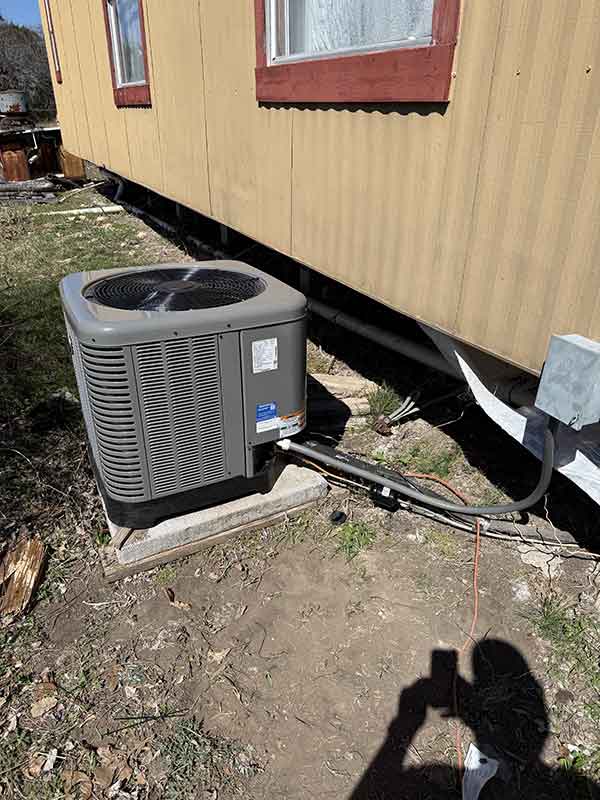
Outdoor condensing units that sat submerged are usually honest losses. The compressor may survive, it is sealed, but the contactor, capacitor, fan motor, control wiring, and increasingly the electronics of modern units all drank floodwater, which is never clean water. Silt and contaminants stay behind in every connection. Insurers and manufacturers both generally treat submerged condensers as replacements, and mostly they are right.
Indoor air handlers tell a similar story when the water reached them: motors, boards, and insulation that soaked are finished, and wet fiberglass insulation inside the cabinet becomes a mold farm you cannot fully clean. The line between splashed and submerged matters enormously here, which is exactly what the component-level inspection establishes, honestly, with a flashlight and a meter rather than a guess.
Ductwork is the sleeper issue. Metal duct that took water can sometimes be cleaned, dried, and sanitized properly. Flex duct and duct board that got wet are done, the inner liner and insulation hold contamination forever, and blowing conditioned air through flood-touched flex for years afterward is the health mistake nobody should make. Wet ducts under a slab or in a flooded crawlspace deserve particular scrutiny, and crawlspace duct runs took the worst of it in 2025.
The Save-It-or-Scrap-It Assessment
The honest assessment runs component by component, with the flood line as the star witness. Where did the water actually reach, on this equipment, in this house? Everything below the line gets opened and inspected. Everything above it gets verified rather than assumed fine, because humidity and splash reach higher than standing water. The verdicts get written down, per component, with photos.
Some verdicts are genuinely good news. Equipment mounted high enough, attic air handlers, units on elevated pads, often cleared entirely. Systems where water reached only the bottom inch of a cabinet sometimes needed a contactor and a cleaning rather than a funeral. We saved real money for real families with exactly those inspections, and every save was evidence-based, never wishful.
And some verdicts are hard, delivered straight: this system drank the flood and putting money into it is spending good money on a compromised machine. Families deserve that sentence plainly, with the reasoning shown, because the alternative, a resurrection repair that fails in fourteen months, after the insurance window closed, is the crueler outcome. We would rather be the bearer of one honest hard verdict than the author of that second disaster.

The Insurance Game, Played Straight
Flood insurance outcomes track documentation, and the documentation window is early. Photograph everything before cleanup where safely possible: water lines on equipment, silt in cabinets, the flood line on walls near the mechanical room. Keep every receipt. Get the professional assessment in writing, per component, because a written condemnation from a licensed contractor is what turns an adjuster conversation from argument into paperwork.
Know the difference between your policies. Homeowners insurance generally excludes rising water; flood policies cover it with their own rules about equipment, depreciation, and replacement. We are not adjusters and do not pretend to be, but our assessment reports are written knowing an adjuster will read them: findings, flood line, component verdicts, photos, replacement scope. That document does real work on a claim.
One more insurance note from the trenches: replacement quotes matter, and inflated ones hurt everyone. We quote flood replacements the same way we quote everything, real scope, real numbers, stated before work, because a clean, defensible quote moves through a claim faster than a padded one, and the family standing in the wet house needs speed more than anyone needs padding.
The Second Flood Is the Scam Wave
Every disaster brings it: out-of-town trucks, cash-up-front offers, condemnations of equipment that was never touched by water, and pressure to sign today because the price goes up tomorrow. The playbook works because flooded families are exhausted and the need is urgent. We watched it work on neighbors in 2025, and it made us angrier than the water did.
The defenses are simple and they hold. Verify the license, Texas makes it easy to look up. Get the assessment in writing, component by component, and get a second opinion on any big condemnation, ours or anyone’s. Be suspicious of any contractor who arrived with the news cycle and cannot name a local reference. And never pay in full up front for work not yet done, disaster or no disaster.
The local-shop advantage is never clearer than in a disaster’s aftermath: we were here before the water, we will be here after the warranty, and everything we condemned had a reason attached that a second opinion could check. That is not marketing. That is just what accountability looks like when the county is watching, which around here it always is.
Building Back Smarter
Rebuild time is the one moment flood lessons are cheap to apply. Equipment elevation leads the list: condensers on raised pads above the known water line, air handlers moved up out of flood-prone crawlspaces and closets where the structure allows, electrical disconnects and connections mounted high. None of this costs much during a replacement. All of it changes the next flood from a total loss to an inspection.
Placement thinking extends to the small stuff: float switches and pans that catch ordinary failures, condensate routing that survives wet seasons, and duct paths chosen so the next high-water event touches as little of the delivery system as possible. Houses in the river and creek corridors deserve this thinking as standard practice, and after 2025, around here, it finally is. Ask anyone who rebuilt that summer: the elevation conversation now happens on every replacement in the corridor, and it should have been happening all along.
The flood taught this county plenty about itself, most of it good. What it taught this shop lives in how we assess, document, and rebuild now, and in the standing offer this article ends on: if your house ever takes water, call before you energize anything. The inspection is fast, the verdicts are honest, and we have done this before, closer to home than we ever wanted to, and the county we did it alongside is the same one reading this now.
Quick Answers
Our AC ran fine after the water went down. Are we in the clear?
Running is sadly weak evidence. Flood-touched electrical components can operate for weeks while corrosion from silt and contaminated water works on connections, windings, and boards, and the delayed failures land after insurance windows close. If water reached any part of the system, the component-level inspection is cheap insurance: everything below the flood line opened and cleared, verdicts in writing while the claim is still open. Fine-for-now and actually-fine are different findings, and only the inspection tells them apart.
The insurance adjuster wants proof our system was flood-damaged. What do you provide?
A written component-level assessment built for exactly that reader: the flood line documented, each affected component inspected and photographed, per-component verdicts with the reasoning stated, and a replacement scope with real numbers. Adjusters move fastest on claims where a licensed contractor has done their thinking for them in a defensible document, and that is precisely what the report is. Bring us in early, before cleanup erases the evidence if safety allows, and the claim gets its best possible paperwork.
Can flooded ductwork really make us sick later?
Wet flex duct and duct board are the honest concern: their liners and insulation absorb contaminated water and cannot be genuinely sanitized, and the system then breathes across that contamination every runtime hour for years. Metal duct that took water can often be properly cleaned, dried, and sanitized, and we assess it case by case. The flood-touched flex gets condemned on our reports every time, because trading a known contamination for a duct replacement is one of the clearest health calls this trade ever gets to make.
What should we do in the first 48 hours after water reaches our equipment?
Three things, in order. Keep the HVAC breakers off and leave them off, no test runs, no experiments, until a technician clears the equipment. Photograph everything: water lines on the equipment and walls, silt, the whole mechanical area, before any cleanup touches it. Then call for the component-level inspection and start the insurance conversation with that documentation in hand. Families who run those three steps have consistently better outcomes, on safety and on claims, than families who start by flipping breakers and hauling evidence to the curb.
If the Water Ever Comes, Call Before You Flip a Breaker.
The post-flood inspection is fast, the verdicts are honest and written down, and the documentation is built for your insurance claim. We learned these lessons the hard way, alongside our own neighbors, in July 2025. They are yours now, and so is the number, at any hour, the same as it was that July.
Call (512) 925-3090or book a free lookWant proof first? The gallery is all real jobs and the reviews are all real neighbors.