
It Needs a Charge Every Summer. It Leaks Every Summer.
A familiar story on Meadowlakes service calls goes like this. The system cooled fine for years, then one June it started running long and the house never quite got cold. Someone added refrigerant, it worked again, and the next June the same thing happened.
By the third summer the recharge feels like routine upkeep. It is not. A sealed refrigerant system does not use up its charge. If it keeps needing more, it is leaking somewhere, and every top-off buys a few months while the leak keeps working.
Refrigerant Does Not Get Used Up
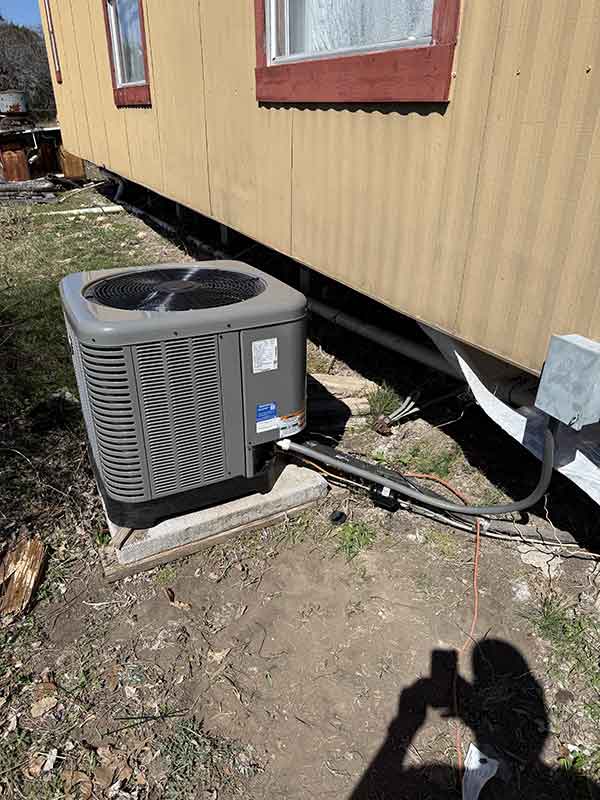
Refrigerant is nothing like oil in a car or propane in a tank. It circulates in a sealed loop between the indoor coil and the outdoor unit, changing from liquid to vapor and back, carrying heat out of the house. A healthy system holds the same charge for its whole working life.
When charge goes missing, it went out through a hole. That hole might be pinhole-sized and lose a little each month, which is why the trouble seems to arrive with the first real heat: the system finally runs hard enough for the shortage to show.
Topping off feels like a repair because the house cools again. All it really does is refill a leaking container. The refrigerant keeps escaping into the air, and the low-charge stretch before each recharge strains the compressor, which is the heart of the outdoor unit. Running it short of charge, summer after summer, is one of the most reliable ways to wear one out early.
What Low Charge Looks Like From Inside
You do not need gauges to suspect a leak. The early signs show up in how the house behaves. The system runs longer than it used to on the same kind of day. Air from the registers feels cool but not cold. The house drifts a few degrees above the setting on the hottest afternoons.
Farther along, ice gives it away. A coil short of refrigerant runs colder than it should, and moisture freezes on it instead of draining. You might see frost on the larger copper line at the outdoor unit, or water around the air handler as ice melts after the system shuts off. Some homeowners hear a faint hiss or bubbling near the coil.
If you find ice, switch cooling off at the thermostat and set the fan to run so the coil can thaw. Running a frozen coil sends liquid refrigerant back toward a compressor that was designed to receive vapor, and that is how a leak call turns into a compressor call.
Finding the Leak Instead of Guessing
A leak gets found with instruments, never assumptions. An electronic leak detector sniffs for refrigerant around the coil, the joints and the valves. Bubble solution brushed onto a suspect fitting shows a leak by foaming. When a leak is too small for either method, the refrigerant gets recovered, the system gets filled with dry nitrogen at pressure, and the gauges get watched. A pressure drop proves a leak exists, and the nitrogen pushes through the hole hard enough to locate it.
The usual suspects are familiar. Indoor evaporator coils corrode and develop pinholes. Braze joints crack after years of vibration. Service valves leak at their caps or cores. Line sets rub through where they pass over a sharp edge or a wall penetration. Outdoor coils corrode too, and humid air off the lake speeds that along.
Shade plays a quiet part outside. The established trees along the streets keep condensers running cooler, which helps, but they also drop leaves and debris into the fins. Wet debris packed against an outdoor coil holds moisture on the metal for days, and that is where corrosion gets a head start. Keeping the area around the unit clear is one of the few leak defenses a homeowner controls.
Our Meadowlakes refrigerant leak repair page goes through how we test, and the main refrigerant leak repair page covers the methods in more depth.
The Repair, Done Properly
Once the leak is found, the repair depends on where it sits. A leaking valve core gets replaced. A cracked joint gets cut out and rebrazed. A short section of rubbed line set gets repaired and protected so it cannot rub again. A coil riddled with corrosion pinholes usually has to be replaced, because patching one hole tends to uncover the next.
How the work gets done matters as much as what gets done. Brazing happens with nitrogen flowing through the lines, which keeps scale from forming inside the copper and clogging the system later. After the repair, the system gets pulled into a deep vacuum to remove air and moisture, and we confirm the vacuum holds before any refrigerant goes back in.
Finally the charge gets weighed in to the manufacturer’s spec instead of added until the gauges look about right. Then the system runs under load and the readings get written down, so the next visit has something to compare against.
When the Leak Changes the Plan
Not every leak is worth fixing. On a newer system with one failed joint, repair is usually the clear answer. On an older one, the leak is a good moment to step back and look at the whole picture.
A few questions settle it. How old is the system? Is the leak in an evaporator coil that has already been patched once? Does the unit run on R-22, a refrigerant whose production has ended? Are other repairs piling up? A leaking coil on an aging R-22 system usually tips the decision toward replacement, because the repair is substantial and the rest of the equipment is heading the same way.
With so much of the local housing already past its first system or two, we have this talk a lot. If replacement makes more sense, our AC replacement page for Meadowlakes explains how we size and stage a changeout. Either way, you get the leak location, the options and the reasoning before anything is decided. For the rest of our work in town, visit the Meadowlakes page.
Can a stop-leak additive seal the hole?
We do not recommend it. Sealant additives are designed to harden where they meet air and moisture, and inside a refrigeration system that can happen in valves, metering devices and the compressor as easily as at the leak. They also contaminate the refrigerant, which complicates every future repair. Finding the leak and fixing it properly avoids a much bigger problem down the road.
Why did the leak show up right after a maintenance visit?
Usually the maintenance found it rather than caused it. A thorough visit checks pressures and temperatures, and a low reading is often the first evidence of a slow leak that was already there. Occasionally a service valve cap left loose or a worn valve core is to blame, which is quick to check. Either way, ask the tech to show you the readings.
Should I keep using the system until the repair visit?
If it still cools and nothing is frozen, light use is usually fine. Raise the thermostat a few degrees so it is not running nonstop, change a dirty filter, and keep an eye on the copper lines outside. If frost appears or the air turns warm, stop cooling, let the fan run to melt the ice, and call.
A system that needs refrigerant every summer is sending the same message every summer. Find the hole, fix it right, and the June call stops being a ritual. On an older unit, let the leak be the signal to plan the next system on your own schedule.
Find the Leak Before the Next Top-Off. Ask for a Free Look.
We locate the leak with instruments, show you exactly where it is, and lay out repair or replacement with the reasons for each.
Call (512) 925-3090or request a call back hereLook through the gallery for recent repairs. If the coil is frozen solid tonight, call anyway, because the 24-hour line is answered by someone who knows refrigeration.