
Hybrid Heating System Installation Without the Runaround.
A hybrid system, heat pump for the mild months, gas furnace for the freezes, is Central Texas heating optimized: electric efficiency for ninety percent of winter, combustion muscle for the nights that bite. The installation lives or dies on one engineered detail, the changeover, and that detail is exactly what we obsess over.
Installation · Burnet & Central Texas
Two Heat Sources, Engineered as One
The hybrid idea exploits a Texas-shaped opportunity: our winters are mostly mild hours where a heat pump moves heat for a third of combustion’s cost, punctuated by hard snaps where a furnace’s full-throttle output is worth its fuel. A hybrid installation puts both sources on one duct system under one intelligent control, heat pump carrying the season, furnace relieving it below the calculated balance point, and neither ever fighting the other. Installed correctly, it is the lowest-operating-cost comfortable winter available to a gas-connected Central Texas house, and summer gets a high-efficiency air conditioner in the bargain, since the heat pump cools as its day job.
The engineering concentrates at the handoff. The balance point, the outdoor temperature where furnace takes over, is calculated from your utility rates and equipment curves, then programmed into controls that actually honor it: proper dual fuel thermostat logic or changeover kits configured so the sources stage rather than stack, with the furnace locked out above the line and the heat pump locked out below it. The classic industry failure is the default-settings hybrid that burns gas on fifty-degree days or, worse, runs both sources in configurations that waste each other. We commission the changeover by forcing it and watching it, both directions, with the readings recorded.
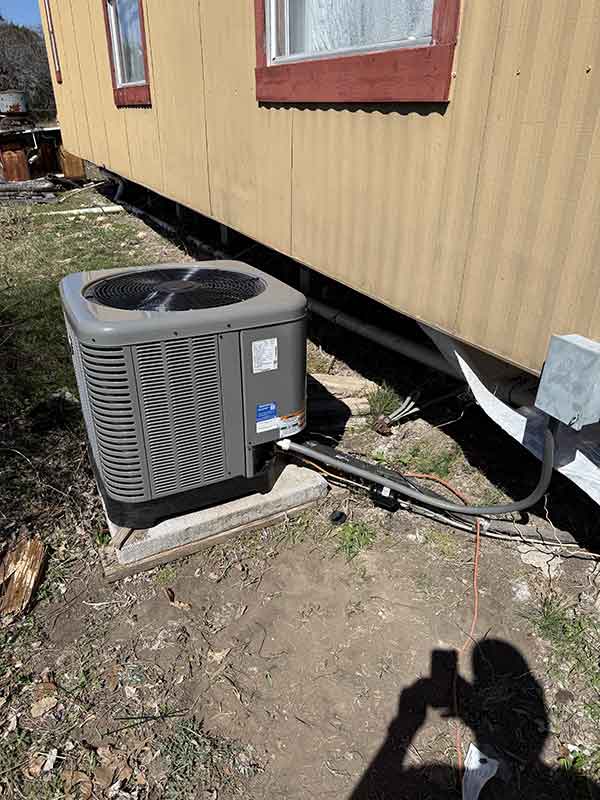
The install itself layers the disciplines: heat pump craft outside, refrigerant, charge, defrost, furnace respect inside, combustion, venting, safeties, and coil-over-furnace airflow verified for both machines’ appetites, because the indoor coil serves two masters in this architecture.
There is also a Hill Country layer to this work that out-of-area advice never accounts for. Limestone terrain around Burnet soaks up heat all day and radiates it back through the evening, so equipment here runs longer and later than the same unit would in a milder market. Humidity rolling off Buchanan, LBJ, and the rest of the Highland Lakes chain works on coils, drain lines, and cabinet steel every month of the year. Then winter shows up sideways: a sixty-degree afternoon collapsing into an overnight freeze finds every marginal component in the county at once. Doing hybrid system installation correctly here means doing it for this climate, with parts choices and settings that respect what Central Texas actually does to machinery.

Installation
What Hybrid Installation Involves
The scope of doing dual fuel properly, from arithmetic to handoff verification.
Skip the reading, make the call.
Two minutes on the phone with a real tech beats an hour of internet research. Describe the symptom in your own words and get a straight answer about cause, timing, and cost.
Why Off Duty
The Retrofit Sweet Spot
The best-kept secret in hybrid economics is the retrofit timing: if your gas furnace is healthy and your air conditioner is dying, replacing the AC with a heat pump instead of a straight cooling unit converts the house to dual fuel for a modest premium, often the single best efficiency-per-dollar move available to a corridor home. The furnace stays for the freezes it already handles well, the new heat pump takes over shoulder-season heating at electric-efficiency prices, and summer cooling upgrades in the same stroke. We flag this option on every AC replacement quote where the furnace supports it, because the arithmetic deserves to be seen even when the answer is no thanks.
Existing hybrid owners get their own honest service: systems installed elsewhere frequently run factory-default changeovers that waste money in both directions, and a single configuration visit, balance point recalculated to current rates, lockouts set, staging verified, often pays for itself within the season. If your house has both a heat pump and a furnace and you cannot say what temperature hands off to what, that visit is overdue and we will bring the amp clamp that settles it.
Here is how the visit goes. A call to (512) 925-3090 reaches a real tech, not a call center, at any hour. On site, the diagnosis runs on instruments until the cause is certain, and then everything gets laid out in plain English: what failed, what fixes it, and exactly what it costs, before work begins. When the hybrid system installation work is done, it gets verified under load instead of switched on and waved at. If the pattern sounds simple, it is. It is also rare enough in this trade that people write reviews about it.
A straight word on money. We do not print teaser prices on this website and we do not do surprise math on invoices. Call, describe the problem, and we will tell you what the visit costs before a truck rolls. When the diagnosis is in, you get the full repair price out loud, before the work starts, and you decide with the real number in front of you.
Worth saying plainly: this is not a problem that ages well. Systems compensate quietly right up until they cannot, and the failure that finally announces itself usually costs more than the one caught early would have. If your gut says something is off, that instinct is worth one free phone call. The worst case is we tell you everything sounds normal, which is a pretty good worst case.
Who does the work matters as much as what gets done. Off Duty is owner-operated: the person diagnosing your system is the person whose name carries the company, trained in the family trade and seasoned by ten years of Central Texas installs and repairs. You can see the standard in real job photos, and you will see it again in your own equipment closet.
We run this work all over the map: Burnet and the Highland Lakes first, then the whole hundred-mile circle, Marble Falls, Georgetown, Round Rock, Austin, Killeen, and out to Waco and Boerne. The full sixteen-county roster is on the service areas page. Wherever you sit on it, the same truck standard applies: the same tech, the same instruments, the same price-before-work rule, whether the drive took ten minutes or ninety. Distance changes the arrival window, never the workmanship.
Diamond Contractor
Mitsubishi’s top ductless credential, earned with factory training.
Second Generation
Raised in the trade, ten years on the tools before the name went on a truck.
Warranty Authorized
JB and Mitsubishi warranty work: we file the claim, you skip the fight.
Open 24 Hours
A real person answers the phone at any hour, every day of the year.
The Standard
How This Work Gets Done Here
Every trade job carries an invisible line item: the standard it was done to. On hybrid system installation work, ours reads like this. The diagnosis is proven with instruments, because guessing is expensive and it is your money on the table. The parts that go in are parts we would put in our own house, matched to spec instead of whatever was cheapest on the shelf. The workmanship follows the manufacturer’s book and the Texas code book both, because shortcuts hide for exactly one season and then bill you with interest.
When the work is finished, it gets tested the way it will actually be used: under load, at temperature, with the readings written down. Then the area gets left the way we found it or cleaner, the old parts get shown to you on request, and the invoice matches the number you already heard. If anything acts up afterward, you call the same number and the same person answers. That is the entire warranty conversation most customers ever need, and it is why the reviews keep saying the same three things: honest, fair, showed up.
Hybrid Heating System Installation Questions
Asked Before We Roll a Truck
The ones the phone line hears most for this service, with the answers given at full length instead of sales-brochure length.
Is a hybrid system worth it over just a heat pump with strips?
For gas-connected houses, usually yes, and the freeze math is why. Strip backup heats at the most expensive rate electricity offers, exactly when demand peaks and the grid strains; a furnace heats those same hours at gas prices with combustion muscle to spare. The mild-month economics are identical between the two setups, the heat pump carries both, so the comparison lives entirely in the cold snaps, where the furnace wins on cost and grid-independence both. Houses without gas service flip the answer: bringing in fuel rarely pays, and modern cold-climate heat pumps close the gap. Your meter situation largely decides, and we show the math either way.
What balance point should my system use?
Whatever your rates and equipment curves calculate, which is the entire point: it is a computed number, typically landing somewhere in the 30s for Central Texas configurations, that moves with utility prices and equipment efficiency. Set too high, the furnace burns fuel on days electricity was cheaper; too low, the heat pump strains through weather it should hand off. Factory defaults know neither your rates nor your machines. We calculate it at installation, program the lockouts to honor it, and recommend rechecking whenever rates shift meaningfully, a five-minute reconfiguration that keeps the economics honest.
Can you convert my existing furnace and AC into a hybrid?
If the furnace is sound, very likely, and it is the classic conversion: the aging AC gets replaced by a heat pump matched to a compatible coil, dual fuel controls get installed and configured, and the existing furnace continues as the cold-snap muscle. The assessment verifies furnace health honestly, converting around a dying furnace helps nobody, coil compatibility, and electrical capacity. Conversion cost over a straight AC replacement is modest; the operating savings arrive every mild winter month after. It is one of our favorite recommendations because the math is usually so clean.
Do the two systems ever run at the same time?
In a correctly configured system, essentially never, and preventing it is a design requirement rather than a hope. Heat pump and gas furnace share the indoor airflow path, and simultaneous operation wastes energy and can stress the equipment, so proper dual fuel controls enforce exclusivity: heat pump above the balance point, furnace below it, with staged transitions between. The famous exception is defrost, brief periods where the furnace covers while the heat pump clears its outdoor coil, which is intentional, momentary, and part of what commissioning verifies. If your hybrid runs both sources for long stretches, its controls are misconfigured and worth a visit.
What maintenance does a hybrid system need?
Both halves on their proper schedules, which conveniently interleave: the heat pump follows the twice-yearly rhythm, spring for cooling season, fall for heating, and the furnace joins the fall visit for its annual combustion analysis and safety inspection despite its short working season, because the hours it works are the coldest and least forgiving. The changeover logic gets verified each fall as part of the package. One agreement covers the whole architecture, reminders included, and the system’s dual nature never becomes the owner’s scheduling problem, which is exactly how it should be.
Both Sources, One Smart System
Balance point calculated, changeover engineered, and both machines commissioned honestly. Prefer to write it out? Send the form and we call you back.
(512) 925-3090 Book a Free Look




