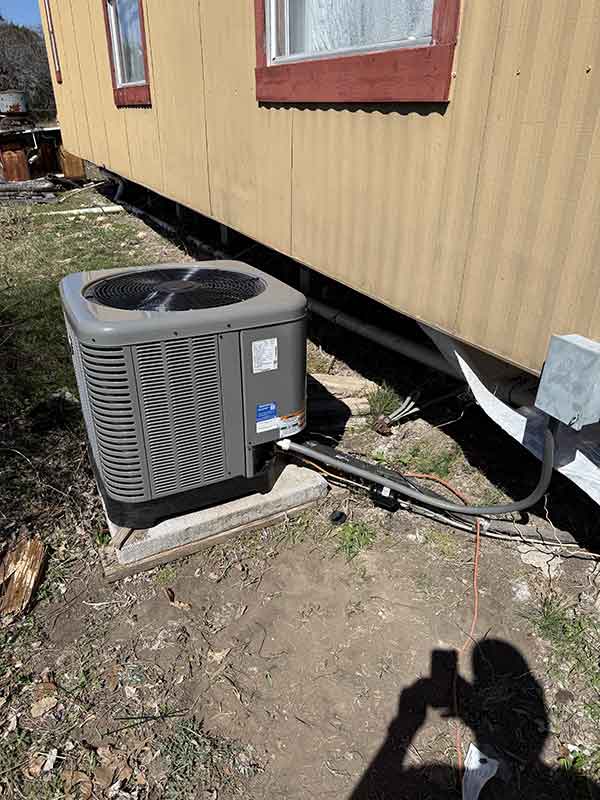
Commercial HVAC Repair Without the Runaround.
Commercial HVAC failure is a business event: the dining room warming while tables turn, the office sending productivity home, the shop losing the afternoon’s walk-ins, and commercial repair is triage plus craft at operations speed, the 24-hour line answering, the truck stocked for the commercial failure list, and the fix sequenced around the hours you trade.
Commercial HVAC · Burnet & Central Texas
Repair at the Speed of Operations
The commercial repair discipline starts at the phone: what failed, what the space is doing, what the business loses per hour, the triage weighting genuine operations emergencies, the restaurant mid-service, the server closet climbing, the walk-in with the weekend’s inventory, ahead of the comfortable inconveniences, and the response promising honestly, windows stated, parts probability read from the symptom, the manager’s decision informed rather than soothed. On site the diagnosis runs commercial equipment fluently, RTU staging and economizer logic, three-phase electrical read safely and correctly, belt-drive blowers and their bearings, commercial controls from thermostats through building systems, the failure named with evidence and priced before repair, per the house standard, at commercial scale.
The stocked-truck doctrine extends to the commercial list: contactors and capacitors at commercial ratings, belts in the common sections, universal motors and the three-phase diagnostic gear, igniters and flame sensors for the gas-heat fleet, board-level spares where platforms allow, and the fix-today rate staying high because the inventory anticipates the census, RTU electrical failures, belt and bearing wear, economizer actuators stuck mid-position, condensate systems at commercial volumes backing up, compressor support components cooked by Texas rooftop summers. Where parts must order, the commercial reality gets managed, temporary measures engineered, spot cooling, staged capacity, the timeline stated to the hour the supplier commits, and the return visit landing in closed hours where the business needs it to.
Every commercial repair feeds the account’s file, equipment histories building across visits, and the repair conversation flags the preventative program where the failure pattern argues it, the census being overwhelmingly maintainable items caught late.
There is also a Hill Country layer to this work that out-of-area advice never accounts for. Limestone terrain around Burnet soaks up heat all day and radiates it back through the evening, so equipment here runs longer and later than the same unit would in a milder market. Humidity rolling off Buchanan, LBJ, and the rest of the Highland Lakes chain works on coils, drain lines, and cabinet steel every month of the year. Then winter shows up sideways: a sixty-degree afternoon collapsing into an overnight freeze finds every marginal component in the county at once. Doing commercial repair correctly here means doing it for this climate, with parts choices and settings that respect what Central Texas actually does to machinery.
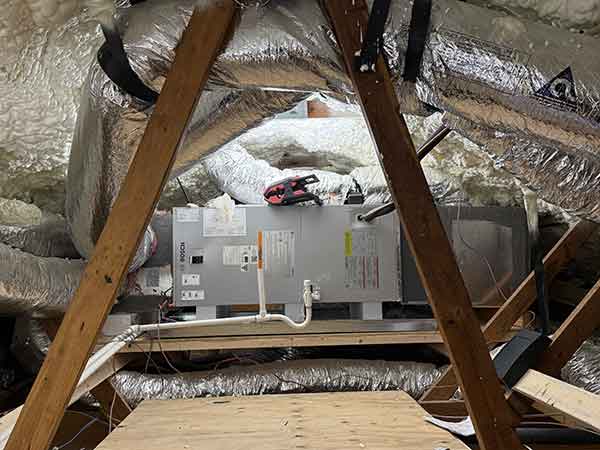
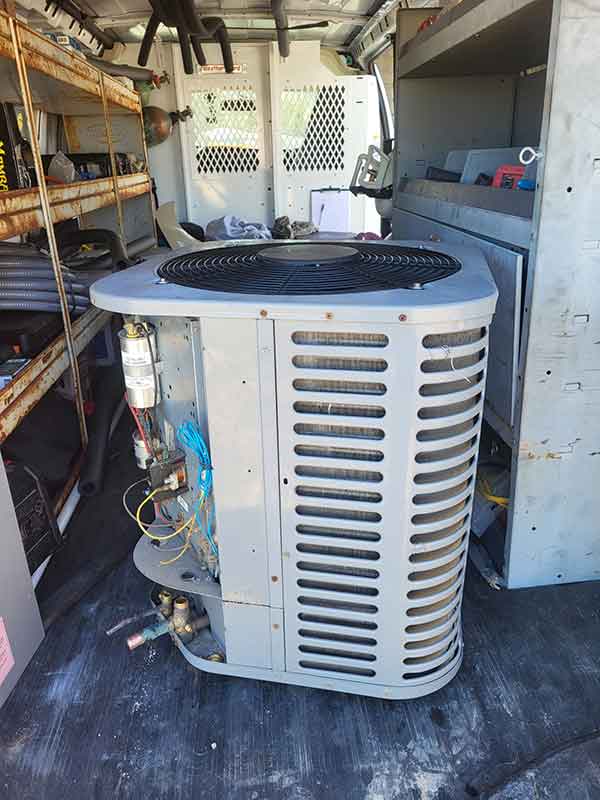
Commercial HVAC
The Commercial Failure Census
What takes business systems down around the corridor, in rough order of frequency.
Same crew, any hour.
The name is the joke, the 24-hour line is not. If this problem cannot wait, call now and the on-call tech picks up, quotes the visit straight, and rolls a stocked truck.
Why Off Duty
Downtime Math Runs the Visit
Commercial repair economics price in operations: the failed RTU over a dining room costs covers per hour, the retail floor’s comfort converts to conversion rates, the office’s productivity walks out the door at 85 degrees, and the repair sequencing respects the arithmetic, diagnosis immediate, temporary capacity engineered where the fix must wait, spot cooling, staged operation on multi-unit buildings, the repair itself scheduled into closed hours when the business trades better without trucks on the roof, and the communication running manager-grade throughout, what failed, what it costs, when it resolves, in operator language rather than technician shorthand. The businesses that route their commercial work here cite the communication as much as the wrenches, which is its own diagnostic about the industry.
The repair-versus-replace conversations arrive at commercial scale with commercial honesty: aging RTUs on their third compressor against replacement math that includes efficiency at commercial runtimes, demand charges, and the downtime cost of each future failure, the analysis run in operating dollars, the file’s history informing it, and the recommendation stated the way we would take it ourselves, sometimes another repair, sometimes the crane conversation, always the numbers shown. Commercial equipment decisions deserve business-case treatment, and getting it from the repair truck rather than a sales visit is precisely the point.
Here is how the visit goes. A call to (512) 925-3090 reaches a real tech, not a call center, at any hour. On site, the diagnosis runs on instruments until the cause is certain, and then everything gets laid out in plain English: what failed, what fixes it, and exactly what it costs, before work begins. When the commercial repair work is done, it gets verified under load instead of switched on and waved at. If the pattern sounds simple, it is. It is also rare enough in this trade that people write reviews about it.
A straight word on money. We do not print teaser prices on this website and we do not do surprise math on invoices. Call, describe the problem, and we will tell you what the visit costs before a truck rolls. When the diagnosis is in, you get the full repair price out loud, before the work starts, and you decide with the real number in front of you.
One honest note about timing. Problems in this category rarely improve on their own, and the price of waiting is usually a bigger bill: the weak part takes a healthy one with it, the small leak becomes a stain on a ceiling, the strange noise becomes a seized motor. Calling early is almost always the cheaper version of the same repair, and the phone consult costs nothing: describe what you are seeing and we will tell you honestly whether it can wait.
As for who shows up: this is an owner-operated shop, so the tech at your door is usually Bryce himself, a second-generation HVAC man with ten years on the tools, licensed, insured, and photographed doing exactly this kind of work in the job gallery. No commissioned salesman rides along, and nobody at this company earns a bonus for talking you into more than you need.
Coverage is the same as everything else we do: Burnet at the center, about 100 miles in every direction. That means the lake towns, Marble Falls, Kingsland, Horseshoe Bay, the corridor through Leander, Cedar Park, and Georgetown, plus Austin, Bell County, and the outer ring through Waco, San Marcos, New Braunfels, Fredericksburg, and Boerne. The full sixteen-county list lives on the service areas page, and if you sit just past the edge of it, call anyway and get an honest answer.
Diamond Contractor
Mitsubishi’s top ductless credential, earned with factory training.
Second Generation
Raised in the trade, ten years on the tools before the name went on a truck.
Warranty Authorized
JB and Mitsubishi warranty work: we file the claim, you skip the fight.
Open 24 Hours
A real person answers the phone at any hour, every day of the year.
The Standard
How This Work Gets Done Here
A job like this is a chain of small decisions nobody watches: which part, which setting, which clearance, which step gets skipped when the attic hits 130 degrees. Our answer to all of them is the same. Do it the way the book says, the way the second generation was taught, the way you would want it done if the address were your own. That means proven diagnosis before parts, correct materials over convenient ones, and procedure followed all the way through the parts of the job that never show.
It also means finishing properly. The system gets verified under working load, the readings get documented, the old components get shown on request, and you get an explanation in plain English rather than trade jargon. The price never moves between the quote and the invoice. If anything about the work ever needs a second look, the phone number on your receipt rings the person who did it. Simple system, kept promises, reviewed in public by the people it was kept to.
Commercial HVAC Repair Questions
Asked Before We Roll a Truck
Real questions from real Central Texas customers, answered the same way we answer them on the phone: straight.
How fast can you get to my business when the AC fails?
Commercial triage runs the board: operations emergencies, dining rooms mid-service, inventory at risk, vulnerable occupants, take priority response through the 24-hour line at any hour, the corridor’s business core reachable fast, honest windows stated for everything else, and the demand-season reality managed truthfully, heat-dome weeks stack the board and the stated window is the real one, commercial agreement holders holding their priority standing per their terms. The phone answers with a tech, the triage reads your actual stakes, and the truck that rolls carries the commercial list, which is why most first visits end with the system running.
Do you work on rooftop units and commercial equipment, really?
As core fleet: the corridor’s RTU population, gas-electric and heat pump packages across the common tonnages, commercial splits, three-phase equipment read and serviced safely, belt-drive air handling, economizers and their logic, commercial controls through building-system tie-ins, and the specialty adjacencies, walk-in refrigeration per its own pages, kitchen makeup air, server-room cooling, the equipment census of actual Central Texas business, serviced with the diagnostic fluency and stocked inventory the residential pages describe, scaled commercial. The honest boundary sits at heavy industrial process systems, named when a call reaches it, with the light-commercial-through-mid-market fleet being exactly this shop’s lane.
Can you keep us running while parts come in?
Engineering the bridge is standard scope: spot cooling deployed for critical spaces, server closets, occupied offices, dining sections, multi-unit buildings staged so surviving equipment carries priority zones, load-shedding advice for the interim, which doors, which hours, which equipment rests, and the genuine emergencies escalated through supplier channels, commercial parts networks moving faster when the order carries urgency honestly stated. The bridge plan comes with the diagnosis, its costs and limits plain, and the business decides informed, the alternative, dark equipment and a shrug until the part lands, being the industry habit this page exists to replace.
Why does our system fail every summer?
Because commercial neglect compounds annually: the failure census, cooked electrical components, worn belts, fouled coils, stuck economizers, is overwhelmingly maintainable wear, arriving as summer emergencies when the season’s first sustained load finds everything the year ignored, and buildings running the fail-fix-forget cycle refund their savings each July with downtime interest. The pattern’s fix is the preventative program, the commercial pages’ standing argument, inspections rhythmed to the equipment’s duty, components replaced at drift, the summer entered proven, and the repair visit that keeps meeting the same building makes the case with the file itself, this year’s failure being last year’s watch-list item, priced at the difference.
Do you offer commercial service agreements with repair priority?
The commercial program’s core: agreement accounts holding priority standing on the repair board, their maintenance rhythm documented for warranties and insurance, repair discounts stated in the terms, and the response commitments commercial operations need in writing, per the commercial preventative maintenance page’s full structure, with the repair-side value being exactly the demand-season difference, agreement holders scheduled ahead when the board fills, their equipment histories already in hand when the truck arrives, their failures cheaper because their drift was being watched. The repair line serves every business that calls; the agreement decides who it serves first, which in July is the whole question.
Fixed at Operations Speed
Triage by stakes, commercial truck stock, and the fix sequenced around your trading hours. Prefer to write it out? Send the form and we call you back.
(512) 925-3090 Book a Free Look