
Dry Air for Meadowlakes Houses. Set the Number Yourself.
Plenty of houses near Lake Marble Falls read cool on the thermostat and still feel damp, especially with sprinklers keeping every lawn and fairway green. An air conditioner pulls some moisture as it cools, but it was never built to manage humidity on its own. A ducted whole-home dehumidifier picks up where the AC stops. Off Duty sizes the unit to the house, ties it into your return, gives it a drain of its own, and sets a humidity target you control.
Moisture
Why a Cool House Can Still Feel Damp
Drying the air is a side job for an air conditioner. Warm air crosses the cold indoor coil, water beads up on the fins, and it runs into the drain pan and out through the condensate line. That only works while the compressor runs long enough to get the coil truly cold. Short runs leave it lukewarm, and the moisture stays in the rooms.
Two things cut those runs short around here. The first is an oversized system, common enough in this part of the county that we look for it on every call. It reaches the setpoint in minutes, shuts off, and leaves the air heavy. The second is mild weather. On spring and fall days, and on cool damp nights, the house hardly asks for cooling, so the AC barely runs and nothing is drying the air.
Neither problem shows up on a hot July afternoon, when the system runs long and dries the house well. They show up in the months people expect to be the comfortable ones.
“Brice is such a nice person. He came when he said he would and came back when he got the part, didn’t have to call him price was fair. Definitely recommend Off duty Heating and AC.”
Rick A., customer review
So we start with readings: indoor humidity, how long the system runs per cycle, and whether its size matches the house. If the cooling side is the real problem, you hear that first. If the house simply needs more drying than any AC can give, a whole-home unit is the right tool.
What a Damp House Tells You
Humidity rarely announces itself by name. People notice it sideways, and they tend to blame the thermostat, the windows, or the age of the house before anyone mentions moisture.
A simple humidity gauge on a bookshelf is worth having. If it stays high for days at a stretch while the AC is running normally, the house is taking on more water than the system can remove.
Moisture also costs money in a way people rarely connect to the AC. To make a damp room feel right, most of us nudge the thermostat down a notch or two, and the system then runs colder and longer chasing a feeling that temperature alone cannot fix. Dry air at the same setting simply feels better.
Any one of these signs can have a second explanation, a slow drain or a leaky return among them, so we check the whole system before we sell anything.
- Musty closetsClosed closets and linen cabinets trap still air, and that stale smell is often the first hint that moisture is lingering in the house.
- Sticky floorsHard floors that feel tacky under bare feet usually mean damp air, most often on mild days when the AC hardly runs.
- Sweating windowsCondensation on the inside of the glass on a cool morning means indoor air is carrying more water than it should.
- A 72 that feels warmerThe thermostat says 72 and the room feels several degrees warmer. Damp air feels hotter than its temperature reads.
Sticky Rooms Have a Time of Day. Tell Us Which.
Say which rooms feel sticky and when it happens. A real person answers at any hour.

How the Unit Joins Your System
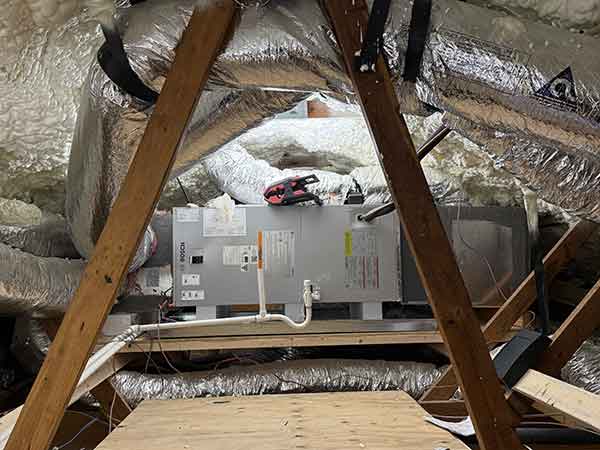
A whole-home dehumidifier is a cabinet with its own small coil and fan, ducted into the system so it treats the whole house instead of one room. Most installs pull air from the return side, dry it, and hand it back so the air handler spreads it through every room.
It usually sits in the attic beside the air handler or in a mechanical closet, wherever there is room to service it and run a drain. That drain is its own line, routed to an approved termination, because the unit pulls a steady stream of water and should not lean on the AC’s condensate path.
Control comes from a dehumidistat with its own setpoint. You pick the humidity level, and the unit runs only when the house drifts above it, whether or not the AC is cooling. On a mild October night, that is the whole point.
Sizing follows the house. We look at the area the system serves, how tight the house is, and how much moisture it takes on from the lake air and the irrigated yards around it, then match the unit’s capacity to that load instead of picking the biggest cabinet that fits the attic.
If the return ductwork leaks, the unit ends up drying attic air, which is why some of these jobs pair with air duct sealing. We wire the dehumidifier, seal its duct connections, set the target with you, and confirm humidity is dropping before we leave. The wider picture is on our whole home dehumidifier page, and smaller units live under dehumidifier installation. Questions first? Write to us here.
Mitsubishi Diamond
A Diamond Contractor for Mitsubishi ductless lines.
Two Generations
A family HVAC shop with a decade of field work behind it.
Owner Does the Work
The person who quotes it installs it.
Phone Answers Anytime
Open around the clock, every day.
Upkeep, and the AC Next Door
A whole-home dehumidifier asks for very little, but it does ask. It has a filter of its own, separate from the one at the air handler, and that filter loads faster than people expect once cedar season starts. We show you where it lives and how to swap it, and during cedar season it deserves a monthly look.
The drain gets checked on every maintenance visit. Lake humidity grows algae in any line that carries water, and a clogged dehumidifier drain backs up just like an AC drain does. The small coil inside the cabinet gets inspected at the same time.

The unit also changes how we read the air conditioner outside. An oversized AC paired with a dehumidifier makes for a comfortable house, but the short cycling still wears on the equipment. When that system nears the end of its run, a right-sized AC replacement and the dehumidifier work well as a pair. A new air handler with a variable-speed blower can also slow the airflow and dry more on its own.
One thing a dehumidifier will not do is cool the house. It gives off a little warmth as it works, which the air conditioner absorbs easily in summer and which is rarely noticed on shoulder-season days. The AC keeps doing the cooling, and the dehumidifier takes care of the water.
Every install gets written down: what went in, where it sits, the setpoint, and the upkeep it needs. Photos of recent installs are in the gallery.
Before You Add a Dehumidifier
Straight answers to what people ask first.
Can my air conditioner handle the humidity on its own?
Sometimes it can, if it is sized right and runs long cycles in hot weather. The trouble shows up on mild days and cool nights, when the AC barely runs and moisture builds anyway. An oversized system makes it worse. We measure humidity and run times before recommending anything.
Where does a whole-home dehumidifier go?
Usually in the attic beside the air handler or in a mechanical closet, connected to the return duct so it treats air for the whole house. We pick a spot where it can be serviced easily and where its own drain line can run to a proper termination.
Is this the same as a portable dehumidifier?
No. A portable unit dries one room and needs its bucket emptied. A ducted whole-home unit works through your existing ductwork, drains on its own, and runs from a dehumidistat setpoint you choose. It covers every room the system serves, quietly and out of sight.
Can the dehumidifier run when the AC is off?
Yes, and that is much of its value. The dehumidistat watches indoor humidity by itself, so on a mild spring evening the unit can dry the house while the AC stays off. Depending on the model, it moves air with its own fan or with the air handler’s blower.
What upkeep does it need?
A filter change on a regular schedule, more often during cedar season, plus a drain and coil check during maintenance visits. Lake air grows algae in any line carrying water, so the drain matters. We show you where the filter sits on the day of the install.
Could the real fix be a smaller AC instead?
It can be. If the system is oversized and near the end of its life, a right-sized replacement may solve the clamminess by itself. If the equipment is healthy, a dehumidifier is usually the faster and gentler fix. We lay out both and let you choose.
Drier air ties into the rest of our Meadowlakes work. Leaky returns get fixed through air duct sealing, aging systems through AC replacement, and the indoor half through air handler installation. A coil that ices or a charge that keeps dropping belongs to refrigerant leak repair. The service countywide is on the whole home dehumidifier installation page, and our Meadowlakes page covers everything else in town.
Dry Air, Set Where You Want It
Start with a free look. We read the humidity, watch how the system cycles, and tell you whether the house needs a dehumidifier, a cooling fix, or nothing at all. If calling is awkward, send a note through the form and we will reach back.
(512) 925-3090 Ask for a Free Look




