Keep the Receipts. They Know When the AC Is Done.
A lot of Meadowlakes households keep a folder on the house. Service visits, filter dates, the invoice from the last repair, the warranty card that came with the condenser. Most people file those papers and never look at them again.
When a system starts acting tired, that folder turns into the most useful thing in the house, more useful than any rule of thumb about age. Plenty of homes in town are on their second or third HVAC generation, so the replace-or-repair question comes up often, and the paperwork answers more of it than people expect.
Reading the Repair Pattern
One repair says almost nothing. A capacitor fails, a contactor pits, a drain line clogs during a humid stretch, and the system goes back to work. Those are wear items, and a healthy system goes through a few of them over its life without any drama.
What the folder shows that memory does not is the pattern. Lay the invoices out by date and look at what got fixed. If the same part keeps coming back, something upstream is killing it, and that deserves a diagnosis before anyone mentions new equipment. If the repairs keep climbing toward bigger parts, a fan motor one summer, a coil leak the next, a compressor pulling hard current after that, the system is telling you where it is headed.
The spacing matters too. Repairs that used to land years apart and now show up every season belong to a system that is losing ground. We read those dates the way a doctor reads a chart: the trend counts for more than any single entry.
The Refrigerant Line on Old Invoices
Older invoices often list the refrigerant that went into the system, and that one line can settle a lot. Systems built around R-22 depend on a refrigerant that is no longer made for new equipment, so every recharge draws on a shrinking supply. If the folder shows charge added more than once, there is a leak somewhere, and a leaking R-22 unit is rarely worth chasing.
Newer systems on R-410A have more room to work with, and a single leak on one can be a fair repair. Even then, a leak finding is a reason to ask how old the coil is and whether this is the only leak or the first of several.
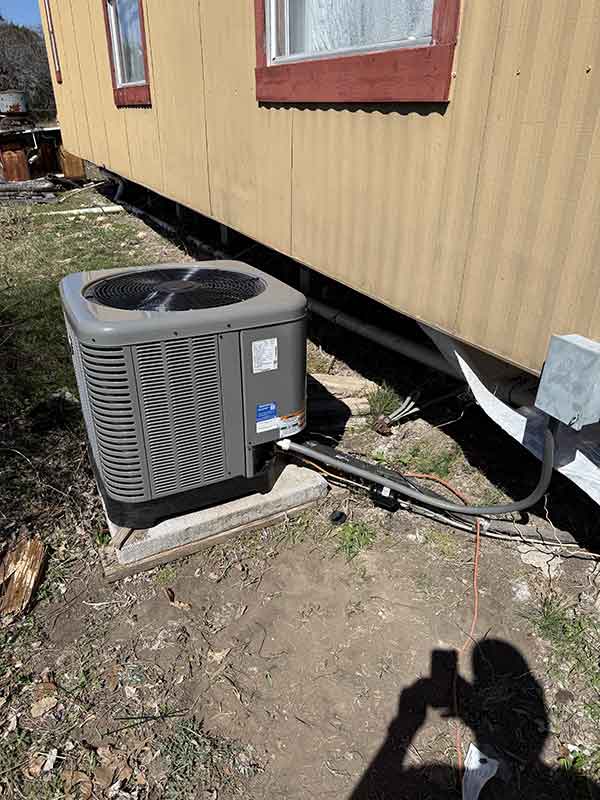
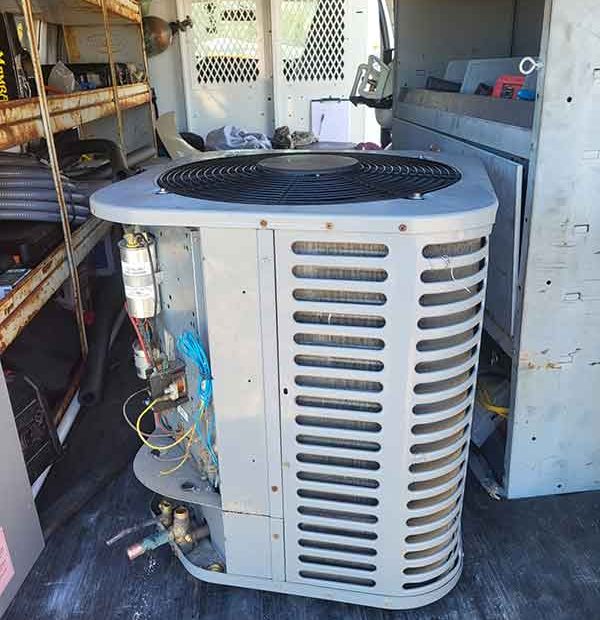
Whatever the folder says, we confirm it at the equipment. The nameplate on the outdoor unit lists the refrigerant and the manufacture date, and that plate never misplaces its paperwork. If your records and the nameplate disagree, the plate wins, and we tell you which one we went by.
What Visit Notes Reveal About Sizing
Good maintenance notes include temperatures and pressures, and sometimes run times. Those numbers stay useful long after the visit. A system whose notes show it cycling on and off quickly, with the house cool but never quite dry, was probably oversized from the start.
That matters at replacement time because the easy move is copying the old tonnage onto the new unit. Oversizing is the most common sizing mistake we find anywhere in the county. A system that short-cycles never runs long enough to pull moisture out of the air, and with Lake Marble Falls and the green fairways keeping humidity up, the result is a house that feels clammy at a perfectly good temperature. A replacement is the one moment where that gets corrected without extra work.
So the old notes frame the conversation, and then we run a Manual J load calculation on the house as it stands now: its orientation, its glass, its insulation and its air leakage. The new system gets sized to that, never to a figure somebody guessed when the house was built.
When the Folder Is Thin
Not every house comes with a history. Maybe the system came with the house, or the previous owner kept nothing. That is fine. A missing folder just means the equipment has to do the talking.
We start at the nameplates on both the indoor and outdoor units, since a mismatched pair means somebody replaced half the system at some point. Then we look at the coil, the blower, the electrical connections and the drain pan, and we measure how the system performs under load. Rust in the pan, a coil that has been patched before, and wiring spliced more than once all fill in the blanks.
Before we leave, you get a written summary of what we found. That becomes page one of a new folder, so the next decision about this system starts from a record instead of a guess. The next technician who opens it will be glad you kept it.
One habit makes a thin folder fill up fast: write the date on the filter frame every time you change it, and snap a phone photo of the nameplates while you are standing there. Those two small records answer questions that otherwise take a ladder and a flashlight. They also tell us whether a dirty coil came from a missed filter or from air leaking around the filter slot, which are two very different fixes.
Turning the Record Into a Decision
Once the history and the measurements line up, the answer is usually plain. A system with occasional wear repairs, a sound coil and a refrigerant still in production is worth keeping, and we will say so even when the visit bills nothing more. A system with a widening repair pattern, an aging coil and a refrigerant on borrowed time is costing you comfort every summer.
If replacement is the answer, the planning starts from the file: a fresh load calculation, a matched indoor and outdoor pair, ducts checked before any equipment is chosen, and an install scheduled around how your household runs. Our Meadowlakes AC replacement page walks through how that changeout gets staged, and the general AC replacement page covers the equipment side. When the indoor unit is part of the job, the air handler installation page explains that half. The rest of our work around town is on the Meadowlakes page.
Should I keep records from a previous HVAC company?
Yes, every page of them. Another company’s invoices still show what failed and when, and a good tech reads another shop’s notes as easily as their own. Bring out whatever you have during the visit. Even a handwritten list of dates taped inside the closet door helps us see whether the repairs are speeding up.
What should a maintenance visit write down for my file?
At minimum: the date, the filter size and condition, capacitor readings, refrigerant pressures and temperatures, the drain condition, and anything that looked worn. Notes like that let each visit compare against the last one instead of starting from zero. If a visit leaves you holding nothing but a receipt that says tune-up, ask for the readings.
Does warranty paperwork matter when I am deciding to replace?
It can change the whole picture. A compressor or coil still covered by the manufacturer turns a large repair into a parts claim, and we file those claims for you when the coverage applies. Registration papers in your folder speed that up. If coverage has lapsed, the repair gets weighed on its own, against the age and history of everything else.
A folder of invoices is not exciting, and that is exactly why it works. It turns a hot-afternoon panic into a decision you have already half made. Keep adding to it, and the next time the system stumbles, you will know whether you are looking at a repair or a retirement.
Bring the Folder. We Will Bring a Free Look.
We read your system’s history, check the equipment against it, and tell you straight whether it has another summer in it.
Call (512) 925-3090or request a call backPast changeouts are in the gallery. If the system already quit on you, the same number answers 24 hours a day.