
Cottonwood Shores Split System Going In? Start With the Load.
A split system puts the compressor and condenser outside and the air handler or furnace, with its coil, inside, joined by a copper line set. Whether it goes into a modest home on the original plats, a manufactured home or a new build on one of the open lots, Off Duty sizes it from a load calculation on that particular house, matches the two halves, tests the line set and writes down the commissioning numbers before calling the job finished.
Installs
Two Cabinets, One System
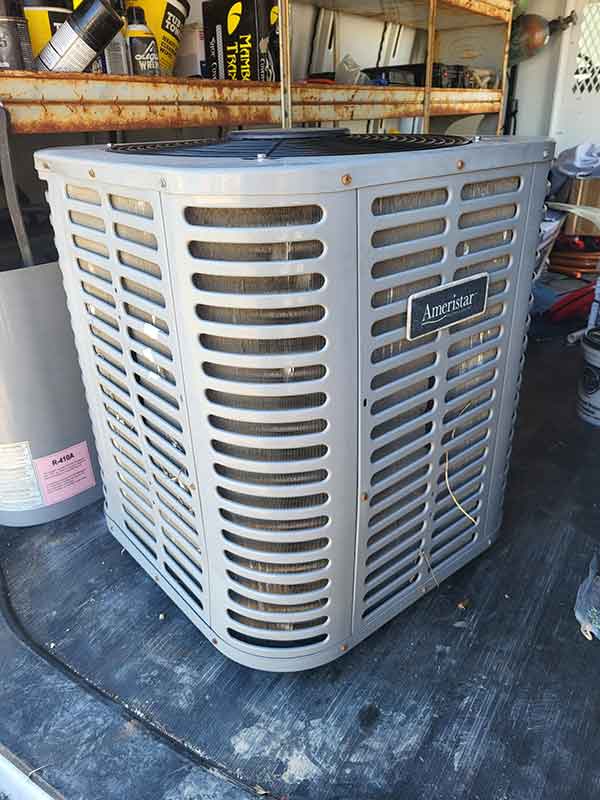
The outdoor half holds the compressor, the condenser coil and the fan that throws heat out into the yard. The indoor half is an air handler, or a furnace with an evaporator coil set on top, moving house air across the cold coil and into the ducts. Copper lines carry refrigerant between the two, and low-voltage wiring tells both sides when to run.
A package unit puts all of that in one box outdoors, and plenty of manufactured homes in town use one. A split often wins when there is indoor room for the air handler or furnace, when the household wants gas heat in the same system, or when the owners would rather keep half the equipment out of the lake air that works on outdoor cabinets. Some homes really are better left on a package unit, and we will say so.
“They’re very informative and quick to help.”
Brian C., customer review
Being informative starts with that comparison. You see why one layout suits your house better than the other before a single piece of equipment gets picked, and the reasons stay on paper for later.


What Goes Where on Install Day
Each piece below gets set, connected and checked as part of one job, in one sequence.
A Load Calculation on the Actual House
Tonnage copied off an old nameplate repeats somebody else’s guess, and a new build has no nameplate to copy at all. The right size comes from a Manual J load calculation using this house’s square footage, window area and orientation, insulation, ceiling heights and air leakage.
The answer varies more than people expect. A modest original-plat home with updated windows may need less capacity than the equipment it had. A manufactured home has its own envelope and smaller ducts to account for. A new build on an open lot, with no established shade, takes full afternoon sun on its west wall from its very first summer.
Size matters more near the lakes than in most places. An oversized system cools the air quickly, shuts off and leaves the moisture behind, so rooms feel clammy at a cool setting while the constant short cycles wear the equipment down. A right-sized system runs long enough to dry the air as it cools. Duct capacity gets checked against the new equipment before anything is ordered, and the countywide overview lives on the split system installation page.
Lot Cleared, Slab Coming? Call Before the Framing.
Mechanical work planned during framing goes in cleaner than work squeezed in afterward. Call with the plans, at any hour that suits you.
Pad Placement on a Small Lot
Lots in Cottonwood Shores are compact, and the condenser has to share space with a driveway, a fence line, a neighbor and sometimes a bedroom window. Placement gets settled before the pad goes down: enough clearance for the coil to breathe, distance from dryer vents and roof runoff, the quieter side of the house when there is a choice, and the shortest sensible path for the line set.
On a new build, the earlier we are involved, the better the result. Ducts, the line set route, the condensate path and thermostat wire all belong in the walls and attic before drywall closes them in. Showing up after the finish trades means compromises, such as longer line runs, cramped returns or an air handler with no room to service it. A call during framing, or even at the plan stage, avoids every one of them.
Builder-grade packages on newer homes around town are a related story. When a house arrives with equipment that was sized and set in a hurry, an early inspection can catch the shortcuts while they are still easy to correct, and sometimes the fix is smaller than the owner feared.
Finished installs from around the county are in the project gallery, and if you would like the planning questions answered by email first, send them our way.
Numbers on Paper Before We Leave
Cold air at a vent proves very little on its own. An install is finished once the readings check out, and each reading listed here gets taken under load and written down for your records.
Keep that sheet somewhere safe. Later service visits measure against it, and a technician who can compare today’s numbers to install day spots a developing problem long before it becomes a breakdown.
- ChargeVerified by weight or by subcooling against the manufacturer’s target for this equipment.
- Temperature splitMeasured between the return and the supply registers once the system has settled.
- Static pressureRead across the system to confirm the ducts let the blower move its rated air.
- Amp drawCompared against the data plate on the compressor, the outdoor fan and the indoor blower.
- Drain and thermostatThe condensate line tested with water, and the thermostat cycled through every mode it offers.
Diamond Contractor
A Mitsubishi certified ductless installer.
Second Generation
Family habits, ten years on the job.
Owner on the Truck
Bryce sets and commissions the system.
Open 24 Hours
Planning calls taken at any hour.
Split System Questions, Answered Plainly
From people building, replacing or comparing their options.
What is the difference between a split system and a package unit?
A split system divides the equipment: a condenser outside and an air handler or furnace with a coil inside, joined by a line set. A package unit holds everything in one outdoor cabinet. Splits suit homes with indoor space for equipment, while package units suit many manufactured homes and houses without it.
How do you size a new split system?
With a Manual J load calculation run on your house. It accounts for square footage, windows, insulation, orientation and air leakage, and rules of thumb tend to oversize. The equipment gets chosen to meet that load, and the ducts get checked to confirm they can carry the airflow it needs.
Why do the indoor and outdoor halves need to match?
Because they are rated together. The coil’s capacity and refrigerant metering have to suit the condenser for the system to deliver its rated performance and efficiency. A mismatched pair can run, but it tends to dehumidify poorly and put extra strain on the compressor over the years.
What happens to the line set during the install?
It gets sized for the length of the run, brazed with nitrogen flowing inside to keep scale out of the system, and pressure tested for leaks. Then a deep vacuum is pulled and held to remove air and moisture. Refrigerant goes in only after the line set passes both checks.
We are building on an empty lot. When do we call you?
During framing at the latest, and at the plan stage if possible. Duct routes, the line set path, the condensate drain and thermostat wiring all need room inside walls and attics before drywall goes up. Early planning also settles where the condenser pad will sit on the lot.
What readings do we get at the end?
A written record of the refrigerant charge, the temperature split at the registers, static pressure across the system and amp draw on each motor compared to its data plate, plus confirmation that the drain flowed and the thermostat cycled correctly. That record becomes the baseline for future service.
A new system often settles older problems along the way. Attic ducts that sweat go to duct insulation, and a drain line that clogs every summer gets AC drain line cleaning. If your current system might still have life left, start with AC capacitor replacement or evaporator coil repair instead. Everything else for the town lives on our Cottonwood Shores page.
Bring the Floor Plan, We Bring the Load Math
Whether the house is going up on an open lot or the current system is on its last summer, the planning visit is the free look: a walk through the house, the load calculation, the layout choices and a price you can study before deciding. Send the plans or the square footage ahead if you have them, or request a call back through the form.
(512) 925-3090 Request a Free Look




