
A Cottonwood Shores Condenser That Hums? Meter the Capacitor.
An outdoor unit that hums on a hot afternoon while its fan sits motionless is usually asking for help getting started, and the run capacitor is the first suspect. Off Duty proves it with a meter before anything gets swapped: the microfarad reading held up against the rating printed on the can, the contactor inspected on the same visit, and a hard look at whatever made the part fail. Bryce does the work himself, and you see the reading alongside the price.
Capacitors
Why the Fan Sits Still While the Unit Hums
Compressors and condenser fan motors cannot start from a standstill on line voltage alone. The run capacitor stores a charge and feeds it to a second winding in the motor, out of step with the first, and that offset is what gets the shaft turning. When the can weakens, the motor gets power with no push, and the sound you hear from the side yard is a motor trying and failing.
Left that way, a stalled compressor pulls heavy current, heats up and trips its internal overload, then tries again a few minutes later. Plenty of homeowners notice the pattern before they notice the heat: a buzz outside, a click, quiet, then another buzz. If that is happening at your house, switch the system off at the thermostat and call.
“Brice is such a nice person. He came when he said he would and came back when he got the part, didn’t have to call him price was fair. Definitely recommend Off duty Heating and AC.”
Rick A., customer review
Rick was writing about a different repair, but the habit carries over. If the exact capacitor your unit takes is not on hand, you hear that plainly, and the return trip to finish the job happens without you having to chase it.
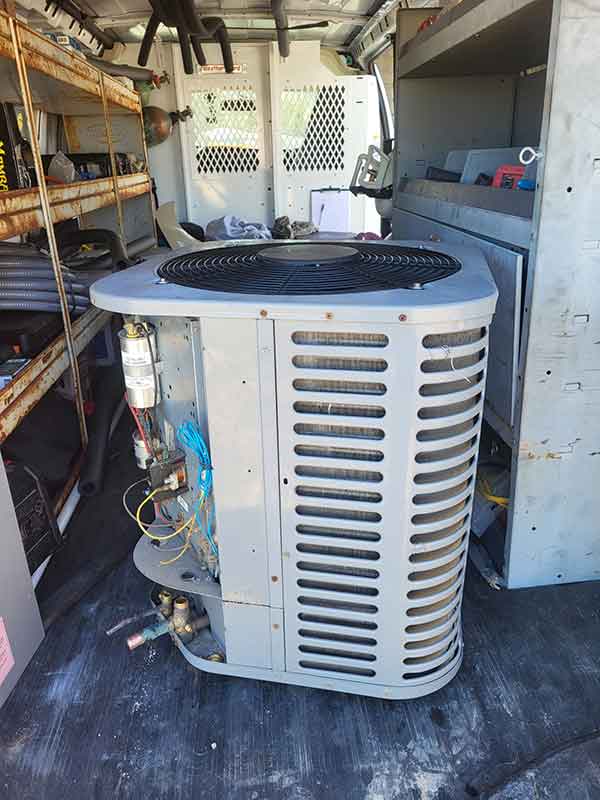

Proving a Weak Capacitor With a Meter
A capacitor can look perfect and read low, or bulge at the top and still read near its rating, so appearance never settles it. Power gets shut off at the disconnect, the can gets safely discharged, the leads come off, and a meter reads its actual microfarads. That number goes right next to the rating and tolerance printed on the label.
Most residential condensers use a dual capacitor: one can serving two motors through three terminals, one for the compressor, one for the fan, and a common shared between them. Each side gets read on its own, because a can with a healthy compressor side and a tired fan side is an everyday find.
Then the unit runs, and a clamp meter checks the current on each motor against its data plate. That second step tells us whether the capacitor was the whole story or only the first chapter.
- Swollen or leaking canA domed top or oily residue means the part is finished, though the meter still confirms which side gave out.
- Reading below the labelMicrofarads outside the printed tolerance call for a replacement with the same rating, never the closest size rattling around a van.
- Voltage rating matchedA 440-volt can belongs where the original was rated 440. A lower-rated part may fit the bracket and still fail early.
- Contactor contactsPitted or burned contacts starve both motors of voltage and cook a fresh capacitor, so they get inspected while the panel is already open.
- Terminals and wiringLoose spade connectors and heat-browned wire get corrected before the side panel goes back on.
Buzzing Outside Right Now? Turn It Off, Then Call.
Tell us what you hear and when it started. The person on the line knows the equipment and can begin the diagnosis during the call, day or night.

Lake Air, Afternoon Heat and the Condenser Out Back
Cottonwood Shores sits between Lake Marble Falls and Lake LBJ, and outdoor units here spend their whole lives in humid lake air. That moisture works on terminals, coil fins and cabinet screws, and outdoor equipment around the Highland Lakes tends to corrode years ahead of the same models farther inland. The capacitor lives inside that cabinet with everything else.
Heat is the other half of it. A capacitor ages faster the hotter it runs, and a condenser sitting on an open lot with no shade, or set near granite and pavement that hold the afternoon sun, bakes its components through five-plus months of daily cooling.
The local housing mix shows up in this work too. Modest established homes on the original plats often run older condensers that have already been through a capacitor or two. Manufactured homes frequently use package units, with the capacitor sharing a box with the blower and parts that differ from site-built stock. New builds arrive with builder-grade equipment that deserves an early look. Every one of them gets the same metered diagnosis, and the countywide side of this service is covered on our AC capacitor replacement page.
Diamond Contractor
Mitsubishi certified on ductless equipment.
Second Generation
Grew up in the trade, ten years on the tools.
Owner on the Truck
Bryce meters and swaps the part himself.
Open 24 Hours
A real person answers every call.
When the Capacitor Keeps Coming Back
One failed capacitor is maintenance. Two in a short stretch is a symptom. Capacitors mostly die from heat and age, and whatever keeps one hot or overworked will take out its replacement too.
A condenser fan motor with dragging bearings draws extra current and runs hotter, which wears out the fan side of the can. A compressor that struggles at startup leans hard on the capacitor every single cycle. A part installed with the wrong rating, often a generic one grabbed for a quick fix, never gave the motor what it needed in the first place. Short cycling from an oversized system or a faulty thermostat adds starts the capacitor was never meant to handle.
So a repeat failure earns a wider look: fan motor amps and bearing play, compressor current on startup, the wiring between the contactor and both motors, and the age of the system as a whole. If the honest read points to a tired fan motor or compressor behind it, you hear that along with the choices. Replace the capacitor again and get through the season, repair the motor causing the trouble, or open the conversation about the system itself. You pick, with the readings in front of you.
After a new capacitor goes in, the unit does not just get switched on and left. It runs through a full cycle while the compressor and fan currents get read again, so you know the motors are drawing what their data plates say they should and the hum is gone because its cause is gone.
Recent repairs from this side of the county are in the project gallery, and if you would rather describe the symptoms in writing, send them through the contact form.
Capacitor Questions From Between the Lakes
The ones that come in on hot afternoons.
Can I replace the capacitor myself?
We would steer you away from it. A capacitor holds a charge after the power is off and can hurt you, and the replacement has to match the original microfarad and voltage ratings. A wrong guess also hides the reason it failed, which a meter and an amp reading would have caught.
How do you know it was the capacitor and not the compressor?
The meter decides. We read the can against its printed rating, then run the unit and compare motor current to the data plate. A healthy capacitor on a compressor that still refuses to start points somewhere else entirely, and you hear that before any part goes in.
What is a dual capacitor?
One can serving two motors. It has three terminals: one for the compressor, one for the outdoor fan, and a common between them. Either side can fail on its own, so both get measured separately. A weak fan side alone is enough to stop the fan while the compressor hums.
Why did my capacitor fail during a heat wave?
Heat is what ages them. A capacitor inside a sun-baked cabinet runs hot, and long afternoons of nonstop cooling stack up the hours. A part that was already drifting low tends to give up on the hottest day of the year, which is also when the system needs it most.
Do you check the contactor on the same visit?
Yes. With the side panel already off, the contactor gets inspected for pitted or burned contacts, and the wiring gets checked for loose or heat-browned connections. A worn contactor cooks a new capacitor, so leaving it alone would only set up a second visit you never needed.
Is a humming outdoor unit an emergency?
Treat it like one for the sake of the equipment. A compressor that hums without starting draws heavy current and heats up each time it tries. Turn the system off at the thermostat and call. The line is answered around the clock, and whoever picks up can talk you through it.
A capacitor visit often turns up the next job. A coil that ices or drips points to evaporator coil repair, a system past saving leads to split system installation, water stains near the air handler call for AC drain line cleaning, and sweating attic ducts go to duct insulation. The rest of our work in town is on the Cottonwood Shores page.
Hear the Hum Tonight? Someone Picks Up.
Capacitor calls rarely wait for business hours, and this line never closes. Describe the sound, how long it has been going on and whether the fan turns at all, and the free look starts from there: a metered diagnosis and a price before any part goes in. Rather write it out? Request a call back through the contact form.
(512) 925-3090 Schedule a Free Look




