
Same Trucks, Same Prices, Bee Cave.
Bee Cave grew from a crossroads store to the Hill Country Galleria’s city in a generation: premium new construction across the hills, a serious retail and restaurant layer, and homes whose systems were specified better than most, but installed at boom speed all the same.
Bee Cave · Travis County
Premium Stock, Boom-Speed Installs
Bee Cave’s housing is mostly young and mostly premium: custom and semi-custom builds across the hills west of the Galleria, upscale subdivisions with equipment packages a grade above production norm, and the paradox that defines the city’s mechanical file, better equipment installed at the same boom pace as everywhere else, which means commissioning debts, rushed charge work, duct systems drawn generously but sealed hastily, hiding under premium badges. The honest assessment reads what was actually delivered versus what was specified, and the corrections, charge verified by weight, airflow proven room by room, duct sealing completed properly, routinely unlock performance the equipment always had.
The commercial layer is the area’s densest west of Austin: the Galleria’s retail and restaurant fabric, the office and medical growth along 71, and the hospitality serving lake traffic, all running systems with real business stakes and maintenance rhythms worth keeping. The hillside geography does here what it does across the lake country, west glass, canyon exposure, great-room stratification, and the zoned architectures most of the newer homes carry need verification rather than faith. Bee Cave rides the lake-country routes with Lakeway, windows quoted honestly, and the file grows on the second-opinion pattern: households with premium homes tired of premium-priced guesswork.
The full Off Duty catalog runs here the same as it runs at home base: AC repair and emergency service around the clock, full system installation sized by a real load calculation, Diamond Contractor ductless work, heat pump service for the machines that carry Texas winters, seasonal maintenance that keeps the emergency line quiet, and the 147-service catalog behind them, one page per service, no runaround. Commercial buildings get the same treatment through our commercial and refrigeration sides.
Single-stage, two-stage, variable-speed: the tiers get sold on efficiency numbers and they should be sold on runtime. A single-stage system has one speed, full blast or off, which is fine equipment and the right answer for plenty of houses. Two-stage runs at a lower output most of the time and steps up when the heat demands it. Variable-speed modulates continuously and runs long gentle cycles, which is how a system actually wrings humidity out of a Hill Country summer and keeps a house even from the front room to the back bedroom. The tradeoff is honest: more electronics, more cost, more to go wrong at year twelve. Which tier makes sense depends on how long you plan to own the house, whether humidity or hot spots are the complaint, and what the ductwork can support. You hear all of that with the differences in plain English, then you pick.
The Travis County Context
What Travis County Systems Face
Travis County HVAC runs three climates in one county: the urban core’s heat-island load stacking onto Austin’s older housing stock, character homes with retrofit constraints and additions layered across decades; the hill country west side, where high glass, hillside exposure, and premium builds demand design-grade thinking; and the Lake Travis chain, living the same waterfront humidity and part-time-occupancy reality as our home lakes. The county’s traffic is its own weather system, which is why our Travis scheduling runs clustered routes and honest windows rather than optimistic ones, and why the emergency line quotes the real drive at the hour you call. The 183 and 71 approaches, the 620 loop, and the lake roads are known territory, and the county’s range, downtown bungalow to Lakeway glass, is the file’s widest chapter.
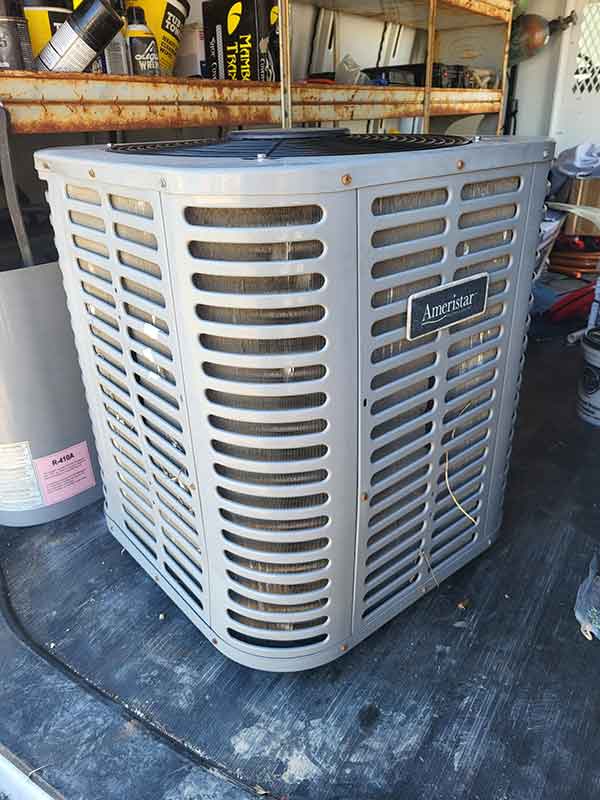
Heat pumps have a failure list of their own, and it shows up in Bee Cave the week the first real front arrives. A heat pump cools in summer and then runs backwards in winter, and the part that flips it is the reversing valve. When that valve sticks or its solenoid quits, you get cooling in January or heat in July, same equipment, wrong direction. The other half is defrost. A heat pump frosts over outdoors in cold damp weather by design and has to run a timed defrost cycle to shed it, so a bad defrost board, sensor, or thermostat leaves the outdoor coil buried in ice and the house leaning on the auxiliary electric heat strips, which is the version that shows up on a power bill. Then there are the strips themselves, elements and sequencers that fail open and leave you short exactly when it is coldest. Heat pump work is its own skill set.
One number, any hour.
No answering service, no callback queue. The person who picks up can diagnose over the phone.
Any Hour, Any Day
What the Name Actually Means
There is a difference between a 24-hour phone number and 24-hour service, and most homeowners only discover it at the worst possible moment. A lot of outfits route after-hours calls to an answering service, which is a polite stranger with a script and a message pad who cannot tell you anything about your system and cannot send anyone. You get a call back when the office opens. Our line reaches a technician. That person can listen to what the system is doing, ask the questions that narrow a failure over the phone, tell you honestly whether tonight is worth tonight’s rate, and dispatch a truck on the strength of that conversation instead of a message left in a queue. Ask any company that advertises around-the-clock coverage exactly who answers at 3 AM and what that person is able to do. The answer tells you everything about what you are actually buying, and it is worth asking before you need it rather than during.
Why Bee Cave Calls Burnet
How a Burnet Shop Treats Bee Cave
What you get from a Burnet shop instead of a metro franchise: the owner on the truck, ten years of Hill Country systems in his head, pricing said out loud before work starts, and a reputation that lives or dies within an hour of your driveway. The reviews on our reviews page keep repeating three words, honest, fair, showed up, the gallery shows the work behind them, and every job in this county is another chance to keep earning both.
Start with the trip. You learn what the visit costs while you are still on the phone, before anybody commits to anything, and that number does not move once the truck is in your driveway. Plenty of callers hear it and decide to wait until morning, and that is a perfectly good outcome. A price you can hang up on is the only kind worth quoting.
A system can be losing capacity for years without anybody calling it broken, and the only way to know is to measure the same things every season and compare. Refrigerant charge is the big one: a slow leak means a charge that drops a little each year, and a system running light cools acceptably in May and falls behind in August, which most homeowners chalk up to the system getting old. Weighing and verifying the charge annually catches the leak while the repair is still small. Temperature split across the coil, static pressure across the blower, and amp draws do the same job for airflow and mechanical wear. Put three years of those numbers side by side and the trend tells you what the system is going to do next summer. That record is also what makes a warranty claim go smoothly, and it is worth something real when the house sells.
Nearby in Travis County
Also on This Route
The same trucks run every town in the county: Austin · Lakeway · West Lake Hills · Rollingwood · Sunset Valley · Pflugerville · Manor · Jonestown · Lago Vista · Volente · Briarcliff. County page: Travis County. Recent jobs from this stretch of the map are in the gallery.
Bee Cave Questions
What Neighbors Ask First
Our house is only a few years old. Why does it already have comfort problems?
Because specification and execution are different events: boom-pace construction commonly installs good equipment with rushed commissioning, charge set by time pressure rather than weighed to spec, ducts drawn well but sealed badly, zones never verified past does-air-come-out, and the resulting comfort debt shows early, rooms that lag, humidity that lingers, bills higher than the equipment grade promises. The fix is verification engineering: measure what was delivered, correct the gaps, and document the result. Young premium homes respond dramatically because the underlying equipment was never the problem; the missing afternoon of commissioning was.
Do you service the restaurants and shops near the Galleria?
The commercial catalog runs there at full strength: rooftop and split systems for retail, restaurant work with kitchen-heat balance and walk-in stakes, office comfort along the 71 corridor, and maintenance agreements built around business hours per the standing commercial practice. Emergency triage reads revenue honestly, a dining room down on a Saturday is treated as the event it is, and the quoting carries the same straight-number policy as everything else. The Galleria area’s density makes routes efficient, and standing accounts anchor the rhythm the area rides.
How far is Bee Cave from your shop really?
An honest lake-country drive, stated plainly in every window: the routes run 71 through the hills, Bee Cave clusters with Lakeway and the shoreline towns on standing runs, scheduled work rides reliable rhythms, and emergencies get truthful around-the-clock windows that respect the miles. No pretended proximity, no geography surcharge beyond the real drive, per the policy that runs the whole map. What the distance buys is the Burnet standard, no-commission diagnosis, engineering over guesswork, the price before the work, and the lake-country file says it travels well.
How fast can you get here in an emergency?
The 24-hour line answers with a real tech at any hour, emergencies jump the schedule, and the window quoted reflects the honest drive from Burnet or wherever the truck currently sits. No-cool and no-heat calls with vulnerable people in the house go first, always. What you never get is a promised fifteen minutes that becomes three hours; the window stated is the window kept.
Do you really service all 147 things on your list out here?
The whole catalog travels: every service page on the site is work we actually perform across the full sixteen-county map, from capacitor swaps to geothermal design, walk-in coolers to radiant floors. The truck stocks the common-failure list regardless of destination, and specialty work schedules the same way it does anywhere. One phone call sorts what your situation needs; the catalog exists so you can read up first if you want to.
Put Bee Cave on Tonight’s Route.
Straight answers, fair prices, and a stocked truck with an honest window. Send the form or call any hour.
(512) 925-3090 Book a Free Look




