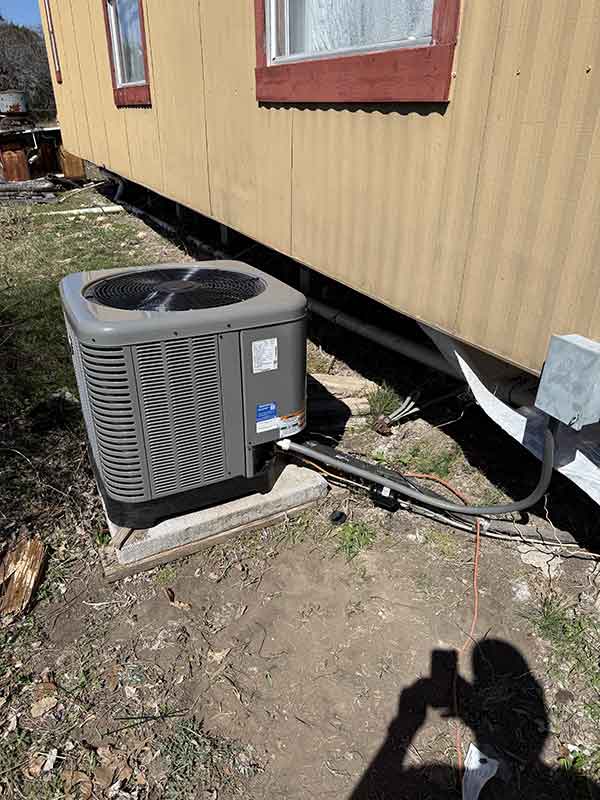
Cooling and Heat for Waco Homes.
Waco anchors the map’s northern edge: a full city’s worth of housing eras from craftsman grids to boom-ring suburbs, the university’s rental economy, the Magnolia-era tourism, and customers who chose a Burnet shop deliberately across a real distance.
Waco · Mclennan County
The Northern Anchor, Chosen On Purpose
Waco tests the map’s edge honestly and rewards it: the city’s housing spans every era the twentieth century built, craftsman and bungalow grids near the university and the older core, mid-century neighborhoods rippling outward, and the ring suburbs’ newer stock running corridor patterns, and our file here grew entirely on deliberate choice, second opinions that traveled up I-35 by referral, landlord programs run at distance, project installs booked for the engineering rather than the proximity. The distance is stated in every window, per the standing policy, and the scheduled-work model, maintenance rhythms, replacement projects, verification engineering, suits the hundred miles honestly.
The university’s rental economy runs the landlord playbook at scale, August turns, durable-and-simple specifications, documented condition across tenancies, and the tourism era’s hospitality layer, the silos’ orbit of lodging and restaurants, adds commercial stakes the readiness doctrine serves. The honest counsel for the northern edge never changes: same-hour crises deserve a local truck, and everything schedulable, plannable, or worth a second set of instruments rides our routes with windows kept as quoted. The customers who chose the standard across the distance are the best proof it travels, and their referrals are how the file keeps growing. The suspension bridge’s cattle-drive history still frames the riverfront, a fair emblem for a city that moves at working speed.
One way to read the catalog is by how fast it has to happen. No-cool in July with a baby or somebody elderly in the house is an emergency and it jumps the line, any hour. A noisy blower that still blows cold is a regular appointment this week. A system you know is on its last summer is a planned replacement you schedule when it suits you and the price is locked first. Tell us which one you have and the answer comes back honest.
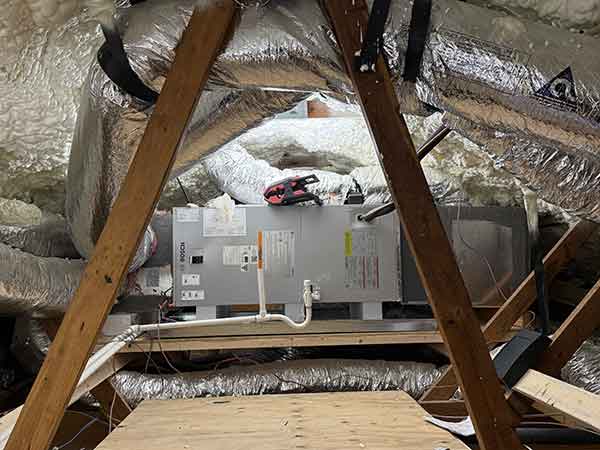
New equipment bolted to old ductwork is the most common way a good system disappoints its owner. A furnace and coil move a specific amount of air to do what the label says, and if the duct system cannot pass that air, the label is fiction. So before anybody picks a model number, the ducts get evaluated: static pressure measured across the air handler, return size compared against what the new airflow needs, the trunk and branch layout checked, the accessible runs looked at for crushes and disconnections. Plenty of changeouts out here need a bigger return or a reworked plenum more than they need a higher efficiency rating. That gets quoted as part of the job rather than discovered afterward, because the alternative is a homeowner who paid for high-end equipment and got a noisy blower, a starved coil, and the same hot back bedroom. The install process starts there for a reason.

The Mclennan County Context
What the Northern Edge Runs
McLennan County HVAC at our range runs on honesty and rhythm: the distance real and never pretended away, windows quoted at the miles, routes clustered so the county’s work travels efficiently, scheduled relationships, maintenance rhythms, project installs, landlord programs, anchoring the regularity that makes the edge serviceable; Waco’s stock spanning craftsman-era grids through university rentals to the ring’s newer fleets, each pattern known from its cousins across the map; and the metro’s own trades acknowledged plainly, our northern presence serving the customers who chose the Burnet standard deliberately, second opinions, straight pricing, the owner on the truck, worth the scheduling honesty it requires. The 84 and 6 approaches carry the routes, and the county’s file grows on exactly the referral pattern distance demands, earned rather than assumed.
Condensate is the quiet one. A system pulling humidity out of the air all summer produces gallons of water a day, and every drop of it has to leave the house through a drain line that our warm wet air turns into a petri dish. Slime builds, the pan overflows, and the first sign is a ceiling stain over the hallway. That drain gets cleared and treated on every visit for a reason.
A frozen coil looks like the strangest failure in the trade and it is usually the simplest. Somebody in Waco calls because the air conditioner is blowing warm, goes and looks, and finds a block of ice on the indoor coil or frost creeping down the copper. Ice means the coil got colder than it should have, and that happens when not enough warm house air is moving across it. So the hunt is for airflow: a filter nobody changed since spring, a return grille blocked by furniture, a blower wheel packed with dust, a crushed flex duct in the attic, a closed-off damper. Low refrigerant charge freezes a coil too, which is why the charge gets weighed rather than guessed. The first instruction over the phone is always to shut the cooling off and run the fan alone so the ice melts, because nobody can diagnose a coil they cannot see.
Say what the house is doing.
A real tech picks up, quotes the window with the drive figured in, and the truck rolls stocked.
Any Hour, Any Day
Off Duty Is a Promise, Not a Slogan
Businesses get their own after-hours calculus, because a commercial failure has a price tag running in real time. A walk-in cooler alarm at midnight is not a comfort problem, it is thousands of dollars of product with a clock on it. A rooftop unit down at a restaurant on a Friday means a dining room nobody sits in through the best revenue hours of the week. So commercial emergency calls get handled with the loss rate in mind: phone triage first, including the steps a manager can take right now to buy time, ice, product relocation, whichever applies, then a truck, then an honest assessment of whether tonight’s fix is permanent or a hold until parts arrive. We say which one it is. A temporary fix presented as a permanent one is how a business gets surprised twice. The after-hours number and the commercial number are the same number, and the person answering it knows refrigeration as well as comfort cooling.
Why Waco Calls Burnet
The Off Duty Standard, Delivered Here
A dispatcher who has never held a gauge cannot tell you what parts to bring. Here the person taking the call is a tech, so the truck leaves loaded for the symptom you described rather than loaded generically. That is most of why one trip finishes the job instead of three. The failure patterns come from a decade of local calls, and they sit behind every repair we run.
The arrival window is figured with the drive in it. You get a real span rather than a cheerful guess, and a call if the job ahead of yours runs long, because sitting home all day waiting is its own cost. Reach (512) 925-3090 and ask what today actually looks like. On a no-cool in August the answer is usually sooner than you expect, and if it is not, you hear the truth instead of a comfortable number.
Before anybody quotes a paid repair, we check what the manufacturer still owes you. Parts warranties run ten years on a lot of equipment and most homeowners never registered theirs, never knew, and got billed retail by somebody who did not look. We file the claim. You pay labor instead of labor plus a compressor, and that is a very different conversation.
Nearby in Mclennan County
Also on This Route
One route covers the whole county: Hewitt · Bellmead · Woodway. County page: Mclennan County. Recent jobs from this stretch of the map are in the gallery.
Waco Questions
Waco Questions, Straight Answers
Why would anyone in Waco call a shop a hundred miles away?
The northern accounts answer it themselves: a second opinion that retired a five-figure quote pays for years of scheduling honesty, the no-commission structure reads differently once you have met the alternative, and the same-tech-every-visit relationship survives distance in a way call-center dispatch never survives proximity. Scheduled work, maintenance, installs, landlord programs, rides planned routes reliably, and the honest windows, hours stated as hours, get kept. For the 2 AM emergency we say plainly: keep a local option. For everything else, the standard travels, and the referrals prove it.
Can you run our rental properties from that distance?
The landlord program was built for managed distance in both directions: owner-directed service with standing instructions, findings called before work, documented visits with photos to your inbox, turns scheduled on vacancy windows, the academic calendar’s August crunch planned ahead rather than competed inside, and tenants served through the emergency line with paperwork flowing to you. Distance between owner and property is the program’s normal condition, ours to the city just adds route planning, and the per-address files keep every property’s story straight across tenancies and years.
What northern work justifies the drive best?
Project work leads: installs and replacements run as engineering, load calculations, duct evaluation, unhurried commissioning, deserve dedicated trips and get them, retrofit projects in the craftsman grids reward the character fluency, verification engineering on underperforming systems travels perfectly, and second opinions on major quotes are the classic first engagement. Maintenance rhythms anchor the standing routes once relationships form. The model is deliberate service at honest windows rather than rapid response, stated plainly up front, and the northern file’s growth says the trade works.
Will a bigger system cool my house better?
Usually the opposite, which surprises people. An oversized system satisfies the thermostat quickly, shuts off before it has pulled meaningful humidity out of the air, and leaves the house cold and clammy while the equipment short-cycles itself toward an early failure. Right-sizing comes from a load calculation on your actual house: glass, orientation, insulation, air leakage, square footage. Correct sizing is the cheapest efficiency improvement available, and it costs nothing extra to do the arithmetic first.
Do I have to be home for the appointment?
For a diagnosis or a repair, somebody eighteen or older should be there, since decisions get made at the unit and nobody authorizes work you have not heard priced. For a scheduled maintenance visit plenty of customers leave access arranged and get the readings and photos afterward. We call ahead before rolling, we call if the window shifts, and we do not start billable work without a yes. Arrangements that fit your schedule are worth asking about when you book.
Put Waco on Tonight’s Route.
Repairs, replacements, and the 24-hour line, all from one Burnet shop. Send the form or call any hour.
(512) 925-3090 Book a Free Look