
Variable Speed Heat Pumps, Explained Straight.
A single-stage heat pump has two settings: everything and nothing. A variable speed machine has hundreds, and it uses them to match your house minute by minute, holding temperature within a degree, wringing humidity out of Texas air, and sipping electricity while it does it. It is the difference between a light switch and a dimmer, applied to the biggest energy user in your home.
Heat Pumps · Burnet & Central Texas
Why the Dimmer Beats the Switch
Conventional equipment cycles: blast at full power, overshoot, shut off, drift, repeat. Every start is a stress event and an efficiency loss, every off-cycle lets humidity creep back, and the temperature sawtooths around the setpoint. An inverter-driven variable speed machine barely cycles at all. It finds the output that exactly balances the house’s losses, often a whisper of its full capacity, and holds there for hours. Compressor stress falls, electrical draw falls, and the house sits at the setpoint instead of orbiting it.
In Central Texas the humidity story is the sleeper benefit. Dehumidification happens while air moves across a cold coil, so longer gentler cycles pull dramatically more water out of the air than short blasts, even at identical thermostat settings. Lake-country houses that always felt clammy at 74 degrees suddenly feel crisp at 76, and every degree of setpoint you gain back is real money across a five-month cooling season. Owners consistently report the humidity change as the upgrade they noticed first.
The equipment only delivers if the installation respects it: accurate load calculation, matched airflow, weighed charge, and commissioning that verifies modulation actually modulates. An oversized variable speed system is an expensive way to recreate single-stage behavior, which is why our installs start with the math instead of the catalog.
Local conditions shape this work more than most homeowners expect. Our summers stack week after week of hundred-degree afternoons, which means long compressor runtimes, drain lines moving gallons of condensate a day, and electrical components living near their limits from June through September. Lake humidity keeps the corrosion clock running even in mild months, and spring pollen packs filters fast enough to choke airflow in weeks. A tech who works this exact hundred miles every day builds all of that into the variable speed heat pump work call: what to check first, which parts fail early here, and which settings survive a Texas cooling season instead of merely a laboratory one.

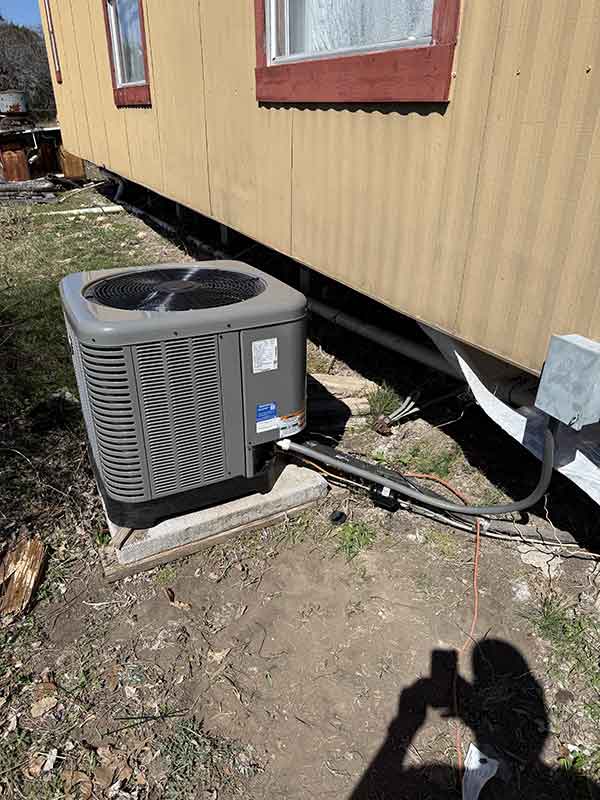
Heat Pumps
What Variable Speed Buys You
The brochure words are comfort and efficiency. Here is the specific, checkable version of what changes in your house.
Same crew, any hour.
The name is the joke, the 24-hour line is not. If this problem cannot wait, call now and the on-call tech picks up, quotes the visit straight, and rolls a stocked truck.
Why Off Duty
The Honest Tradeoffs, Stated Plainly
Variable speed costs more up front, and the premium buys sophistication that must be serviced by people who understand it. Inverter boards and communicating controls are more capable and more expensive than a contactor and capacitor, and a shop that only speaks single-stage will be lost inside one. Those are the true costs, and we state them plainly because the equipment earns its keep anyway for most households: the operating savings, comfort gains, and lifespan advantage compound over a Texas cooling season in a way spec sheets undersell. What we will not do is put one in a house whose ductwork or load profile cannot use it, and we check that before quoting rather than after installing.
If your current system is nearing the end, the variable speed question belongs in the replacement conversation, because the incremental cost at replacement time is far smaller than the standalone difference suggests. We quote the tiers side by side, single-stage, two-stage, variable, with expected operating costs for your actual house, and let the arithmetic make the argument. It usually does.
The process here never changes, whether the job is variable speed heat pump work or a full system swap. Step one, you call (512) 925-3090 and a human answers, around the clock. Step two, we test until the real cause is proven, because parts-swapping on a hunch is how invoices grow. Step three, you get the failure, the fix, and the exact number explained to the point before we touch a thing. Step four, we do the work to spec and prove it under load before we leave. Our customers keep writing reviews about exactly this rhythm, which tells us to keep it.
On pricing, the policy is the same as everything else here: out loud and up front. The visit cost gets stated on the phone before anyone drives anywhere. The repair price gets stated after diagnosis and before work. No packages with hidden contents, no commission-driven upsell in the truck, and no number on the invoice you did not already hear.
Worth saying plainly: this is not a problem that ages well. Systems compensate quietly right up until they cannot, and the failure that finally announces itself usually costs more than the one caught early would have. If your gut says something is off, that instinct is worth one free phone call. The worst case is we tell you everything sounds normal, which is a pretty good worst case.
Who does the work matters as much as what gets done. Off Duty is owner-operated: the person diagnosing your system is the person whose name carries the company, trained in the family trade and seasoned by ten years of Central Texas installs and repairs. You can see the standard in real job photos, and you will see it again in your own equipment closet.
We run this work all over the map: Burnet and the Highland Lakes first, then the whole hundred-mile circle, Marble Falls, Georgetown, Round Rock, Austin, Killeen, and out to Waco and Boerne. The full sixteen-county roster is on the service areas page. Wherever you sit on it, the same truck standard applies: the same tech, the same instruments, the same price-before-work rule, whether the drive took ten minutes or ninety. Distance changes the arrival window, never the workmanship.
Diamond Contractor
Mitsubishi’s top ductless credential, earned with factory training.
Second Generation
Raised in the trade, ten years on the tools before the name went on a truck.
Warranty Authorized
JB and Mitsubishi warranty work: we file the claim, you skip the fight.
Open 24 Hours
A real person answers the phone at any hour, every day of the year.
The Standard
How This Work Gets Done Here
Every trade job carries an invisible line item: the standard it was done to. On variable speed heat pump work work, ours reads like this. The diagnosis is proven with instruments, because guessing is expensive and it is your money on the table. The parts that go in are parts we would put in our own house, matched to spec instead of whatever was cheapest on the shelf. The workmanship follows the manufacturer’s book and the Texas code book both, because shortcuts hide for exactly one season and then bill you with interest.
When the work is finished, it gets tested the way it will actually be used: under load, at temperature, with the readings written down. Then the area gets left the way we found it or cleaner, the old parts get shown to you on request, and the invoice matches the number you already heard. If anything acts up afterward, you call the same number and the same person answers. That is the entire warranty conversation most customers ever need, and it is why the reviews keep saying the same three things: honest, fair, showed up.
Variable Speed Heat Pumps Questions
Asked Before We Roll a Truck
The ones the phone line hears most for this service, with the answers given at full length instead of sales-brochure length.
Is variable speed just a fancier thermostat setting?
No, it is different machinery. The compressor itself is inverter-driven and can run anywhere from a whisper to full output, and the blower modulates with it. A thermostat only decides when to ask for heating or cooling; a variable speed system changes how the machine answers, continuously matching output to the actual load instead of slamming between all and nothing. That mechanical difference is where the comfort, humidity, and efficiency gains physically come from. No control gadget bolted to single-stage equipment can replicate it.
How much can it actually save on bills?
Honest range for Central Texas: meaningful, and dependent on your baseline. Replacing a tired single-stage unit with a properly sized variable speed system typically cuts cooling energy substantially, both from the efficiency rating jump and from modulation itself, and the humidity improvement often lets people raise the setpoint a degree or two, which compounds the savings. We will not print a universal percentage because houses differ. What we will do is model your house and rates in the quote so the number you plan around is yours, not a brochure’s.
Are these systems reliable, or more things to break?
Modern inverter platforms have matured into genuinely reliable equipment, and the gentler duty cycle, few starts, low average output, is mechanically kind to the compressor. The honest caveat is serviceability: when something does fail, it is boards and modules, which cost more than the old commodity parts and demand real diagnostic skill. That makes shop choice part of the purchase. We service what we sell with the instruments and training the platforms require, and we stock the common failure parts for the brands we install.
Does variable speed help with my house’s hot rooms?
Often dramatically, though for a specific reason worth understanding. Long gentle cycles keep air circulating far more of the day, which evens out the hot-room, cold-room lottery that short-cycling systems create. If the root cause is duct design, undersized runs or a starved return, the machine helps but the ducts still deserve fixing, and we will tell you which situation you have during the assessment. The combination of corrected airflow plus modulating equipment is the full cure for the classic uneven Texas house.
Can my existing thermostat run a variable speed system?
Usually the system arrives with, or wants, its own communicating control, and there is a real reason: full modulation depends on the equipment and control speaking the same language, sharing load data rather than simple on-off calls. Some platforms run acceptably on quality conventional smart stats with reduced finesse. We configure whichever path fits your system and your preferences, and we set up the heat pump logic correctly either way, staging, balance points, fan profiles, because a mis-set control quietly throws away the very performance you paid the premium for.
Feel the Difference Modulation Makes
A free look, a real load calculation, and the tiers priced side by side with honest operating math. Prefer to write it out? Send the form and we call you back.
(512) 925-3090 Book a Free Look




