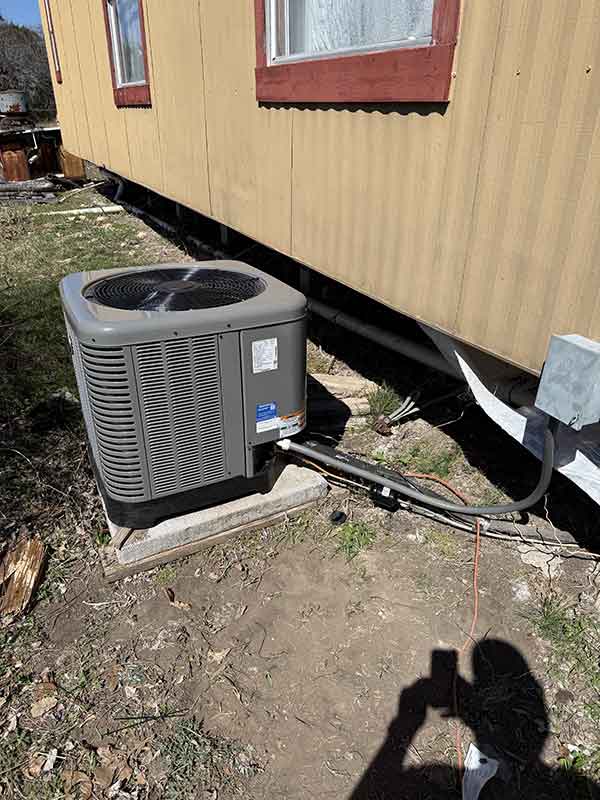
AC Capacitor Replacement Without the Runaround.
If Texas air conditioning has one signature failure, this is it: the humble run capacitor, cooked by heat and hard duty until the compressor hums helplessly and the house starts warming. It is the most common repair we run, the cheapest major fix in the catalog, and the one where a stocked truck means your cooling is usually back within the hour.
Air Conditioning · Burnet & Central Texas
The Small Part That Strands the Most Houses
The capacitor’s job is a starting shove and a running assist for the compressor and fan motors, stored electrical charge delivered at exactly the right moment. Texas is brutal on them: ambient heat bakes the electrolyte, long runtimes cycle them relentlessly, and voltage wobbles from summer grid stress add insult. They fail two ways, gradually, drifting below their rated microfarads while motors strain harder each week, or suddenly, often on the hottest afternoon, leaving the classic hum-click-silence and a warming house. Either way, the fix is quick, modest, and on the truck already.
The craft is in the details around the swap. The replacement must match specification, capacitance and voltage rating, never merely fit the bracket, and quality brands earn their small premium in Texas heat, since bargain capacitors are how this repair becomes annual. The failure deserves a cause check: a capacitor that died young may have been murdered by a struggling motor drawing hard, and replacing it without noticing the murderer schedules the next funeral. And the neighboring components, contactor, motor amps, get a quick health read while the panel is open, because that is just competent practice.
The symptoms are worth knowing cold: AC humming without starting, the outdoor fan needing a stick-push to spin, breakers tripping on start, or cooling that dies on the hottest day. All four say capacitor first, and phone triage on any of them usually gets the truck rolling with the right part confirmed.
Local conditions shape this work more than most homeowners expect. Our summers stack week after week of hundred-degree afternoons, which means long compressor runtimes, drain lines moving gallons of condensate a day, and electrical components living near their limits from June through September. Lake humidity keeps the corrosion clock running even in mild months, and spring pollen packs filters fast enough to choke airflow in weeks. A tech who works this exact hundred miles every day builds all of that into the capacitor replacement call: what to check first, which parts fail early here, and which settings survive a Texas cooling season instead of merely a laboratory one.

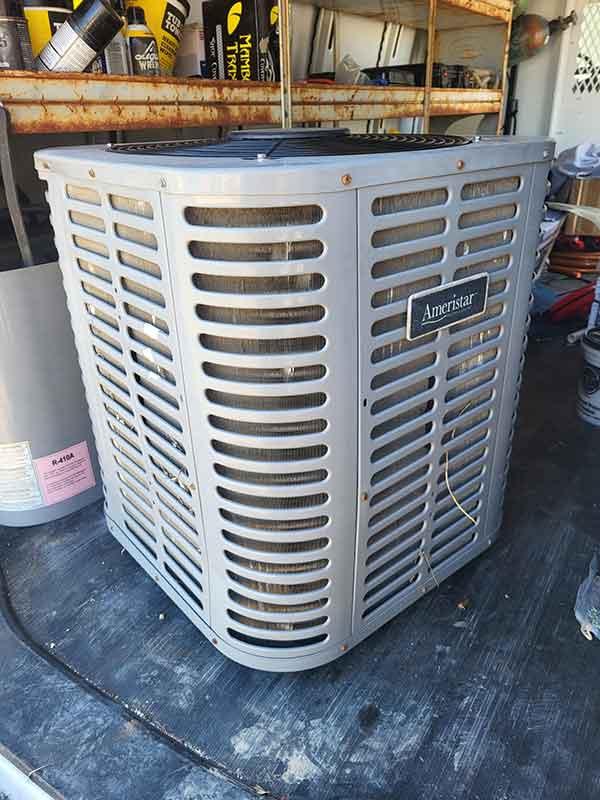
Air Conditioning
Capacitor Trouble, Recognized
The classic presentations, from subtle to stranded. Earlier catches are cheaper catches, as always.
Same crew, any hour.
The name is the joke, the 24-hour line is not. If this problem cannot wait, call now and the on-call tech picks up, quotes the visit straight, and rolls a stocked truck.
Why Off Duty
Cheap Part, Done Properly Anyway
A repair this common invites sloppiness, and the sloppy versions walk through our door regularly: wrong microfarad ratings installed because they fit, bargain-bin brands that last one Texas summer, dual capacitors wired creatively, and swaps performed without ever asking why the part died. Doing it properly costs minutes: match the spec exactly, use a brand that survives heat, torque the connections, verify motor amp draws afterward, and record the readings in the file. The properly done version lasts years and protects the motors it serves. The sloppy version is an annuity, for somebody.
This is also the repair where maintenance shows its worth most vividly. A capacitor’s decline is measurable, microfarads drifting below rating, months before failure, and every spring tune-up catches them in that window: a scheduled five-minute swap instead of a Saturday emergency. A meaningful share of our maintenance customers have never experienced the classic July capacitor stranding. That is not luck. That is the meter.
Every capacitor replacement call runs the same four steps we run on everything. You call (512) 925-3090 and a real person answers, any hour of any day. We diagnose with gauges and meters, never with guesses, until the actual cause is proven. Then we explain it straight: the failure, the fix, and the exact price, in plain English, before any work starts. Finally we do the work to spec and verify it under load before the truck leaves. Temperatures checked, pressures checked, paperwork handled. It is the same process that earned the reviews on our reviews page, and it does not change based on the size of the job.
On pricing, the policy is the same as everything else here: out loud and up front. The visit cost gets stated on the phone before anyone drives anywhere. The repair price gets stated after diagnosis and before work. No packages with hidden contents, no commission-driven upsell in the truck, and no number on the invoice you did not already hear.
A word about waiting it out. Central Texas weather does not leave much grace period, and a system limping in May is a system down in July, when everyone else’s is down too and the schedule is at its tightest. The early call gets the easy appointment and, usually, the smaller invoice. The July call gets the queue. Texas rewards the prepared, and so does our schedule.
You will also know exactly who is in your house. This company runs on one standard because it mostly runs on one set of hands: Bryce, second-generation in the trade, with every credential on the about page and every kind of job photographed in the gallery. Small shop, short chain of accountability, no strangers in rotation.
This service runs wherever our trucks do: home base in Burnet, the Highland Lakes from Granite Shoals to Buchanan Dam, down the corridor to Round Rock and Austin, north to Killeen and Temple, and out to the sixteen-county edge at Waco, Boerne, and Fredericksburg. The whole map lives on the service areas page, with drive-time honesty built into every window we quote.
Diamond Contractor
Mitsubishi’s top ductless credential, earned with factory training.
Second Generation
Raised in the trade, ten years on the tools before the name went on a truck.
Warranty Authorized
JB and Mitsubishi warranty work: we file the claim, you skip the fight.
Open 24 Hours
A real person answers the phone at any hour, every day of the year.
The Standard
How This Work Gets Done Here
Every trade job carries an invisible line item: the standard it was done to. On capacitor replacement work, ours reads like this. The diagnosis is proven with instruments, because guessing is expensive and it is your money on the table. The parts that go in are parts we would put in our own house, matched to spec instead of whatever was cheapest on the shelf. The workmanship follows the manufacturer’s book and the Texas code book both, because shortcuts hide for exactly one season and then bill you with interest.
When the work is finished, it gets tested the way it will actually be used: under load, at temperature, with the readings written down. Then the area gets left the way we found it or cleaner, the old parts get shown to you on request, and the invoice matches the number you already heard. If anything acts up afterward, you call the same number and the same person answers. That is the entire warranty conversation most customers ever need, and it is why the reviews keep saying the same three things: honest, fair, showed up.
AC Capacitor Replacement Questions
Asked Before We Roll a Truck
Real questions from real Central Texas customers, answered the same way we answer them on the phone: straight.
How do I know it is the capacitor and not the compressor?
You hope it is the capacitor, and statistically you are right to: the hum-click-no-start symptom traces to the cheap part far more often than the expensive one. The definitive answer takes a meter and minutes, capacitance tested against rating, then compressor windings verified healthy once the new capacitor lets it run. This is exactly why the capacitor gets tested before the word compressor gets spoken at this shop. If someone has quoted you a compressor without showing a capacitor reading, get the second opinion before the big check.
Can I replace an AC capacitor myself?
People do, and the honest cautions are real: capacitors hold lethal charge after power is cut and must be discharged properly, the replacement must match specification exactly, and the failure deserves a cause check that requires an amp clamp and some judgment. If you have genuine electrical competence, you already know the drill. If you are watching a video with a screwdriver in hand, please weigh the modest professional cost against the risks, and note that our visit includes verifying the motors that the capacitor serves, which is the part the video skips.
Why do capacitors keep failing every summer?
One failure is Texas. Annual failures are a pattern with a cause: undersized or bargain replacements that cannot take the heat, a motor drawing hard and cooking its helper, chronic voltage stress, or a condenser location that bakes beyond even Texas norms. The fix is diagnosis rather than subscription: correct specification and quality brand, motor amp draws verified against nameplate, and the upstream problem addressed where one exists. A properly specified capacitor serving healthy motors should give years of service here. Anything less means the real problem is still unfound.
What does capacitor replacement cost?
It sits among the most modest repairs in air conditioning, and you will hear the exact number on the phone or on-site before any work happens, per house policy. Beware the two pricing pathologies of this repair: the scary-markup version that exploits a stranded family’s urgency, and the too-cheap version installing a part that dies by September. Ours is priced fairly for a quality part, correct installation, and the surrounding health checks that make the fix durable, and the number stays the same whatever hour you called.
Does a weak capacitor hurt anything before it fully dies?
Yes, quietly. Motors running on degraded capacitance start harder and run hotter, drawing more current for the same work, which stresses windings, ages contactors, and nudges the electric bill. The compressor suffers most: hard starts are the roughest miles it ever logs. This is why drifting capacitors get flagged at maintenance rather than watched until death, the five-minute scheduled swap protects components worth fifty times its price. If your system has been starting rough or dimming lights, the damage clock is already running. The cheap fix stops it.
Related work: AC Compressor Repair · AC Fan Motor Repair · AC Repair · see real jobs in the gallery
The Usual Suspect, Fixed in an Hour
Hum-click-silence? The part is probably on the truck already. Call and describe it. Prefer to write it out? Send the form and we call you back.
(512) 925-3090 Book a Free Look