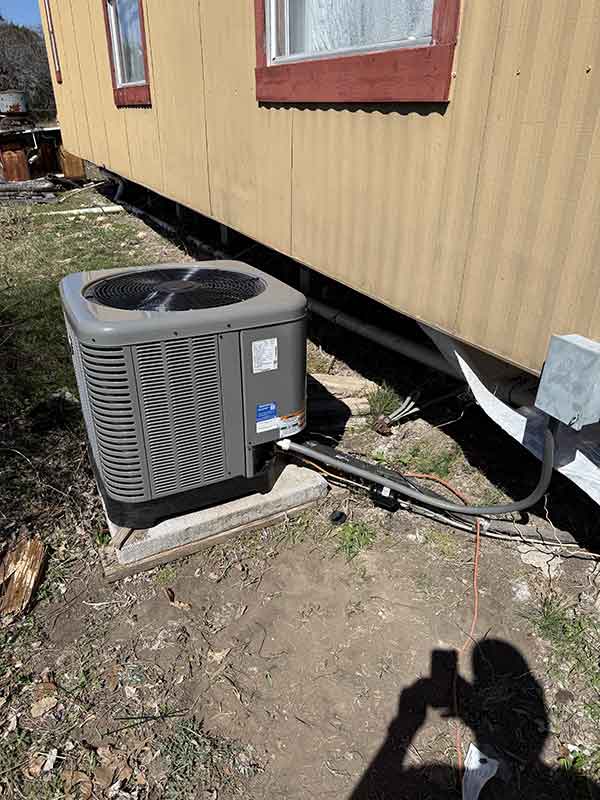
Central Air Repair, Explained Straight.
Central air is a system pretending to be an appliance: condenser, coil, blower, ducts, controls, and drainage all conspiring to cool every room through one thermostat. Repairing it well means diagnosing it as the system it is, because the room that never cools and the bill that keeps climbing are usually system stories, never single-part stories.
Air Conditioning · Burnet & Central Texas
Whole-House Cooling, Whole-System Thinking
The strength of central air is reach, every room served from one machine, and its weakness is the same thing: a fault anywhere degrades everywhere. A tired blower starves distant rooms first. Leaky ducts cool the attic while bedrooms swelter. A struggling condenser stretches runtimes until the system never rests on August afternoons. Homeowners experience these as vague, house-wide complaints, it never quite catches up, the back rooms are always warm, the bills crept up, and vague complaints invite lazy diagnoses. The repair discipline for central systems is refusing the lazy version: measure the whole chain, name the actual bottleneck, fix that.
Our central air workup reads the system end to end: refrigerant circuit health on the gauges, electrical condition under load, temperature split across the coil, static pressure telling the duct story, airflow at the registers that matter, and the drainage and controls that quietly govern everything. The findings sort into a ranked honest list, the fault behind today’s complaint, the drift behind next year’s, because central systems rarely have one thing wrong after a decade of Texas summers. You decide what gets fixed when, with the numbers in front of you.
The classic Central Texas central-air patient deserves mention: the builder-grade system in the fast-growth corridor subdivisions, installed quick during the boom, sized by rule of thumb, ducted to a price. Those systems hit year five through eight with a familiar complaint set, and we know their failure patterns like neighbors, because they are.
There is also a Hill Country layer to this work that out-of-area advice never accounts for. Limestone terrain around Burnet soaks up heat all day and radiates it back through the evening, so equipment here runs longer and later than the same unit would in a milder market. Humidity rolling off Buchanan, LBJ, and the rest of the Highland Lakes chain works on coils, drain lines, and cabinet steel every month of the year. Then winter shows up sideways: a sixty-degree afternoon collapsing into an overnight freeze finds every marginal component in the county at once. Doing central air repair correctly here means doing it for this climate, with parts choices and settings that respect what Central Texas actually does to machinery.
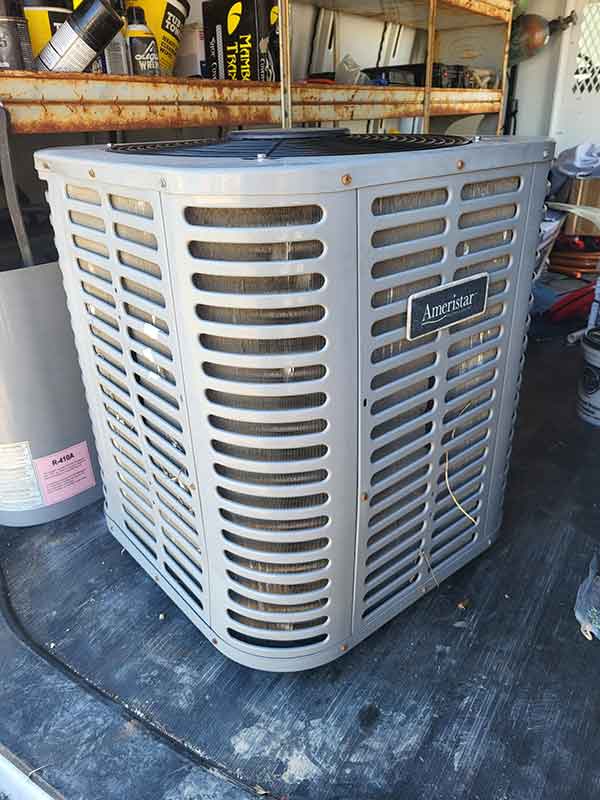

Air Conditioning
Central System Complaints, Decoded
House-wide symptoms and what they usually mean once the instruments come out.
Never catches up on hot days
Undersized, under-charged, duct-leaking, or coil-choked, four different fixes, one lazy shrug avoided by measuring.
Some rooms never cool
The distribution story: duct restrictions, starved returns, or balance never set. The registers get measured, never guessed at.
Runs constantly, bills climbing
Efficiency drift somewhere in the chain. The workup finds which link is bleeding money and prices its fix.
Short cycles all afternoon
Oversizing, control placement, or component distress. Each has a signature, and the signatures differ on instruments.
Humid even when cool
Oversized equipment or airflow set wrong, cooling the air without wringing it. A very Texas complaint with real fixes.
Loud everywhere, weak anywhere
Static pressure through the roof: ducts too small, filter too restrictive, or blower compensating loudly. Measured in minutes.
Same crew, any hour.
The name is the joke, the 24-hour line is not. If this problem cannot wait, call now and the on-call tech picks up, quotes the visit straight, and rolls a stocked truck.
Why Off Duty
The System View Pays for Itself
Part-swapping is cheaper per visit and more expensive per year, and central systems punish it specifically: replace the capacitor without noticing the duct restriction and the new part inherits the old strain; clean the coil without addressing the return-air starvation and it mats again by August. The system workup costs more attention up front and buys the thing homeowners actually want, a house that cools evenly, bills that make sense, and a repair sequence ordered by what matters rather than by what was easiest to quote. Central air rewards the shop that thinks in systems, and so do its owners, for years.
And when the honest system verdict is that the patient is beyond economical repair, an aging R-22 veteran with compounding failures, a builder-grade system that was never right, the conversation shifts openly to replacement, load calculation first, options priced straight, the works. Central air is the biggest comfort machine most families own; both its repairs and its retirements deserve daylight math.
The process here never changes, whether the job is central air repair or a full system swap. Step one, you call (512) 925-3090 and a human answers, around the clock. Step two, we test until the real cause is proven, because parts-swapping on a hunch is how invoices grow. Step three, you get the failure, the fix, and the exact number explained to the point before we touch a thing. Step four, we do the work to spec and prove it under load before we leave. Our customers keep writing reviews about exactly this rhythm, which tells us to keep it.
On pricing, the policy is the same as everything else here: out loud and up front. The visit cost gets stated on the phone before anyone drives anywhere. The repair price gets stated after diagnosis and before work. No packages with hidden contents, no commission-driven upsell in the truck, and no number on the invoice you did not already hear.
A word about waiting it out. Central Texas weather does not leave much grace period, and a system limping in May is a system down in July, when everyone else’s is down too and the schedule is at its tightest. The early call gets the easy appointment and, usually, the smaller invoice. The July call gets the queue. Texas rewards the prepared, and so does our schedule.
You will also know exactly who is in your house. This company runs on one standard because it mostly runs on one set of hands: Bryce, second-generation in the trade, with every credential on the about page and every kind of job photographed in the gallery. Small shop, short chain of accountability, no strangers in rotation.
Coverage is the same as everything else we do: Burnet at the center, about 100 miles in every direction. That means the lake towns, Marble Falls, Kingsland, Horseshoe Bay, the corridor through Leander, Cedar Park, and Georgetown, plus Austin, Bell County, and the outer ring through Waco, San Marcos, New Braunfels, Fredericksburg, and Boerne. The full sixteen-county list lives on the service areas page, and if you sit just past the edge of it, call anyway and get an honest answer.
Diamond Contractor
Mitsubishi’s top ductless credential, earned with factory training.
Second Generation
Raised in the trade, ten years on the tools before the name went on a truck.
Warranty Authorized
JB and Mitsubishi warranty work: we file the claim, you skip the fight.
Open 24 Hours
A real person answers the phone at any hour, every day of the year.
The Standard
How This Work Gets Done Here
Here is the standard this work gets held to, spelled out. First, no guessing: the cause is proven with gauges, meters, and eyes on the actual equipment before a single part is recommended. Second, no padding: the fix that goes on the quote is the fix the system needs, sized and specced properly, with no mystery add-ons riding along. Third, no shortcuts: torque specs, code clearances, and manufacturer procedure all get followed even where nobody will ever look, because that is precisely where corners usually get cut.
And when it is done, it gets proven. Systems get run under real load, temperatures and pressures get checked against spec, and the numbers get recorded so the next visit starts from data instead of memory. You get the plain-English version of what was done and why, the workspace gets cleaned, and the price on the invoice is the price you heard before the work began. Hold us to all of it. Our neighbors in the reviews already do.
Central Air Repair Questions
Asked Before We Roll a Truck
Real questions from real Central Texas customers, answered the same way we answer them on the phone: straight.
What is the difference between central air repair and regular AC repair?
Mostly scope of thinking. The components overlap, condenser, coil, blower, controls, but central air complaints are frequently system-level: distribution, ductwork, sizing, and airflow problems that no single part swap addresses. Our central air workup adds the system measurements, static pressure, register airflow, whole-chain efficiency, to the standard diagnostic, precisely because the my-house-never-cools complaint usually lives between the parts rather than inside one. If your issue is a dead unit, the repair page applies; if it is a house that cools badly everywhere or unevenly, this system approach is what actually fixes it.
Why are my back bedrooms always warmer than the rest of the house?
The classic central-air distribution complaint, with a short suspect list: long duct runs losing cool through leaks or missing insulation, undersized branches choking flow to the far rooms, a starved central return forcing the system to breathe badly, or balance dampers never adjusted after construction. Register measurements and static pressure identify the culprit quickly. Fixes range from modest, sealing, balancing, a return upgrade, to duct corrections, each quoted honestly. What rarely fixes it: a bigger condenser, which is the expensive guess this measurement exists to prevent.
My system cools but the house stays humid. Is that normal?
It is common in Texas and it is fixable, and the distinction matters. Dehumidification happens when air spends time crossing a cold coil, so systems that satisfy the thermostat too quickly, oversized equipment especially, or move air too fast leave moisture behind, producing that cool-but-clammy feel and the temptation to overcool. Airflow settings, fan speeds, and honest talk about sizing are the levers. Right-sized systems running longer gentle cycles wring the air properly. If your comfort requires 71 degrees to feel dry, the system is telling on itself, and the workup will name the specific confession.
Is my ductwork part of a central air repair?
It has to be, because the ducts are half the machine. Static pressure readings at the equipment expose duct restriction and leakage in minutes, and no central system diagnosis is complete without them, a perfect condenser breathing through crushed flex is still a broken system. When duct problems surface, you get them ranked with honest prices: sealing accessible leaks, freeing restrictions, adding return capacity, up through the full duct renovation conversation for the genuinely bad installations. Plenty of miserable central systems are healthy equipment wearing terrible ductwork, and that diagnosis changes everything about the fix.
How long should a central air system last in Central Texas?
The honest fleet numbers: twelve to fifteen years for maintained systems, with the well-installed and well-maintained reaching toward twenty; eight to twelve for the neglected, and the builder-grade corridor systems trend toward the early end of whatever care they receive. The Texas duty cycle is the discount factor, five-month cooling seasons at full effort, and maintenance is the recovery: clean coils, verified charge, healthy airflow, and drift caught early are worth years, measurably. Wherever yours sits on that curve, the system workup reads its position honestly, which beats guessing with either repairs or replacements.
Related work: AC Repair · Air Duct Repair · HVAC Maintenance · see real jobs in the gallery
Fix the System, Never Only the Part
The whole-chain workup finds the real bottleneck and prices its fix straight. Prefer to write it out? Send the form and we call you back.
(512) 925-3090 Book a Free Look