
Refrigerant Leak Repair, the Off Duty Way.
Refrigerant does not get used up. If your system needs a top-off, it has a hole, and every summer you pay to refill it is a summer the hole gets to keep charging rent. Leak repair done right is a three-act job: find it with instruments, fix it properly, prove the fix held. We do all three acts, in order, every time.
Air Conditioning · Burnet & Central Texas
The Subscription Nobody Meant to Buy
The seasonal top-off is the quietest subscription in home ownership. A pound of refrigerant in May, cooling limps through another summer, and everyone forgets until next May, when the pound costs more and the system cools less. Meanwhile the low charge itself does damage: coils run cold and ice over, compressors run long and hot, efficiency sags on every bill. On older R-22 systems the arithmetic turns absurd, with refill refrigerant priced like a discontinued collectible. The top-off is occasionally the right triage. As a plan, it is the most expensive one available.
Finding leaks is real instrument work, and honesty requires saying so: some leaks announce themselves with oil stains at a fitting, while others hide in coils, buried linesets, or micro-cracks that only weep under specific pressures and temperatures. The toolkit runs in escalation: electronic sniffers over every joint and coil surface, UV dye for intermittent offenders, nitrogen pressure testing with soap tracing for confirmation, and isolation testing to corner leaks in inaccessible runs. Each escalation gets discussed with you before it happens, with its cost, because a leak search should never itself become a mystery invoice.
The fix follows the finding: brazed repairs on accessible lines and joints done under nitrogen flow, component replacement where coils or valves are the culprits, and honest talk when the leak lives somewhere that changes the economics, formicary-riddled coils and buried lineset failures being the classic forks in the road.
There is also a Hill Country layer to this work that out-of-area advice never accounts for. Limestone terrain around Burnet soaks up heat all day and radiates it back through the evening, so equipment here runs longer and later than the same unit would in a milder market. Humidity rolling off Buchanan, LBJ, and the rest of the Highland Lakes chain works on coils, drain lines, and cabinet steel every month of the year. Then winter shows up sideways: a sixty-degree afternoon collapsing into an overnight freeze finds every marginal component in the county at once. Doing leak repair correctly here means doing it for this climate, with parts choices and settings that respect what Central Texas actually does to machinery.

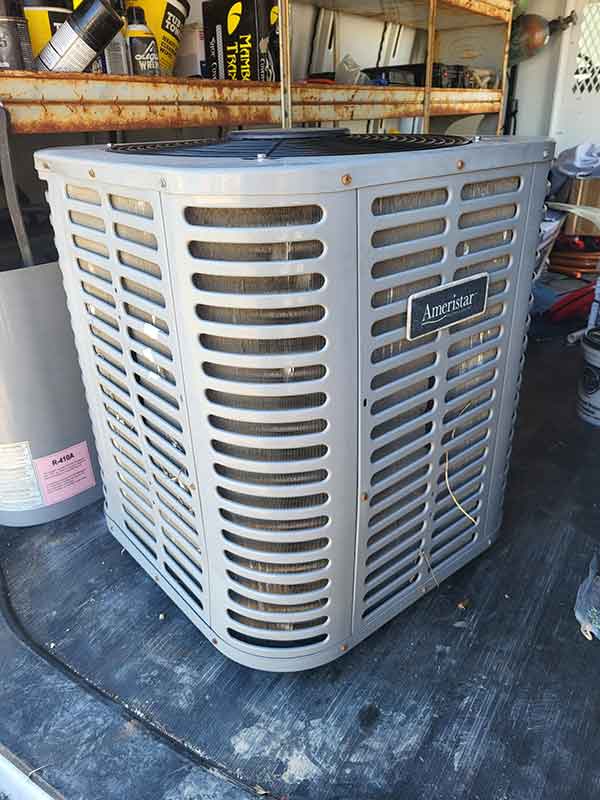
Air Conditioning
Where Texas Systems Spring Leaks
A decade of leak searches around the lakes maps to a familiar set of addresses. We check them in probability order.
Evaporator coil surfaces
Formicary corrosion pinholes, the state bird of Texas refrigerant leaks. Detectable with patience, rarely patchable in multiples.
Service valves and caps
Schrader cores and valve stems weep with age. The cheapest common fix on the whole list, and often the whole story.
Brazed factory joints
Vibration works on every joint for years. Accessible ones repair cleanly under nitrogen with proper technique.
Condenser coil damage
Hail hits, mower debris, and corrosion open the outdoor coil. Location decides between repair and replacement math.
Lineset runs
Rubbed-through insulation contact points and the dreaded buried or slab-run leak. Isolation testing corners these without demolition guesses.
Flare and mechanical fittings
Mini-split flares and add-on fittings loosen and weep. Re-flared and torqued properly, these stay fixed.
Same crew, any hour.
The name is the joke, the 24-hour line is not. If this problem cannot wait, call now and the on-call tech picks up, quotes the visit straight, and rolls a stocked truck.
Why Off Duty
Fix It Once, Prove It Held
The third act is where cut-rate leak work fails: proof. Our repairs close with a pressure test held and watched, evacuation to a deep vacuum verified by gauge rather than by clock, and a recharge weighed to factory specification instead of topped to feel. Then performance readings, pressures, temperature split, superheat and subcool where metering demands it, go in your file as the baseline that makes any future drift visible immediately. A leak repair that skips verification is a guess wearing an invoice, and a charge dumped in without a weigh-in is how systems end up subtly wrong for years.
When the honest verdict is that the leak is terminal, a colander coil, a slab leak whose repair costs approach system value on an aging unit, you get that verdict with evidence and both paths priced: the real repair and the replacement, five-year math attached. What you will never get is another silent top-off with a see-you-next-summer wave. That subscription ends the day we find the hole.
The process here never changes, whether the job is leak repair or a full system swap. Step one, you call (512) 925-3090 and a human answers, around the clock. Step two, we test until the real cause is proven, because parts-swapping on a hunch is how invoices grow. Step three, you get the failure, the fix, and the exact number explained to the point before we touch a thing. Step four, we do the work to spec and prove it under load before we leave. Our customers keep writing reviews about exactly this rhythm, which tells us to keep it.
On pricing, the policy is the same as everything else here: out loud and up front. The visit cost gets stated on the phone before anyone drives anywhere. The repair price gets stated after diagnosis and before work. No packages with hidden contents, no commission-driven upsell in the truck, and no number on the invoice you did not already hear.
Worth saying plainly: this is not a problem that ages well. Systems compensate quietly right up until they cannot, and the failure that finally announces itself usually costs more than the one caught early would have. If your gut says something is off, that instinct is worth one free phone call. The worst case is we tell you everything sounds normal, which is a pretty good worst case.
You will also know exactly who is in your house. This company runs on one standard because it mostly runs on one set of hands: Bryce, second-generation in the trade, with every credential on the about page and every kind of job photographed in the gallery. Small shop, short chain of accountability, no strangers in rotation.
We run this work all over the map: Burnet and the Highland Lakes first, then the whole hundred-mile circle, Marble Falls, Georgetown, Round Rock, Austin, Killeen, and out to Waco and Boerne. The full sixteen-county roster is on the service areas page. Wherever you sit on it, the same truck standard applies: the same tech, the same instruments, the same price-before-work rule, whether the drive took ten minutes or ninety. Distance changes the arrival window, never the workmanship.
Diamond Contractor
Mitsubishi’s top ductless credential, earned with factory training.
Second Generation
Raised in the trade, ten years on the tools before the name went on a truck.
Warranty Authorized
JB and Mitsubishi warranty work: we file the claim, you skip the fight.
Open 24 Hours
A real person answers the phone at any hour, every day of the year.
The Standard
How This Work Gets Done Here
Every trade job carries an invisible line item: the standard it was done to. On leak repair work, ours reads like this. The diagnosis is proven with instruments, because guessing is expensive and it is your money on the table. The parts that go in are parts we would put in our own house, matched to spec instead of whatever was cheapest on the shelf. The workmanship follows the manufacturer’s book and the Texas code book both, because shortcuts hide for exactly one season and then bill you with interest.
When the work is finished, it gets tested the way it will actually be used: under load, at temperature, with the readings written down. Then the area gets left the way we found it or cleaner, the old parts get shown to you on request, and the invoice matches the number you already heard. If anything acts up afterward, you call the same number and the same person answers. That is the entire warranty conversation most customers ever need, and it is why the reviews keep saying the same three things: honest, fair, showed up.
Refrigerant Leak Repair Questions
Asked Before We Roll a Truck
The ones the phone line hears most for this service, with the answers given at full length instead of sales-brochure length.
How do you actually find a refrigerant leak?
In escalating order of effort, with instruments the whole way. Visual and oil-trace inspection first, since escaping refrigerant carries oil that fingerprints the exit. Electronic detection swept over every joint, valve, and coil surface next, which catches most leaks. UV dye circulated for the intermittent ones that only weep under certain conditions. Nitrogen pressure testing with soap tracing for confirmation and for finding multiples. And isolation testing, valving off sections and watching pressures, to corner leaks in linesets and inaccessible runs. Each step is explained and priced before it happens, so the search never outruns your consent.
Is a refrigerant leak dangerous to my family?
In typical residential concentrations, the refrigerants themselves are low-toxicity, and a slow leak into a ventilated house is an equipment and money problem more than a health emergency. The real dangers are secondary: refrigerant displacing air in tight unventilated spaces, and any open-flame contact producing nasty decomposition products, which is one of several reasons leak repair belongs with people equipped for it. The family-scale harms of a chronic leak are subtler, a compressor cooking itself, ice events, cooling that fails during a heat emergency, and those are reason enough to fix it promptly.
Why should I stop adding refrigerant each year?
Because you are paying three times for one problem. Once for the refrigerant itself, again through the efficiency penalty of running low all season, and a third time through the wear that low charge inflicts, cold coils icing, hot compressors aging, until the deferred repair matures into a bigger one. R-22 owners pay a fourth time through collectible-grade refrigerant pricing. The one-time leak search and repair converts that open-ended bleed into a known cost with an end date. The arithmetic favors the fix in almost every case, and we will show it to you with your own numbers.
Can all leaks be fixed, honestly?
Honestly, no, and the exceptions matter. Accessible line and joint leaks: fixable, durably, with proper brazing and verification. Valve and fitting leaks: fixable, often cheaply. Single-point coil damage in reachable locations: often fixable with real limits explained. The unfixable-in-practice category: coils riddled with formicary corrosion, which leak from many pinholes at once, and buried lineset failures where access costs dwarf the line itself. Those get replacement conversations with evidence and both prices. Knowing which category your leak occupies is exactly what the instrumented search buys.
What refrigerant does my system use, and does it matter?
It matters enormously to the economics. The label on your outdoor unit tells the story: R-22 in systems installed roughly before 2010, phased out and now priced like scarcity itself; R-410A in most of the current fleet, reasonable and available; and the newer A2L refrigerants arriving in the latest equipment. An R-22 system with a significant leak is usually having a replacement conversation whether it planned to or not, because refilling it borders on ceremonial spending. We read your data plate, tell you which world you live in, and shape the repair advice to match the refrigerant reality.
Related work: Refrigerant Recharge · Evaporator Coil Repair · AC Repair · see real jobs in the gallery
End the Refill Subscription
Instrumented search, proper repair, verified hold. One job instead of an annual bill. Prefer to write it out? Send the form and we call you back.
(512) 925-3090 Book a Free Look




